
Skip to content

Blog

Mid-Century Modern Graphic Design: A Guide to 1950s Optimism & Charm

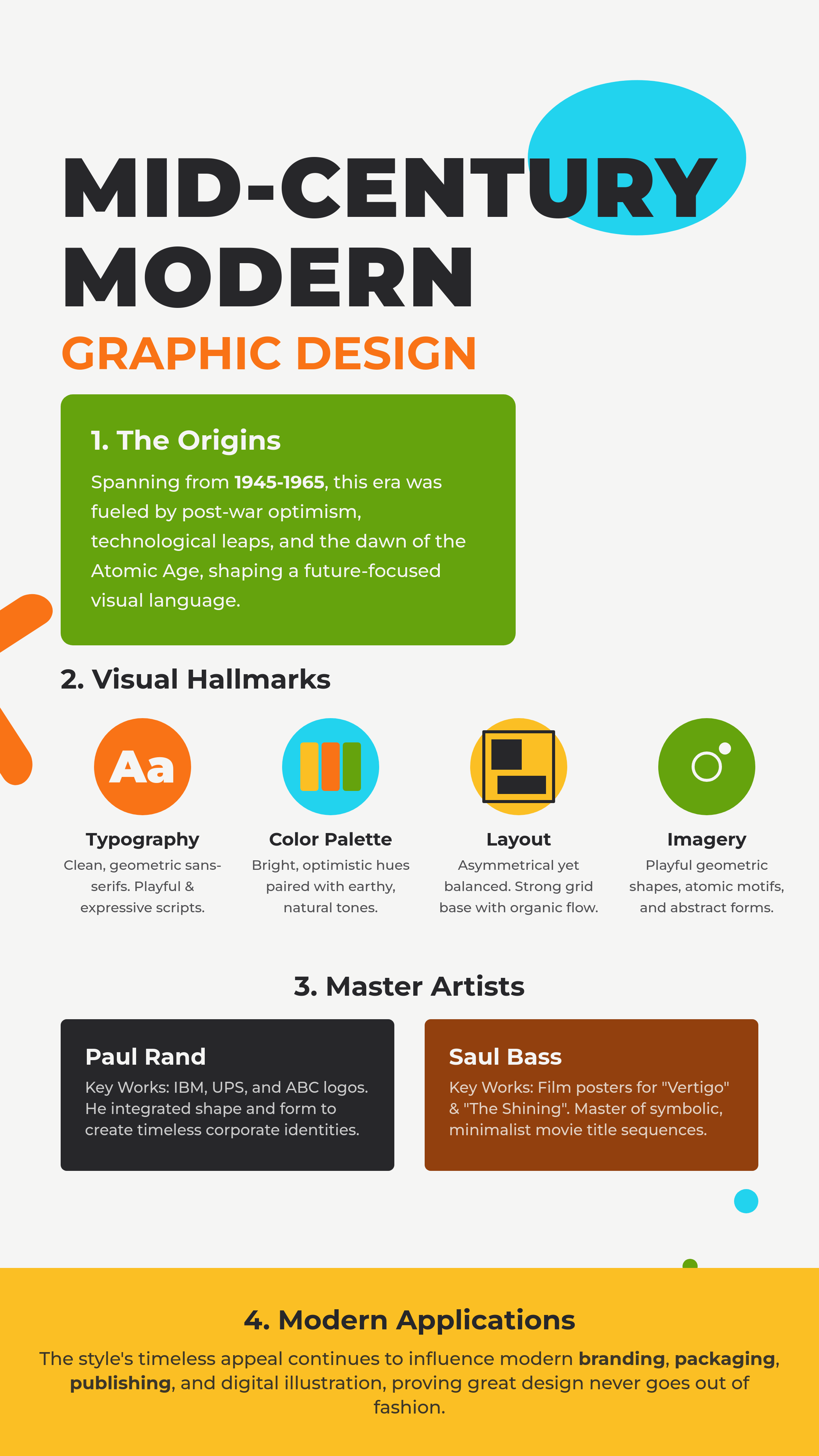
mid century modern style infograhic

Infographic of Mid-Century Modern Style. Generated using mew.design.

What Is Mid-Century Modern Style

Imagine the playful opening credits of a classic Hitchcock film, the friendly, colorful illustrations in a 1950s children’s book, or the iconic, minimalist shell of an Eames chair. This world of charming characters, organic shapes, and boundless optimism is the heart of the Mid-Century Modern style.

Mid-Century Modern was the friendly, accessible face of modernism, capturing the spirit of a post-war world brimming with confidence and excitement for the future. While its masters once brought character to life with ink and paper, today you can use AI design tools like Mew Design to create graphics that capture the unique retro charm of the Mid-Century Modern style.

As one of the most beloved and enduring graphic design styles in our ultimate guide, understanding Mid-Century Modern is key for any designer looking to create work that feels friendly, nostalgic, and full of character. This article explores its optimistic origins, its key visual traits, and its lasting appeal in modern branding.

The Origins of Mid-Century Modern: Designing for an Optimistic Future

The Mid-Century Modern graphic design style flourished in the United States from roughly 1945 to 1965. In the prosperous years following World War II, a sense of optimism and excitement swept the nation. Families were moving to the suburbs, consumer culture was booming, and there was a widespread fascination with the future, space exploration, and the “atomic age.” This retro design style captured that mood perfectly. It moved away from the rigid formalism of European modernism and embraced a warmer, more playful, and organic approach that was perfectly suited for advertising, publishing, and the new medium of television.

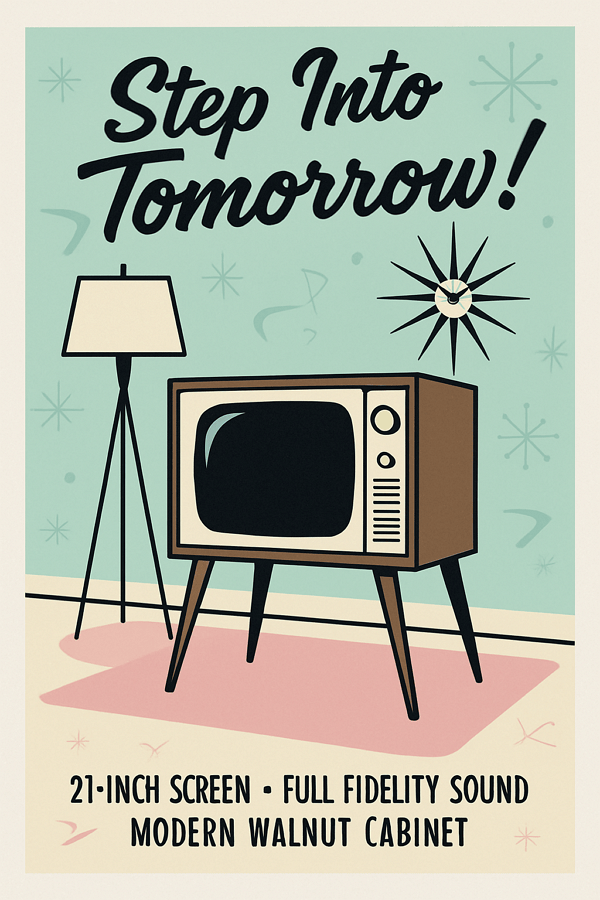
mid century modern tv ad poster

A colorful 1950s TV advertisement poster with bold typography and futuristic flair. Generated using mew.design.

The Visual Hallmarks: Key Characteristics of Mid-Century Modern Graphic Design

To identify the what is Mid-Century Modern style, look for a unique blend of clean modern lines and playful, organic charm. It’s a style that feels both simple and full of personality.

1. Mid-Century Modern Typography: Friendly and Expressive

Mid-Century Modern typography is often clean and legible, but with a touch of personality. While sans-serif fonts were common, they were often used in playful ways—staggered, bounced along a baseline, or mixed with friendly, informal script fonts. The goal was approachability rather than cold neutrality.

2. Mid-Century Modern Color Palette: Bright and Contrasting

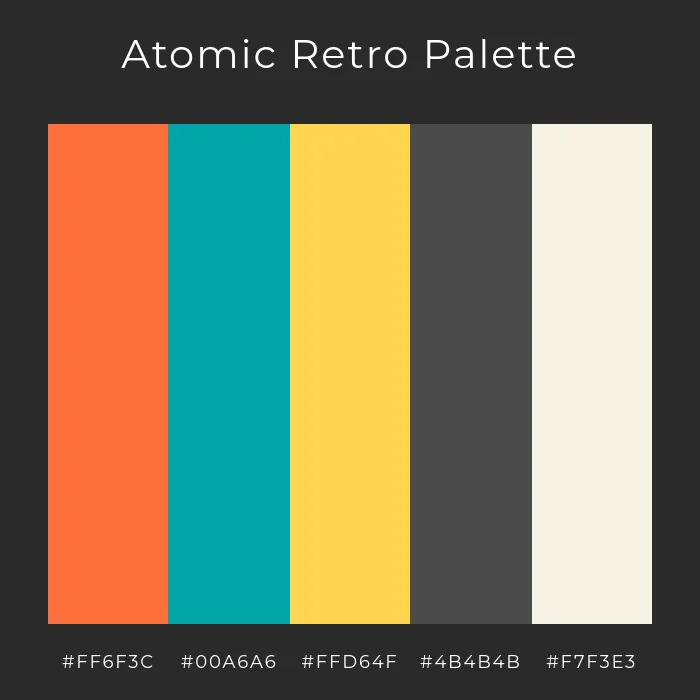
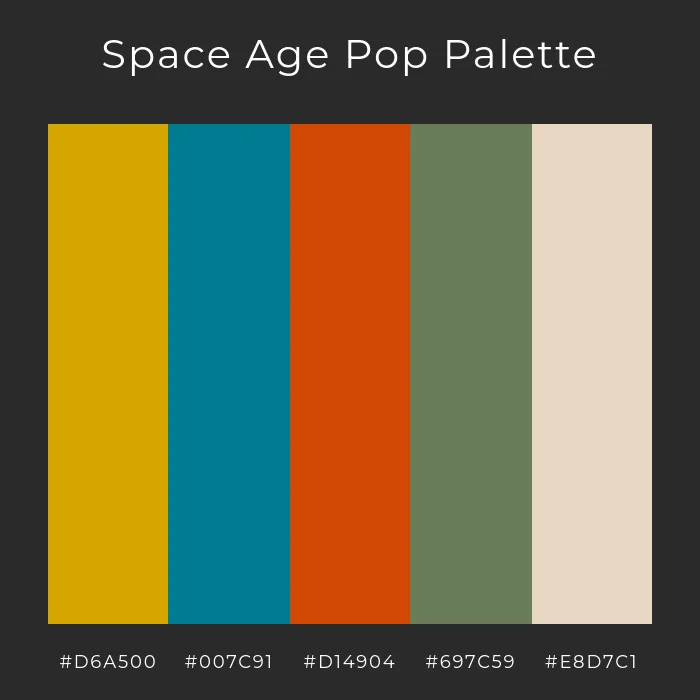
The Mid-Century Modern color palette is one of its most defining features. It’s known for its bright and optimistic hues, often pairing vibrant colors like atomic orange, turquoise, and sunny yellow with deep, earthy tones like olive green, brown, and charcoal gray for a signature high-contrast look.

mid century modern atomic retro colors

A bold and vibrant Mid-Century Modern color palette featuring atomic orange, turquoise, and deep charcoal for striking retro appeal. Generated using mew.design.

space age pop retro color palette

Inspired by the optimism of the Jet Age, this Mid-Century Modern color palette blends golden tones, teal, and earthy greens. Generated using mew.design.

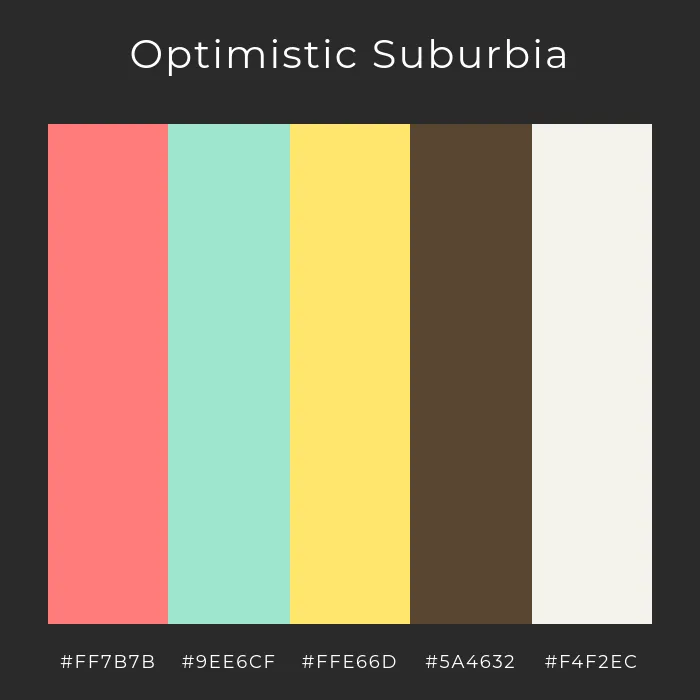
mid century suburban retro color palette

Reflecting the cheerful spirit of 1950s suburbia, this Mid-Century Modern palette pairs soft pastels with warm earthy hues. Generated using mew.design.

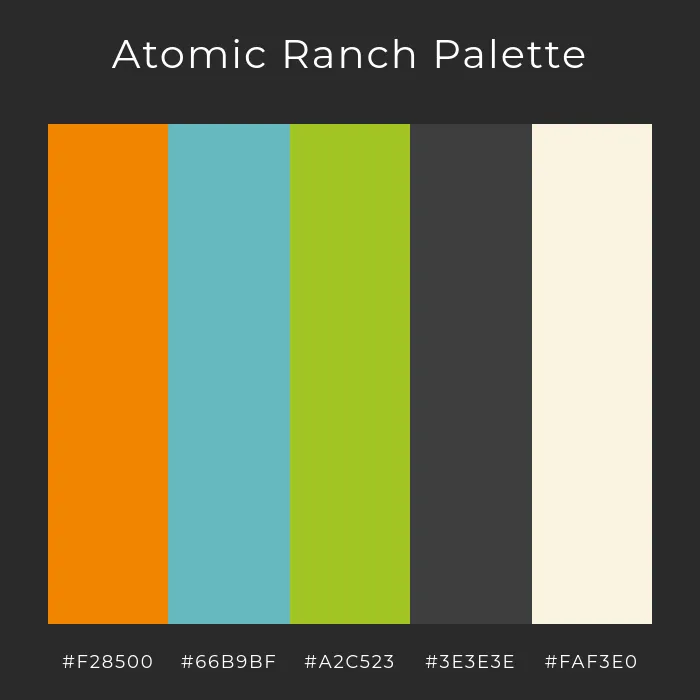
atomic ranch mid century modern colors

A sophisticated Mid-Century Modern palette inspired by vintage ranch homes, mixing vibrant orange and teal with muted neutrals. Generated using mew.design.

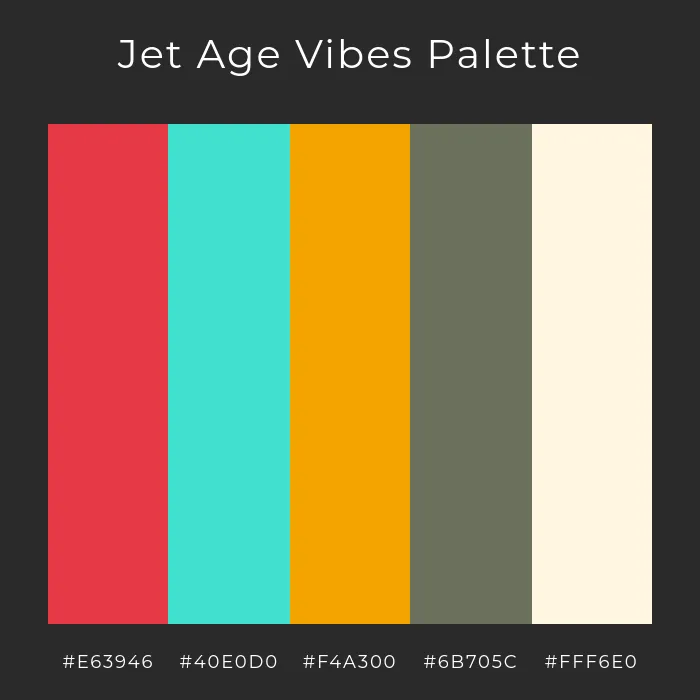
jet age retro color swatches

A high-energy Mid-Century Modern palette that captures the sleek optimism of the Jet Age with red, turquoise, and golden hues. Generated using mew.design.

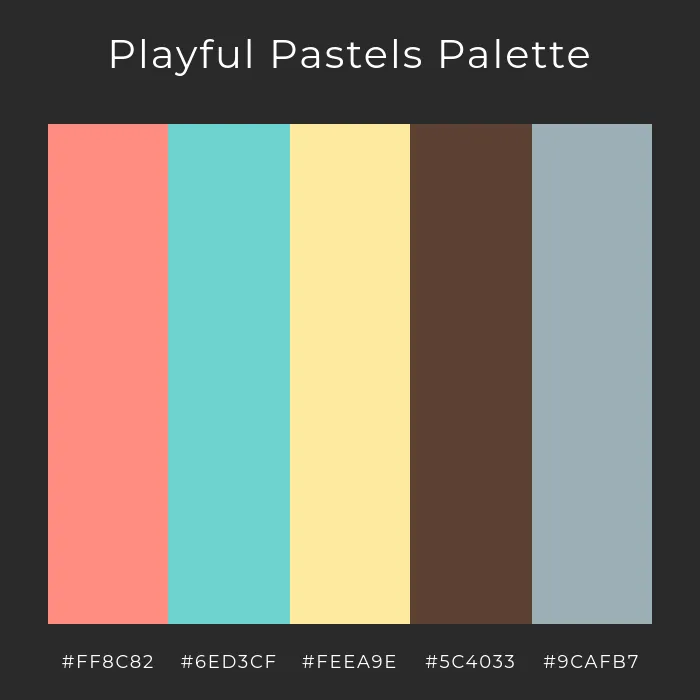
mid century modern pastel color palette

A softer take on Mid-Century Modern design, using pastel pink, teal, and yellow for a playful yet refined retro look. Generated using mew.design.

3. Mid-Century Modern Layout & Composition: Asymmetrical yet Balanced

Unlike the strict symmetry of earlier styles, the layouts of Mid-Century Modern graphic design are typically asymmetrical. However, they are always carefully balanced, using the size, color, and placement of elements to create a composition that feels dynamic and harmonious, but never chaotic.

4. Mid-Century Modern Imagery & Motifs: Playful and Abstract

Mid-Century Modern illustration is the heart of the style. It rejected realism in favor of simple, stylized, and often quirky illustrations. Key elements include:

  • Simple, abstract geometric shapes (like starbursts and boomerangs, reflecting the “atomic age”).
  • Playful, cartoon-like characters with simple features.
  • Organic, free-form shapes that feel spontaneous and lively.

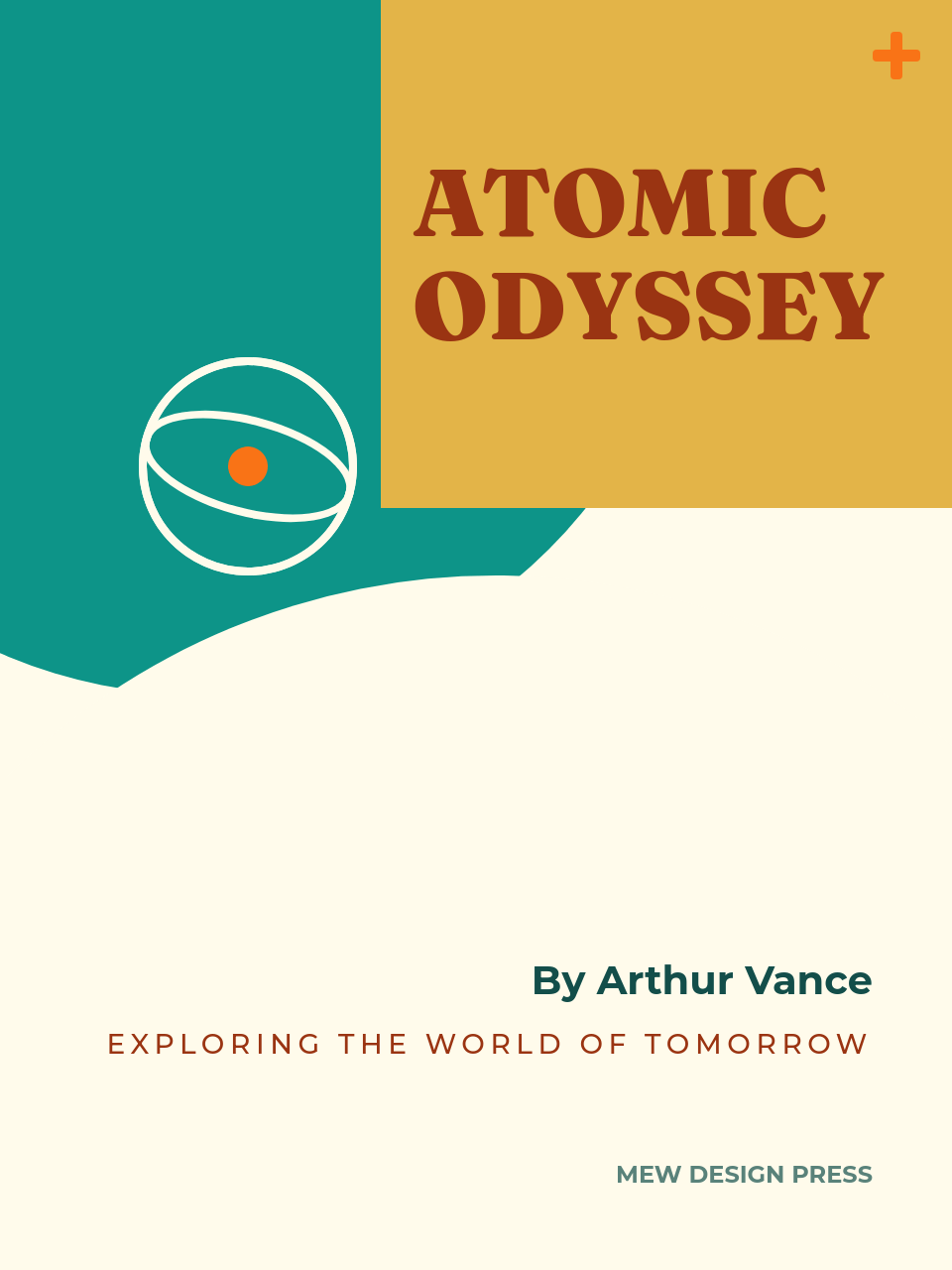
mid century modern book cover design

A playful Mid-Century Modern book cover featuring bold shapes and space-age optimism. Generated using mew.design.

Mid-Century Modern Graphic Designers and Master Artists

The Mid-Century Modern era was defined by legendary American designers who reshaped corporate and entertainment design with their wit and visual intelligence.

1. Paul Rand

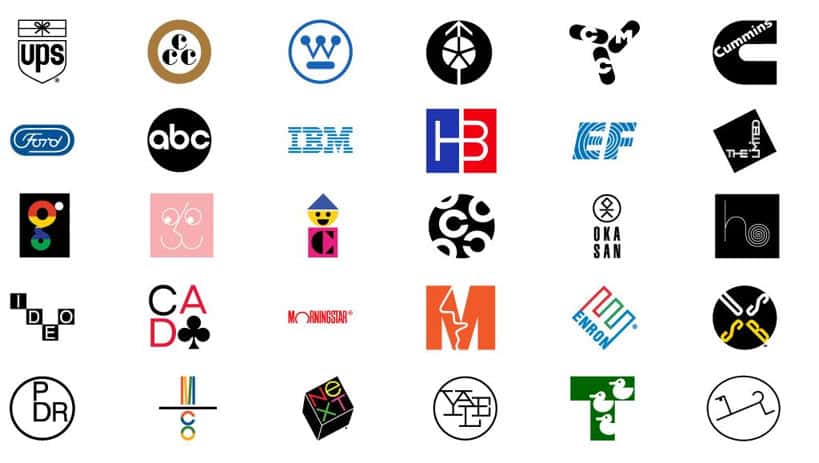
A giant of American graphic design, Paul Rand was a master of creating corporate logos that were not only simple and memorable but also full of wit and charm. He believed that a logo’s primary goal was to be a universal symbol, and he used simple, playful forms to achieve this.

  • Key Work: His iconic logos for IBM, UPS, ABC, and Westinghouse are perfect examples of Paul Rand logos that are both modern and deeply personable.
logos designed by paul rand

Some of the logos designed by the MCM graphic designer – Paul Rand. Source: pixartprinting

2. Saul Bass

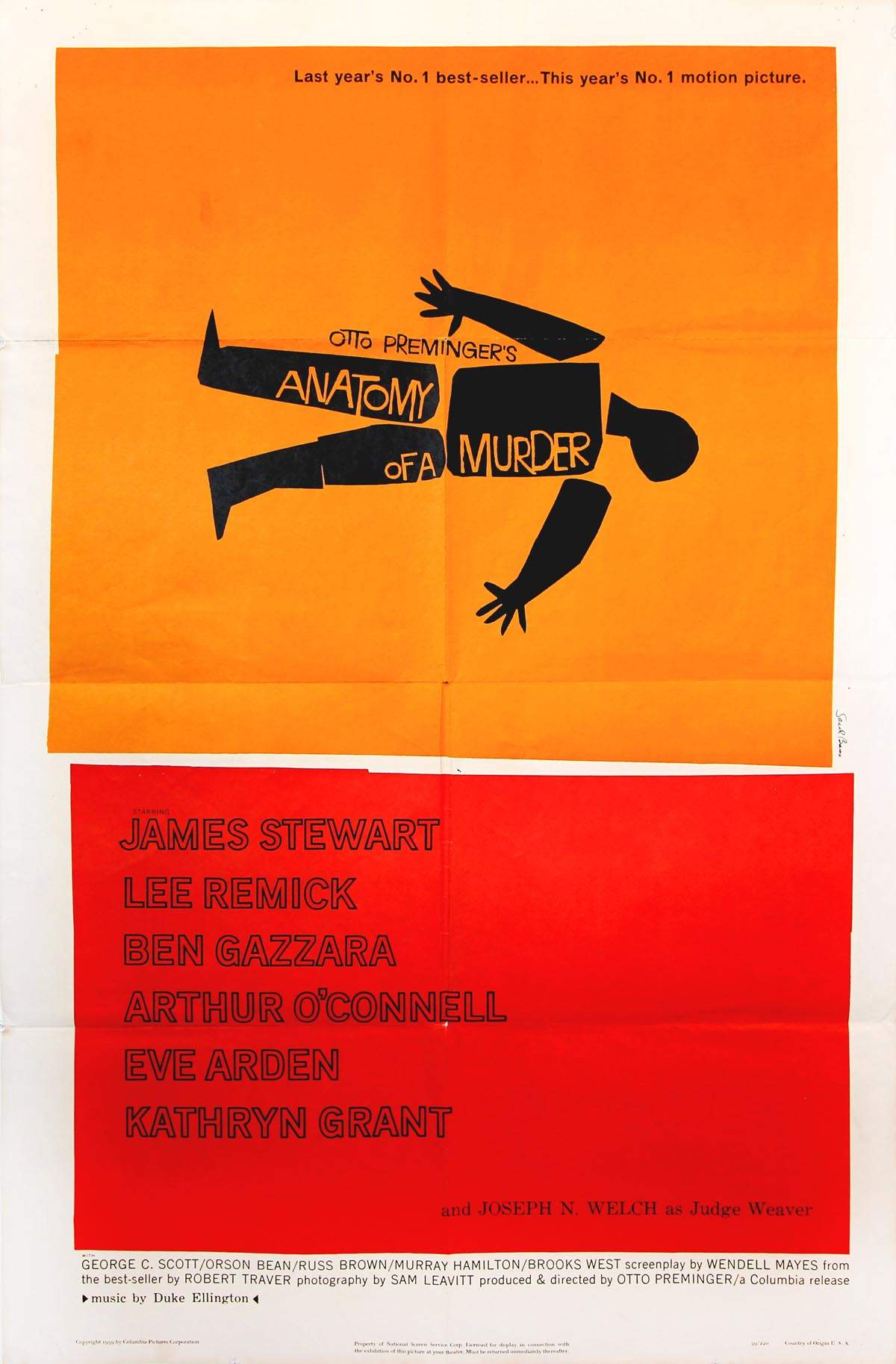
Saul Bass revolutionized film advertising and title sequence design. He transformed movie openings from a simple list of credits into a short, symbolic film that captured the entire mood of the movie to come.

  • Key Work: His groundbreaking title sequences for films like Anatomy of a Murder, Vertigo, and The Man with the Golden Arm are masterpieces of the Saul Bass posters and motion style, using cut-out shapes and bold typography to create suspense and drama.

anatomy of a murder poster by saul bass

Saul Bass, Anatomy of a Murder poster, 1959. Source: sfmoma.org

Mid-Century Modern Graphic Design in the Modern World: Contemporary Applications

The warmth and charm of Mid-Century Modern make it an incredibly popular choice for contemporary brands looking to feel friendly, trustworthy, and a little nostalgic.

  • Branding & Illustration: Modern MCM branding is a popular choice for tech startups, creative agencies, and direct-to-consumer brands. Its illustrative style helps humanize technology and make brands feel more approachable and authentic.

    mid century modern branding design

    Contemporary brand identity using Mid-Century Modern illustrations, bold typography, and retro shapes for a warm, approachable feel. Generated using mew.design.

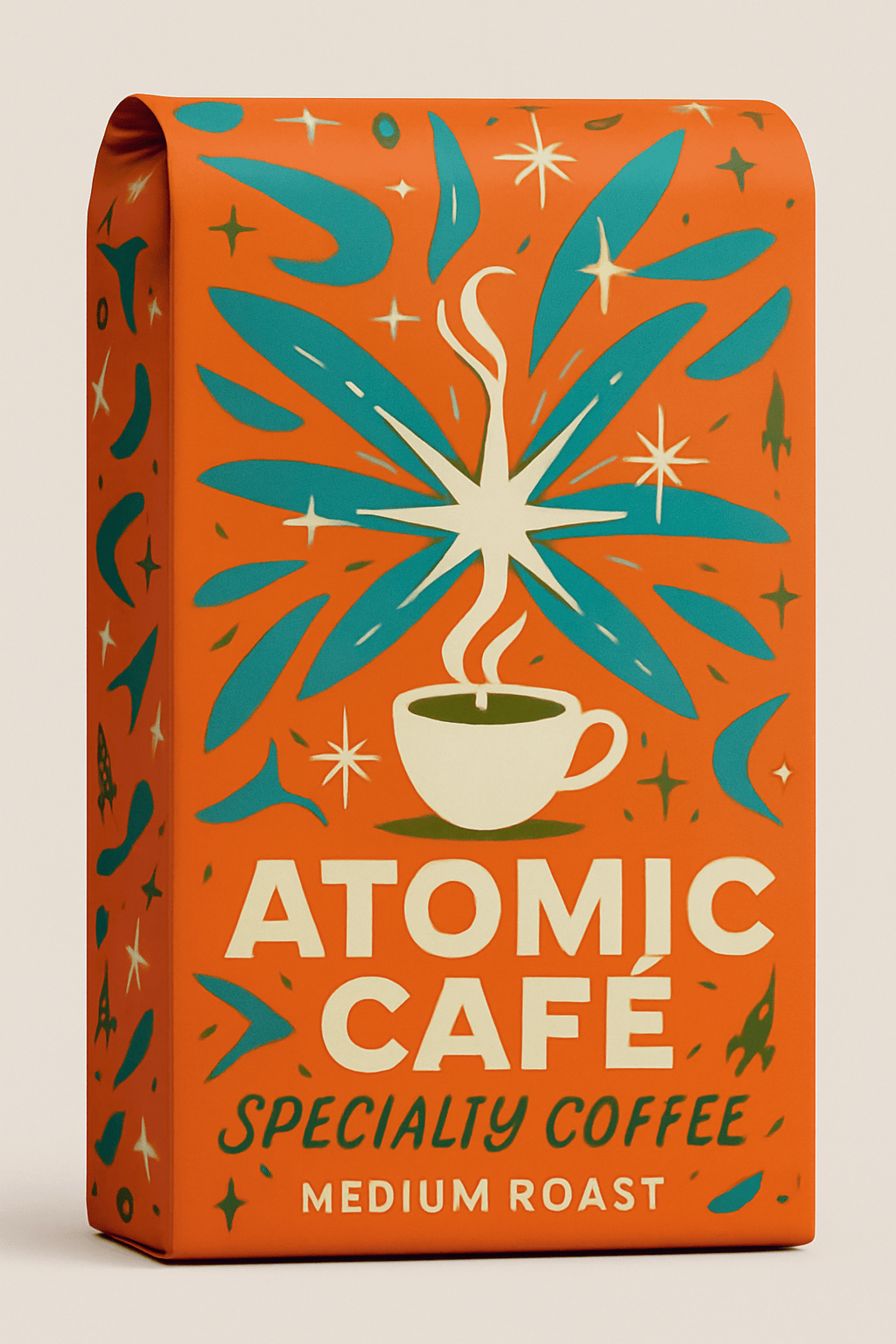
  • Packaging: The style’s friendly characters and bright colors make it perfect for a wide range of product packaging, from coffee bags to children’s toys.

    mid century modern packaging design

    Product packaging in Mid-Century Modern style, featuring playful graphics, nostalgic hues, and geometric layouts. Generated using mew.design.

  • Posters & Publishing: It remains a go-to style for book covers, event posters, and editorial illustrations that need a touch of retro charm and character.

    mid century modern poster design

    A vibrant poster and book cover design showcasing Mid-Century Modern’s signature color blocking and retro charm. Generated using mew.design.

How To Create a Mid-Century Modern-Style Design with AI

Want to capture the retro charm and optimism of the 1950s? Mew Design’s AI Design Agent can help you create delightful Mid-Century Modern graphics with ease.

mew design ai design agent

Key Features of Mew Design

  • Flawless Text Rendering – No more broken or misspelled text in your visuals.
  • Editable Layouts – Generate designs you can refine, not just static images.
  • Style-Accurate Outputs – From Mid-Century Modern to Bauhaus, layouts match authentic design principles.
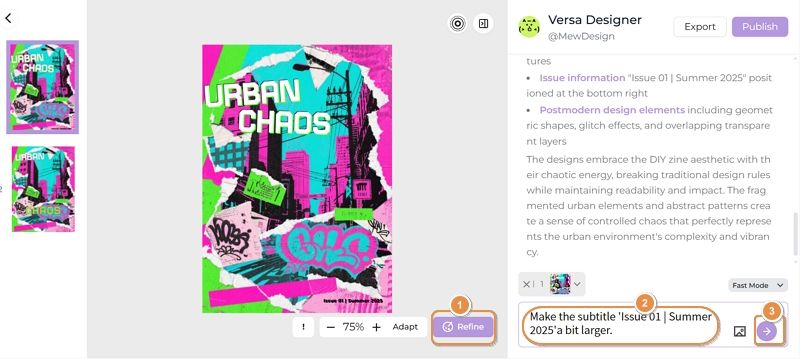
  • Follow-Up Prompt Refinement – Adjust colors, fonts, or composition with quick updates.
  • Creative Community – Share and explore designs from other creators for inspiration.

A Step-by-Step Prompt Guide

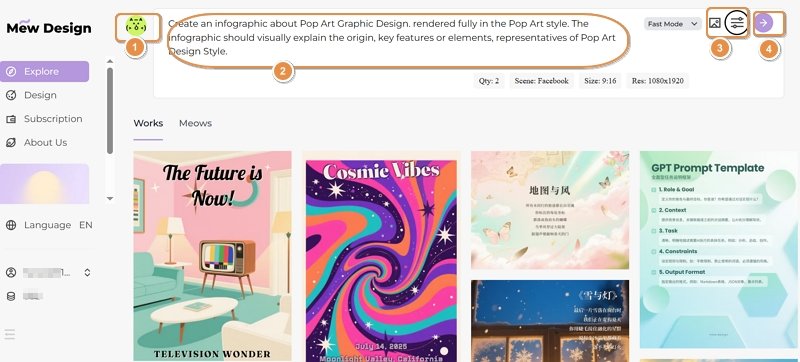
  1. Sign Up or Log In to Mew Design: Create a free account or log in to start your project.

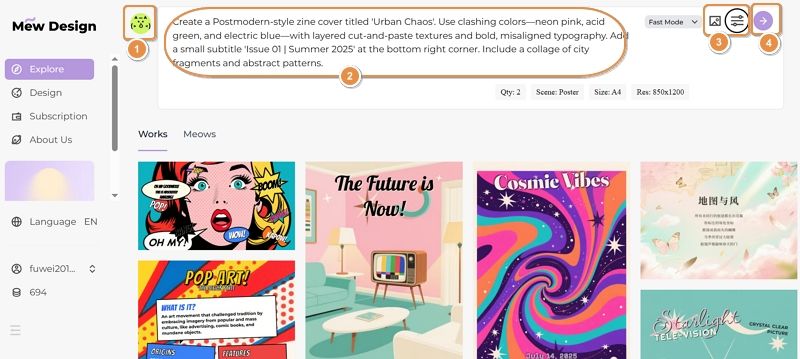
  2. Enter Your Prompt and Generate: describe the Mid-Century Graphic design style clearly.

    enter your ai mid century modern graphic design prompt

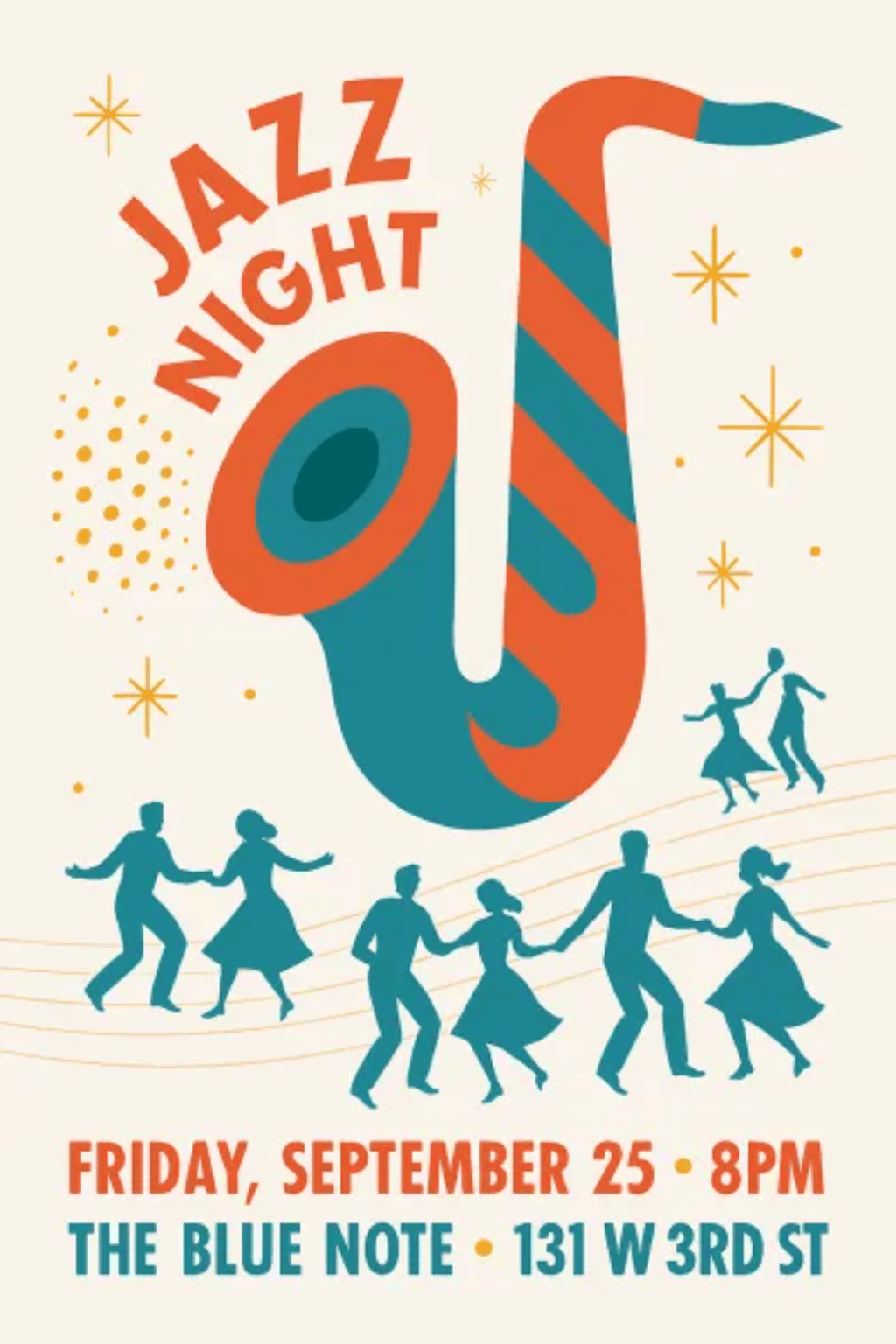
    Example Prompt: Create a Mid-Century Modern poster. Use muted tones like mustard yellow, teal, and warm gray. Incorporate abstract geometric shapes, clean lines, and sans-serif fonts. Add a bold headline at the top: “Retro Design Night,” with the date “October 18, 2025” below.

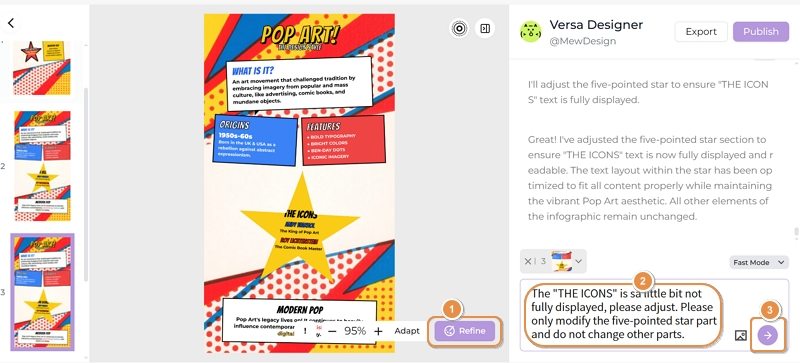
  3. Refine Using Follow-Up Prompts: Adjust layout, colors, or typography. You can ask for more texture, different shapes, or a warmer palette to fine-tune the vintage feel.

    edit the ai generated mid century modern graphic with prompt

  4. Export or Publish to the Mew Design Community: Download your finished Mid-Century Modern Graphic design in high resolution or share it directly with the Mew Design community.

    export your ai generated mid century modern style graphic design

🚀

Ready to Design with Retro Charm?

Whether you’re creating a friendly brand mascot, a charming social media post, or a nostalgic event poster, Mew Design helps you produce professional graphics that capture the optimistic spirit of Mid-Century Modern.

Try Mew Design for Free

Conclusion

Mid-Century Modern graphic design proved that modernism didn’t have to be cold or impersonal. By infusing clean lines with character, warmth, and wit, it created a visual language that remains beloved for its optimism and timeless appeal. Its legacy is a reminder that good design can be both smart and friendly.

Now that you’ve explored the playful world of Mid-Century Modern, see how design took a wild turn with the Psychedelic movement of the 1960s in our Ultimate Guide to Graphic Design Styles.

Psychedelic Graphic Design: A Guide to the Mind-Bending Art of the 1960s

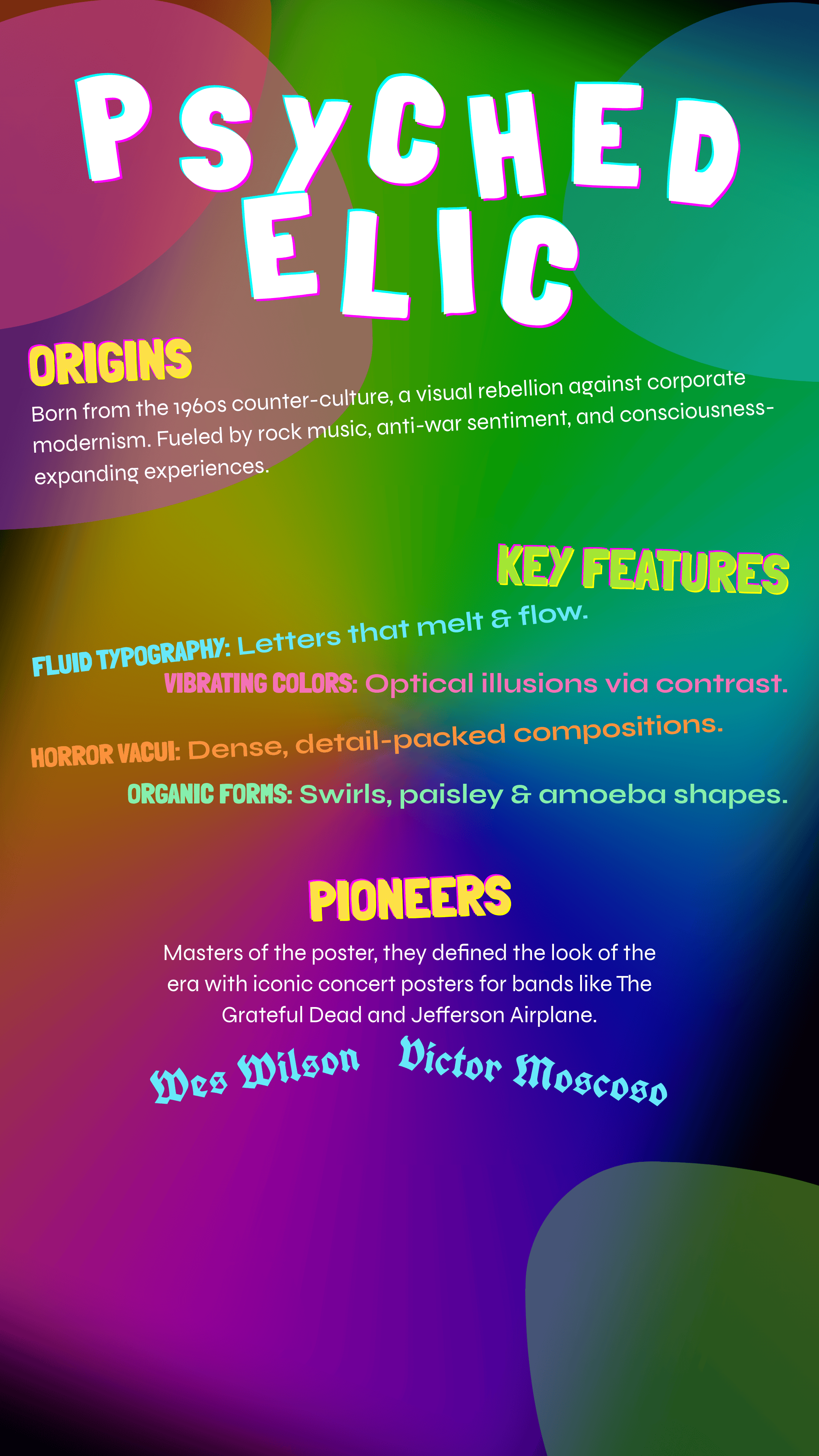
psychedelic style infograhic

Infographic of Psychedelic Design Style. Generated using mew.design.

What Is Psychedelic Style

Imagine a poster where the letters themselves seem to melt and dance, where colors vibrate with such intensity they almost hum, and where swirling patterns pull you into a visual vortex. This immersive, rule-breaking, and mind-expanding experience is the world of Psychedelic design.

Born from the epicenter of the 1960s counter-culture, Psychedelic art sought to visually represent the altered states of consciousness induced by psychedelic drugs like LSD. It was a complete rejection of the clean, orderly modernism that preceded it. While its pioneers once used intricate hand-drawing to bring their visions to life, you can now use Mew Design—an AI design agent—to quickly generate graphics that capture the fluid energy of the Psychedelic style.

As one of the most expressive and visually distinct graphic design styles in our ultimate guide, understanding Psychedelia is essential for any designer looking to create work that is immersive, free-spirited, and unforgettable. This article explores its cultural origins, its key visual characteristics, and its vibrant legacy.
The Origins of Psychedelia: The Visual Soundtrack to a Revolution

The Psychedelic graphic design style exploded into life in the mid-1960s, with its epicenters in San Francisco and London. It was the visual arm of the hippie movement art and was inextricably linked to the psychedelic rock music of the era.

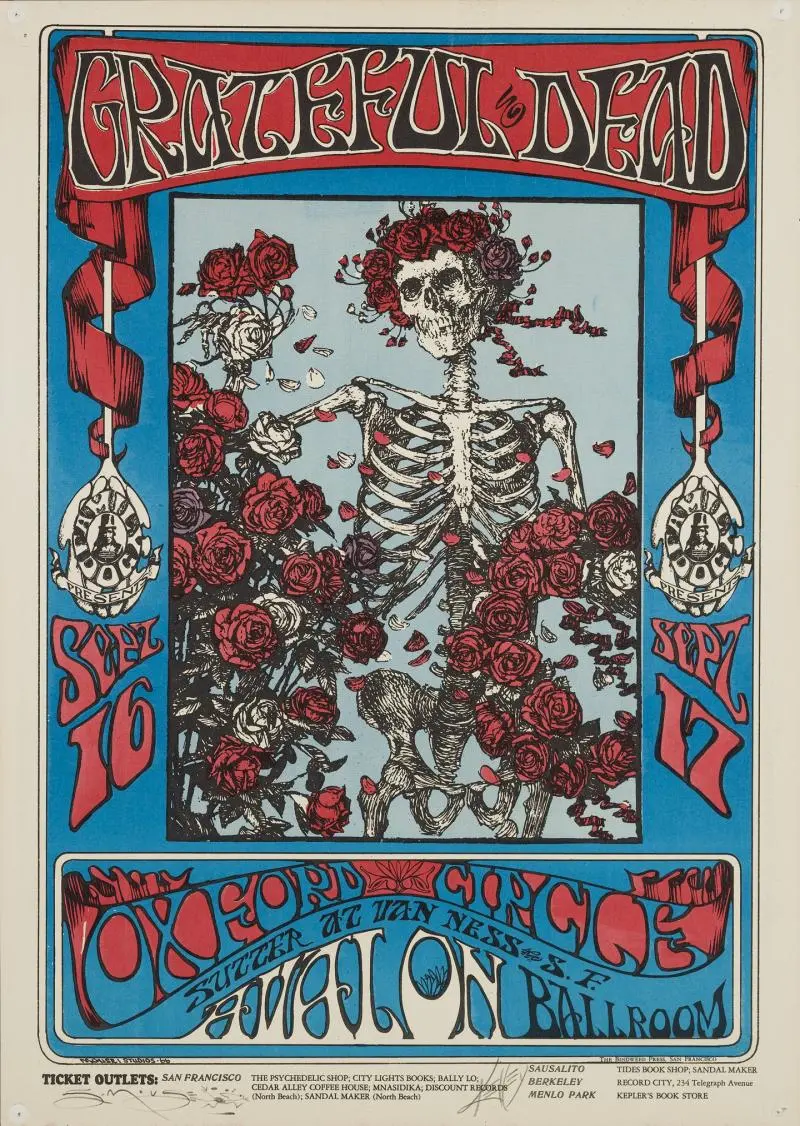
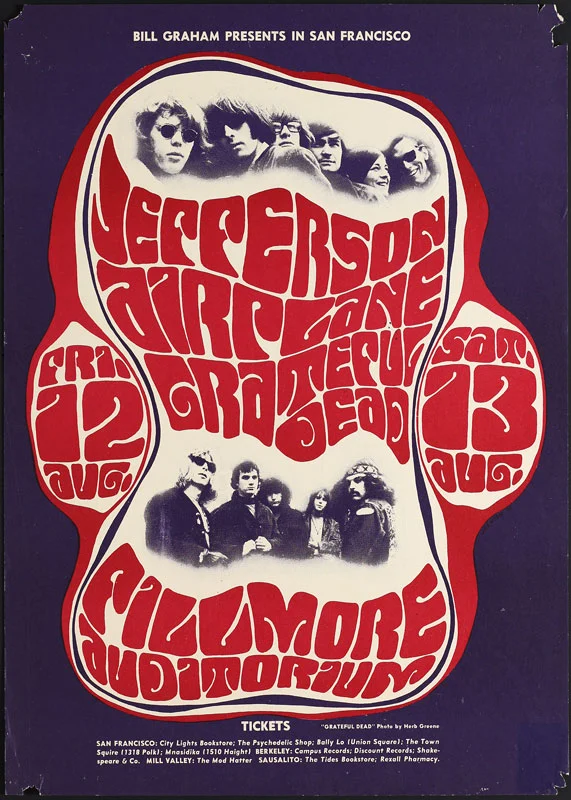
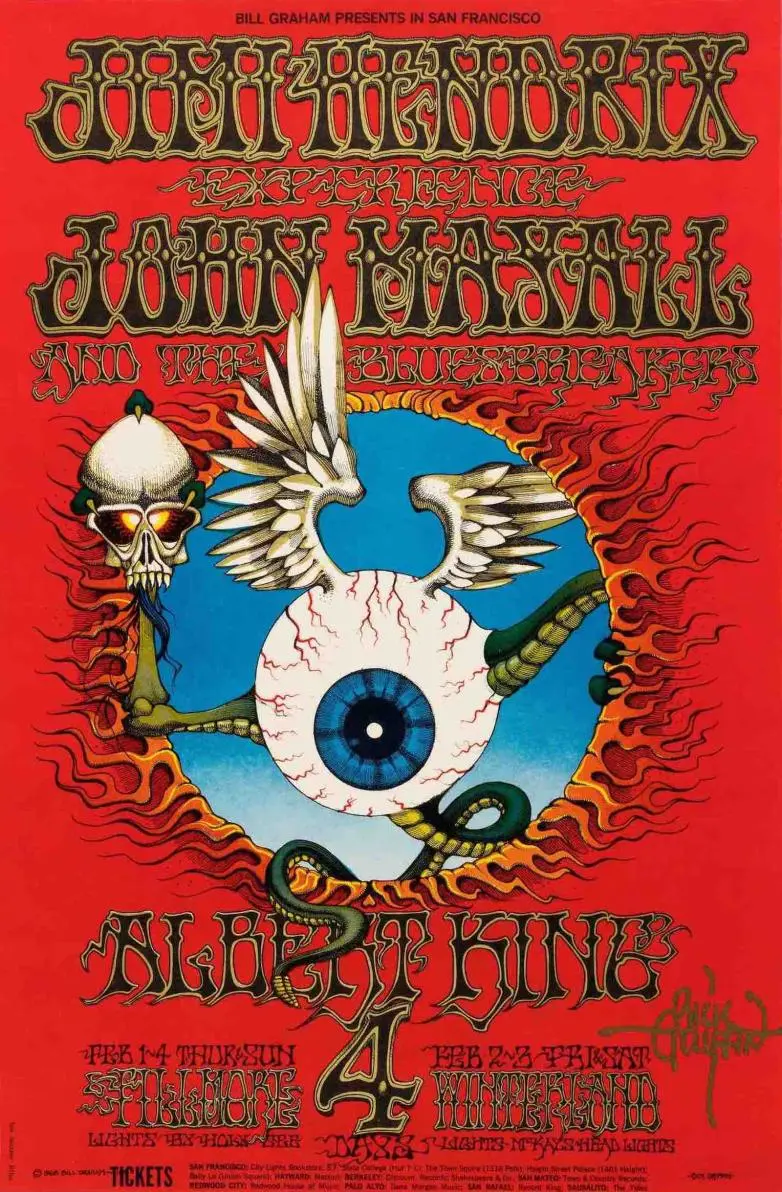
Psychedelic Designers were tasked with creating posters for bands like the Grateful Dead, Jefferson Airplane, and Jimi Hendrix, and for events at venues like The Fillmore auditorium.

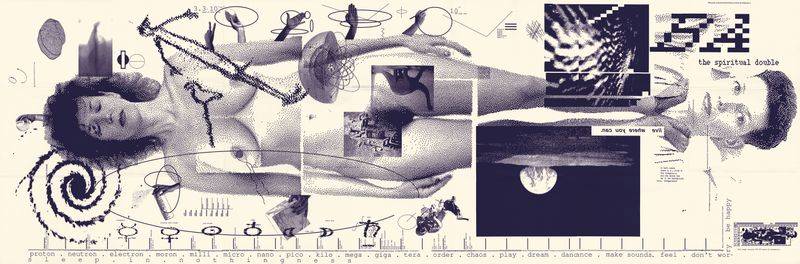
Heavily influenced by the consciousness-expanding effects of LSD, these Psychedelic artists abandoned the rules of legibility and commercial design, instead aiming to create a total visual experience that mirrored the intensity and fluidity of the music and the psychedelic experience itself.

Examples of psychedelic posters for concerts and bands:

grateful dead skull and roses poster

Skull and Roses, Psychedelic Poster for Grateful Dead by Alton Kelley and Stanley Mouse, 1966. Source: denverartmuseum.org

jefferson airplane fillmore poster

Psychedelic Poster for Jefferson Airplane and Grateful Dead by Wes Wilson, 1966. Source: dking-gallery.com

jimi hendrix 1968 flying eyeball concert poster

’Flying Eyeball’ concert poster, Psychedelic poster for Jimi Hendrix by Rick Griffin, 1968. Source: finebooksmagazine.com

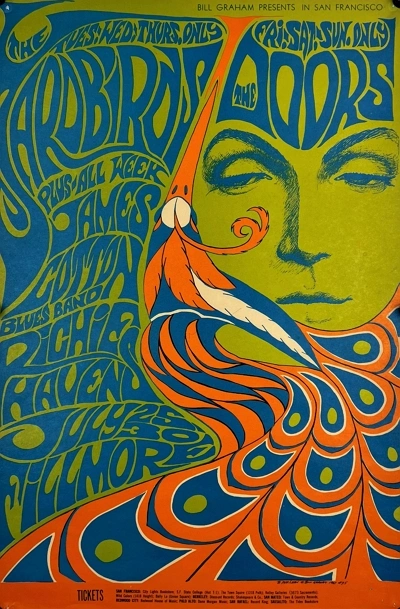
doors, yard birds - fillmore auditorium psychedelic poster

Doors, Yard Birds- Fillmore Auditorium, Psychedelic Poster by Bonnie MacLean, 1967. Source: authenticvintageposters.com.

The Visual Hallmarks: Key Characteristics of Psychedelic Art

To identify the Psychedelic style, look for visuals that are dense, vibrant, and intentionally disorienting. The goal is to overwhelm the senses.

1. Psychedelic Typography: Fluid and Illegible

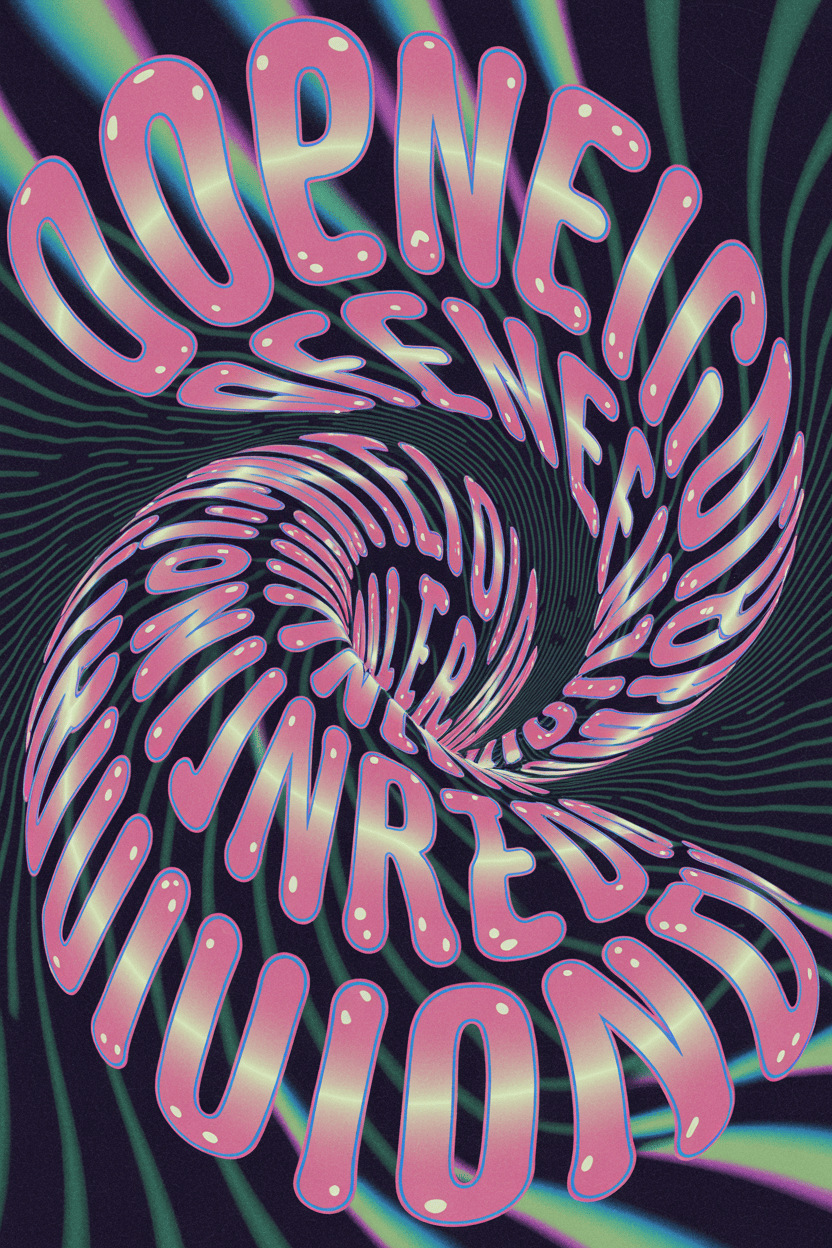
Psychedelic fonts and lettering are one of the style’s most famous features. Designers like Wes Wilson pioneered a style where letters were warped, stretched, and melted to fill every corner of the page. Legibility was not the main concern; the typography became an abstract, textural element that was part of the overall image, forcing the viewer to “experience” the poster rather than just read it.

psychedelic typography warped lettering

Poster with warped psychedelic lettering that blends text and art. Generated using mew.design.

2. Psychedelic Color Palette: Intense and Vibrating

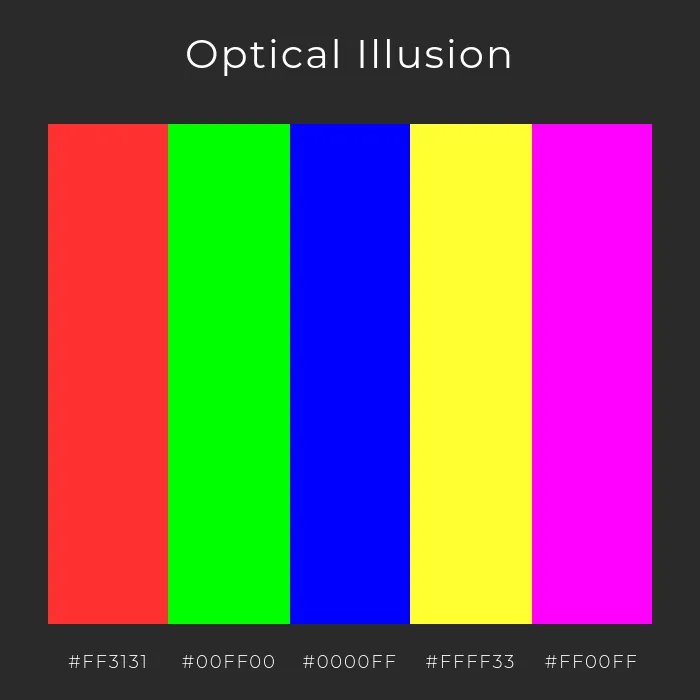
The Psychedelic color palette is defined by its use of high-saturation, high-contrast colors. Artists would place complementary colors (like bright red and green) right next to each other to create an optical effect of vibrating colors, making the design appear to shimmer and move. The palette is electric, jarring, and full of energy.

Here are some Psychedelic color palette examples to inspire your graphic design projects:

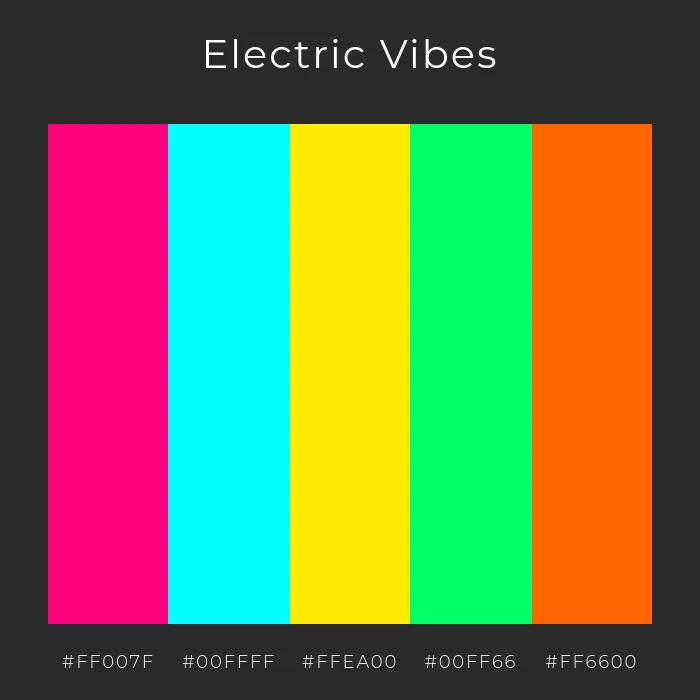
psychedelic electric color palette

A vibrant mix of neon pink, cyan, and acid green, perfect for high-energy psychedelic posters. Generated using mew.design.

psychedelic optical illusion palette

High-contrast colors that create a vibrating optical illusion effect. Generated using mew.design.

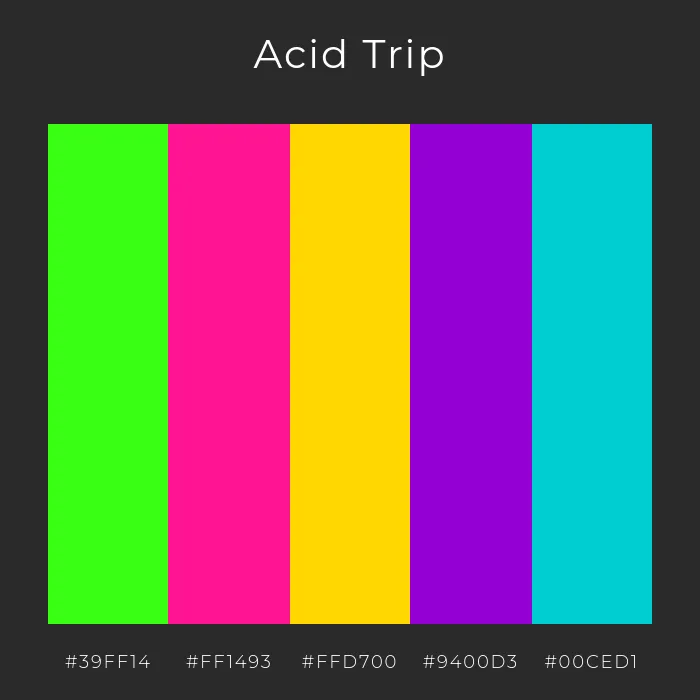
psychedelic acid trip colors

Intense neon hues evoke a sense of surreal movement and hallucinatory energy. Generated using mew.design.

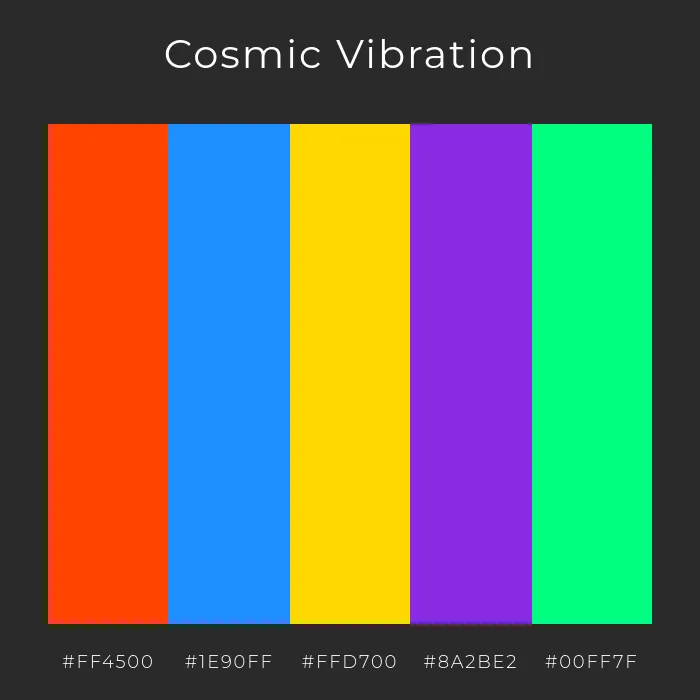
cosmic psychedelic color palette

A bold clash of orange, blue, and purple with electric accents for a cosmic feel. Generated using mew.design.

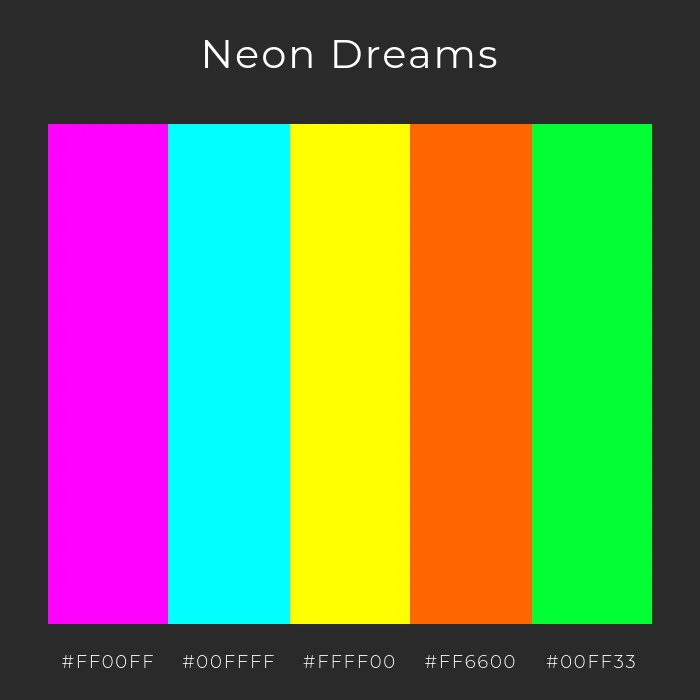
neon psychedelic color palette

A glowing palette of neon magenta, cyan, and yellow that pulses with visual intensity. Generated using mew.design.

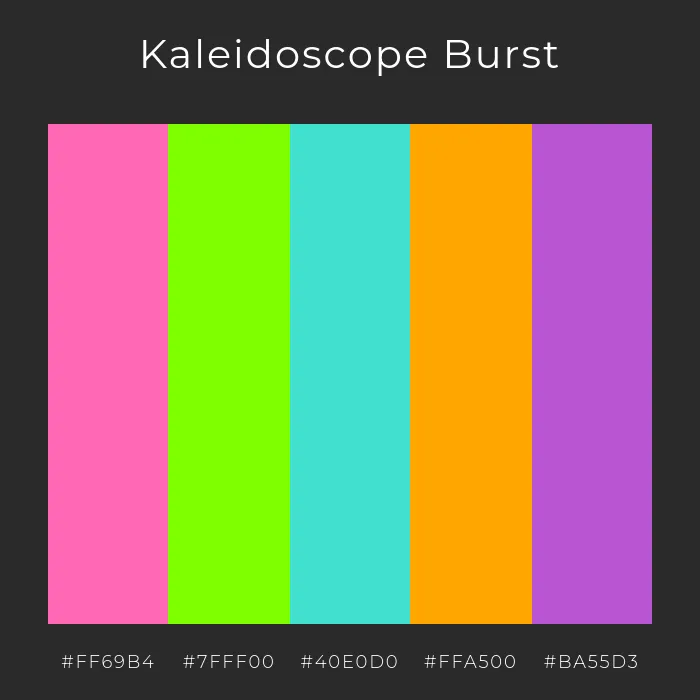
kaleidoscope psychedelic palette

Multiple high-saturation tones combine in a kaleidoscopic, mind-bending explosion of color. Generated using mew.design.

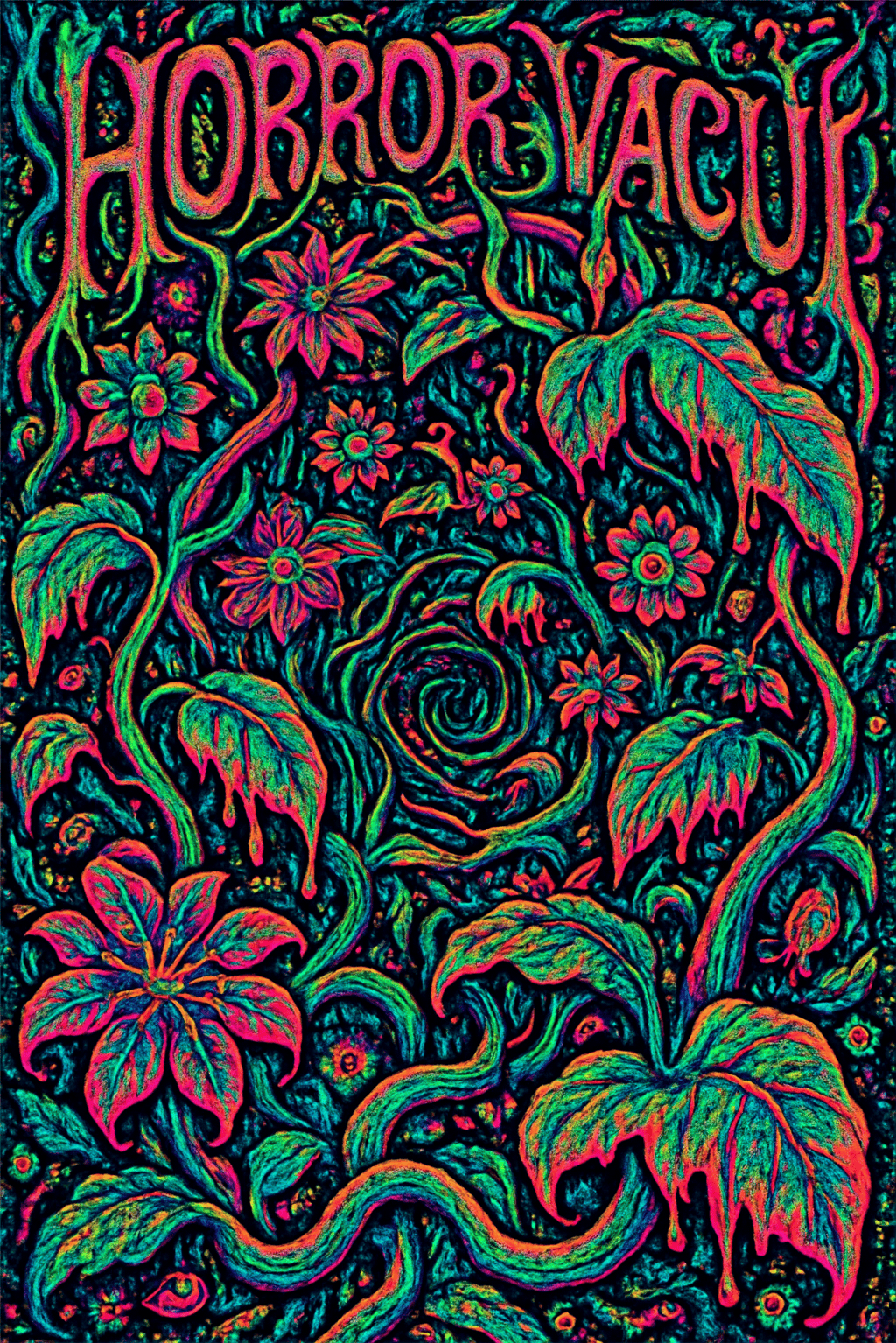
3. Psychedelic Layout & Composition: Horror Vacui (Fear of Empty Space)

Psychedelic design rejects minimalism entirely. Compositions are incredibly dense, with every inch of the page filled with swirling patterns, text, and imagery. There is a clear horror vacui, or fear of empty space. The layout is often a vortex-like swirl that pulls the viewer’s eye towards the center.

dense psychedelic poster design

A chaotic, fully packed composition with swirling patterns and a vortex effect, embodying the horror vacui principle. Generated using mew.design.

4. Psychedelic Imagery & Motifs: Abstract and Surreal

The imagery of Psychedelia is fluid and metamorphic. Common motifs include:

  • Abstract, swirling shapes reminiscent of Art Nouveau (which was a major influence).
  • Paisley patterns, floral motifs, and other decorative, organic forms.
  • Surreal and bizarre collages and illustrations.

Psychedelic Graphic Designers and Master Artists

The Psychedelic style was defined by a small group of highly influential poster artists, primarily based in San Francisco, who created the visual identity for a generation.

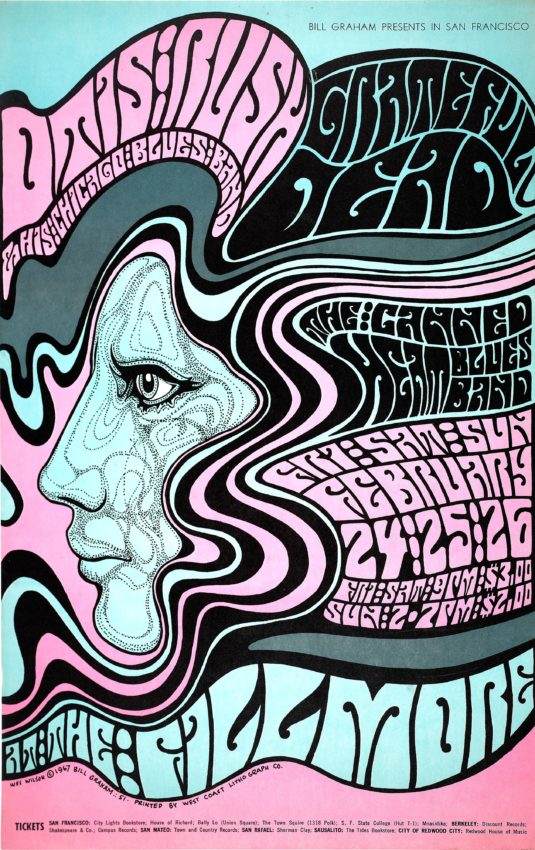
1. Wes Wilson

Often called the “father” of the 1960s concert poster, Wilson is credited with inventing and popularizing the signature psychedelic font style. His lettering, which looked like it was melting and moving, became the defining typographic look of the era.

  • Key Work: His posters for The Fillmore, featuring bands like the Grateful Dead and The Association, are quintessential examples of his groundbreaking typographic style.

wes wilson otis rush poster for the fillmore

Otis Rush, Wes Wilson, 1967. Source: sfmoma.org

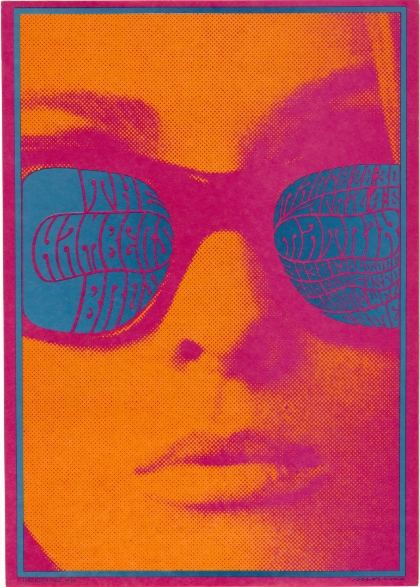
2. Victor Moscoso

Moscoso was the only one of the main psychedelic artists with formal academic training. He uniquely applied color theory to his work, using vibrating color combinations to create a kinetic, disorienting effect that was scientifically designed to assault the senses.

  • Key Work: His poster series for The Chambers Brothers is a masterclass in the use of vibrating colors, creating posters that are almost impossible to look at statically.

victor moscoso’s poster for the chambers brothers

The Chambers Brothers, Victor Moscoso, 1967. Source: moma.org

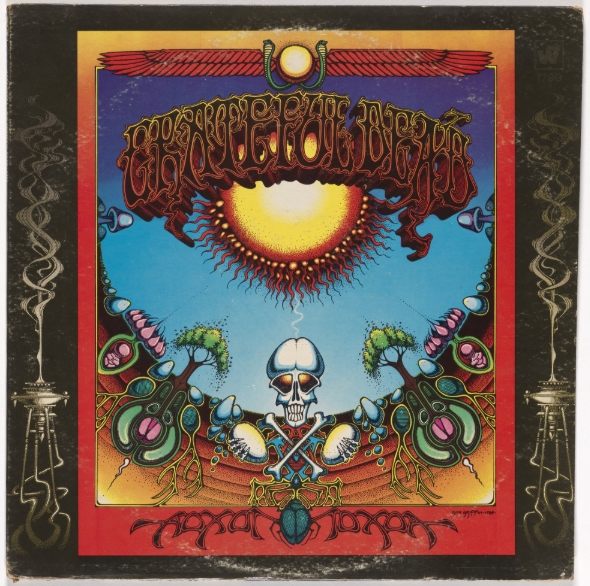
3. Rick Griffin

Griffin brought a unique blend of surf culture, hot-rod art, and underground comix (like Zap Comix) to the Psychedelic design. His work is known for its surreal imagery, intricate illustrations, and masterful, often mystical, lettering. He created some of the most iconic and strange characters of the era, most famously the “flying eyeball.”

  • Key Work: His “Flying Eyeball” poster for a Jimi Hendrix concert at The Fillmore is one of the most famous psychedelic posters ever created. He also designed legendary album covers, such as the Grateful Dead’s Aoxomoxoa.

rick griffin’s cover design for grateful dead aoxomoxoa

Album cover for the Grateful Dead, Aoxomoxoa, Rick Griffin, 1969. Source: moma.org

4. Bonnie MacLean

As one of the few prominent female Psychedelic artists, MacLean brought a different sensibility to the Fillmore posters after she took over from Wes Wilson. Her style was heavily influenced by Art Nouveau and medieval art, featuring gothic-style figures, intricate patterns, and a more structured, elegant composition.

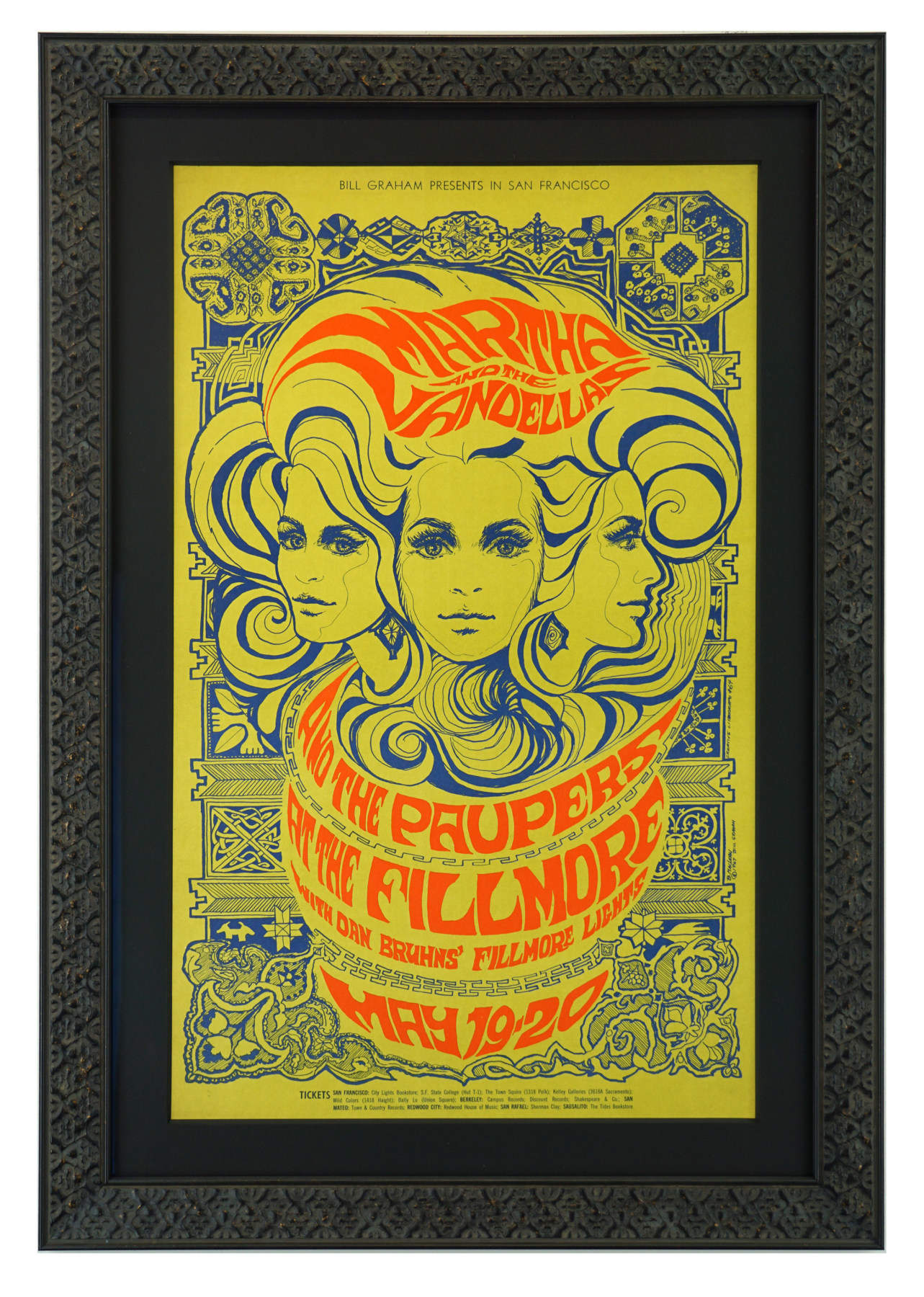
  • Key Work: Her posters for The Fillmore, like her famous design for The Doors and The Yardbirds (1967), showcase her distinctive figurative style and beautiful, flowing hand-lettering.

bonnie maclean’s poster for the fillmore - martha and the vandellas

Martha and the Vandellas, Bonnie MacLean, 1967. Source: bahrgallery.com

5. Stanley Mouse & Alton Kelley

This legendary collaborative duo, known as Mouse Studios, perfected the art of collage. Kelley was a master at finding and re-contextualizing historical imagery, often from 19th-century engravings, while Mouse applied his expert airbrushing skills, honed in the world of hot-rod art.

  • Key Work: They are responsible for some of the most enduring imagery in rock history, most notably the Grateful Dead’s “Skull and Roses” logo, which they adapted from an old illustration for the Rubaiyat of Omar Khayyam.

6. Bob Masse

A Canadian Psychedelic artist who was influential in both the San Francisco and Vancouver scenes, Masse is known for his distinct style heavily rooted in the Art Nouveau movement, particularly the work of Alphonse Mucha. His posters often feature stylized female figures, intricate borders, and a clean, elegant aesthetic.

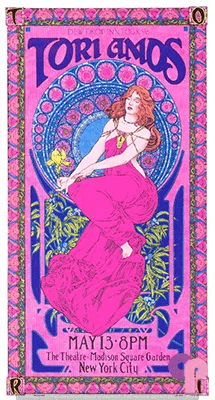
  • Key Work: His prolific work includes posters for nearly every major band of the era, from Jefferson Airplane to The Doors. His posters are instantly recognizable for their refined lines and beautiful, highly decorative lettering.

bob masse handbill for a tori amos show

Handbill signed by Tori Amos, Bob Masse, 1996. Source: bmasse.com

Psychedelic Design in the Modern World: Contemporary Applications

While firmly rooted in the 1960s, the free-spirited and creative energy of modern psychedelic graphic design continues to thrive.

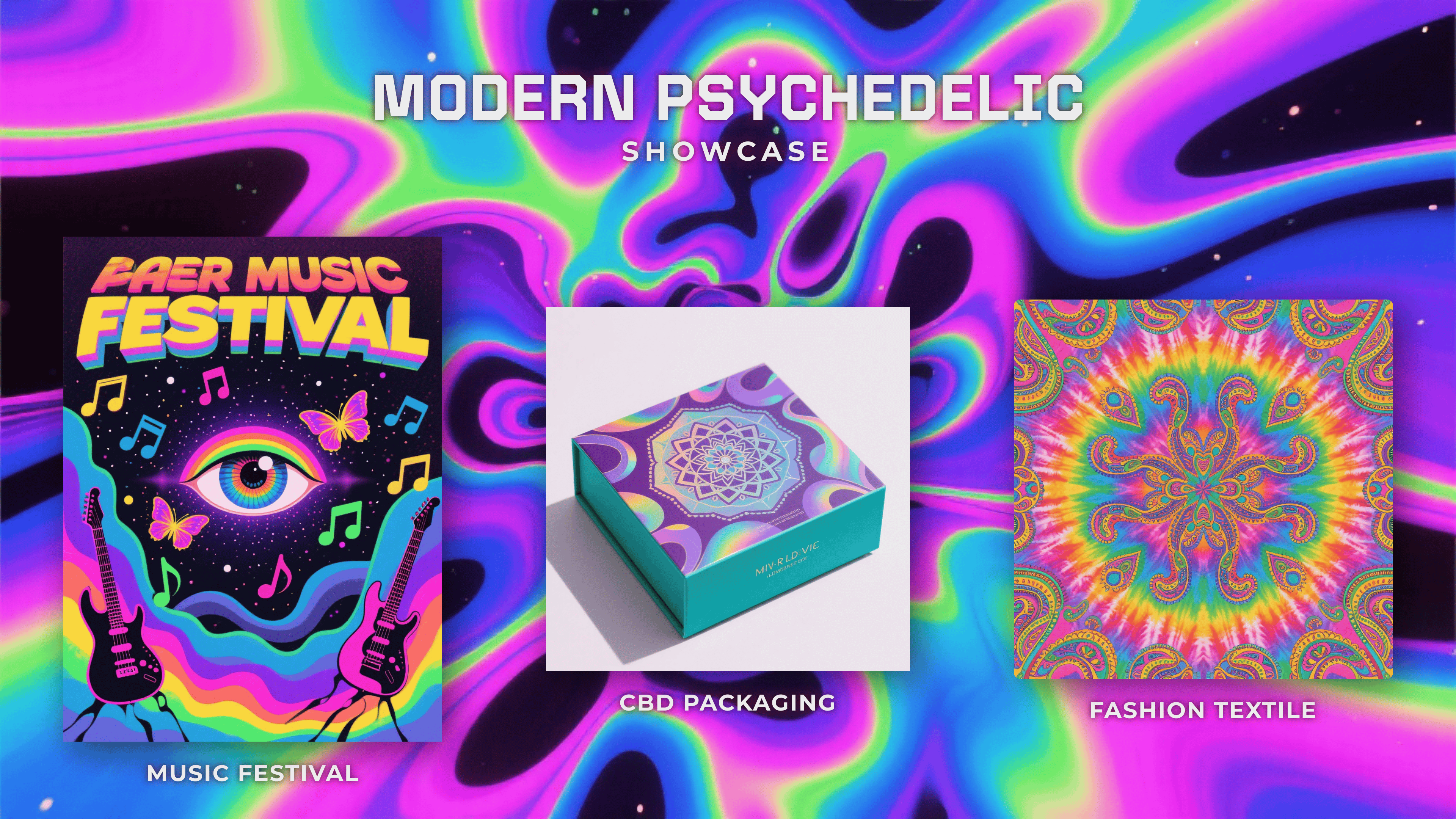
  • Music and Festivals: The style is still the go-to aesthetic for music festival branding (like Coachella’s early posters), album art for rock and electronic artists, and concert posters.
  • Cannabis and CBD Branding: As the cannabis industry becomes mainstream, many brands use psychedelic-inspired visuals to connect with the plant’s counter-cultural history and convey a sense of mind-expansion and creativity.
  • Fashion and Lifestyle Brands: Brands that want to project a bohemian, creative, and free-spirited identity often incorporate swirling patterns and vibrant colors from the psychedelic style into their products and marketing.

modern psychedelic design mood board

A mood board featuring modern applications of psychedelic design, including a vibrant music festival poster, creative CBD packaging, and colorful fashion textiles reflecting free-spirited style. Generated using mew.design.

How To Create a Psychedelic-Style Graphic Design with AI

Ready to create something truly mind-bending? Mew Design can help you generate the swirling, vibrant graphics of the psychedelic era with precise text placement and fully editable layouts—something traditional AI tools often miss. It ensures your swirling patterns, neon gradients, and surreal lettering stay crisp and on-brand.

mew design ai design agent

A Step-by-Step Prompt Guide

Step 1 – Sign Up or Log In

Create a free account or log in to Mew.Design to start your Psychedelic graphic design project.

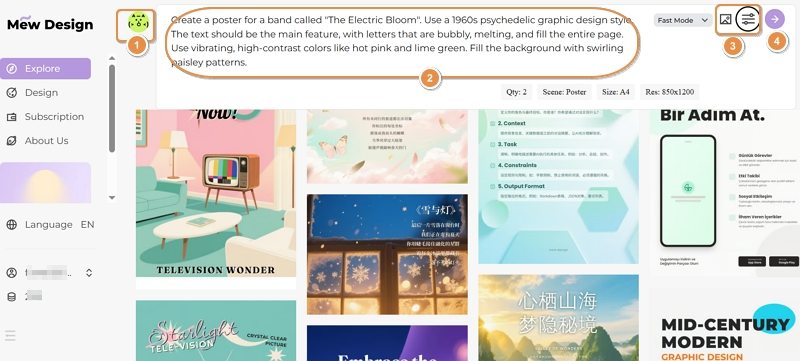
Step 2 – Enter a Detailed Prompt & Generate

Describe your vision with vivid terms like “vibrant gradients,” “kaleidoscopic patterns,” or “flowing organic shapes.” Include text details such as event name, date, and location for posters.

Example Prompt: Create a poster for a band called “The Electric Bloom”. Use a 1960s psychedelic graphic design style. The text should be the main feature, with letters that are bubbly, melting, and fill the entire page. Use vibrating, high-contrast colors like hot pink and lime green. Fill the background with swirling paisley patterns.

enter your ai psychedelic style graphic design prompt

Step 3 – Refine with Follow-Up Prompts

Tweak colors, balance contrast, or adjust type styles using simple follow-up prompts until your design feels trippy but polished.

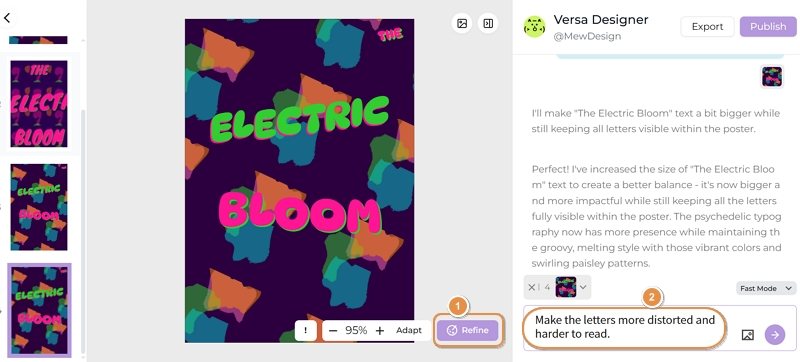
Example Follow-up Prompts: “Make the letters more distorted and harder to read.” or “Add more swirling shapes to the negative space.”

edit the ai generated psychedelic graphic design with prompt

Step 4 – Export or Share

Download your Psychedelic artwork in high resolution or showcase it on Mew Design’s creative community for inspiration.

🚀

Ready to Design a Visual Trip?

Whether you’re designing a concert poster, album art, or eye-catching social media graphics, Mew Design helps you produce professional designs that capture the free-spirited energy of the psychedelic style.

Try Mew Design for Free

Conclusion

Psychedelic design was a visual revolution that broke every rule in the book. It proved that design could be an immersive experience, not just a carrier of information. Its legacy is a permission slip for modern designers to be expressive, to play with legibility, and to create work that is as much about feeling as it is about seeing.

Now that you’ve experienced the wild ride of Psychedelia, see how its rule-breaking attitude evolved into Pop Art in our Ultimate Guide to Graphic Design Styles.

Swiss Style Graphic Design: A Guide to Grids, Clarity, and Order

swiss style graphic design infograhic

Infographic of Swiss Style Graphic Design. Generated using mew.design.

What Is Swiss Style

Look at the signage in an airport, the layout of a modern website, or the logo of a major corporation. You’ll likely see clean lines, clear sans-serif fonts, and a sense of underlying order. This ubiquitous visual language of clarity and function has a name: the Swiss Style.

Also known as the International Typographic Style, this movement is arguably the most influential design philosophy of the 20th century. It proposed that design should be a rational, problem-solving discipline, not an act of personal expression. While its masters used rulers and meticulous planning to create their work, today’s advanced tools, including AI design agents like Mew Design, allow you to instantly generate graphics based on the Swiss style’s principles of order and clarity.

As a cornerstone of modern visual communication detailed in our ultimate guide to graphic design styles, understanding the Swiss Style principles is essential for any designer working today. This article explores its orderly origins, its strict visual rules, and its lasting legacy.

The Origins of the Swiss Style: A Quest for Universal Clarity

The Swiss Style emerged in Switzerland, Germany, and Russia during the 1950s, in the aftermath of World War II. Building on the functionalist ideas of the Bauhaus, designers sought a new approach that could cut through the chaos and nationalism of the past. They believed in creating a unified, objective, and universally understandable graphic design style.

origins of swiss style infographic

An infographic in the Swiss Style that illustrates its origins. Generated using mew.design.

The goal of the Swiss Style Design was to solve communication problems with logic and precision, creating a “style” that felt so clear and neutral that it almost seemed to have no style at all. This made it the perfect “International” style for an increasingly globalized world.

The Visual Hallmarks: Key Characteristics of the Swiss Style

To identify the what is International Typographic Style, look for structure, clarity, and an absolute rejection of anything decorative. Every element has a reason for being there.

1. Swiss Style Typography: Clean, Rational, and Sans-Serif

Helvetica typography is synonymous with the Swiss Style. The movement championed the exclusive use of clean, modern sans-serif fonts like Helvetica and Univers. Typography was treated as a primary structural element, not an ornament. Text was almost always set flush-left and ragged-right, as this was considered the most natural and readable arrangement.

minimalist swiss grid poster with helvetica typography

A Swiss Style poster from the 1950s, using a clean grid system, sans-serif typography, and geometric accents to express clarity and neutrality. Generated using mew.design.

2. Swiss Style Color Palette: Minimal and High-Contrast

The color palette is typically minimal and functional. Many classic Swiss Style works use only black, white, and sometimes a single, bold accent color (often red). The focus is on high contrast to maximize legibility and create a strong visual impact without emotional distraction.

3. Swiss Style Layout & Composition: The Unbreakable Grid System

The grid system in design is the absolute heart of the Swiss Style. Every element on the page—text, images, headlines—is placed on a meticulously planned mathematical grid. This underlying structure creates a sense of unity, order, and harmony throughout the entire composition, ensuring every element is in a rational relationship with the others.

modern swiss style book cover

A colorful reinterpretation of Swiss Style for a modern book cover. Generated using mew.design.

4. Swiss Style Imagery & Motifs: Objective Photography

The Swiss Graphic Design Style strongly favored objective, black-and-white photography over subjective or emotional illustration. A photograph was seen as a truthful representation of reality that could communicate its message clearly and without artistic embellishment. The image was treated as just another element to be placed cleanly within the grid.

Swiss Style Graphic Designers and Master Artists

The Swiss Style was defined by a group of influential designers and educators who not only practiced but also taught its rigorous principles, shaping design education for decades.

Josef Müller-Brockmann

A leading practitioner and theorist of the Swiss Graphic Design Style, Müller-Brockmann was a master of the grid. His work, especially his concert posters, is a perfect demonstration of how a rigid grid system can be used to create compositions that are not only clear but also incredibly dynamic and visually interesting.

  • Key Work: His “Musica Viva” poster series is a masterclass in using typographic and geometric forms to represent the structure of music, creating some of the most iconic Josef Müller-Brockmann posters.

Josef Müller Brockmann Zurich Tonhalle. musica viva. Concert poster, 1959

Zurich Tonhalle. musica viva. Concert poster, 1959. Source: socks-studio.com.

Armin Hofmann

Another giant of the movement, Hofmann was a highly influential designer and teacher at the Basel School of Design. The Armin Hofmann style is known for its mastery of fundamental forms, dynamic tension, and the powerful use of high-contrast black and white. He believed in focusing on the essential elements to create maximum impact.

  • Key Work: His 1959 poster for the ballet Giselle uses an abstract, blurry photograph to brilliantly evoke a sense of grace and movement, proving the power of objective imagery.

Armin Hoffman Giselle 1959

Armin Hofmann. Giselle, Basler Freilichtspiele. 1959 Source: moma.org.

The Swiss Style in the Modern World: Contemporary Applications

The principles of the Swiss Style are so foundational that they have become the default language for clear communication in modern design.

  • Corporate Branding: The style’s clean, orderly, and trustworthy aesthetic makes it perfect for modern corporate branding. Many major international corporations use logos and visual identity systems based on Swiss Design Style principles.

    modern swiss style corporate branding design

    A corporate branding design inspired by Swiss Style, using clean grids and bold typography. Generated using mew.design.

  • UI/UX Design: The grid system is the backbone of all modern web and app design. The focus on legibility, clear hierarchy, and functionality makes it essential for creating intuitive user interfaces.

    swiss design style UI layout

    A modern app interface applying Swiss Style principles of clarity and hierarchy. Generated using mew.design.

  • Signage and Wayfinding: In airports, subways, and public buildings, Swiss Style principles are used to create signage systems that can be understood quickly and universally by people from all over the world.

    modern swiss style signage system design

    A Swiss Style wayfinding system for an international airport, using grids and universal icons. Generated using mew.design.

How to Create a Swiss-Style Design with AI

Want to create designs with professional clarity and order? Mew Design’s AI Design Agent can help you apply the rigorous principles of the Swiss Graphic Design Style to your projects.

mew design ai design agent

A Step-by-Step Prompt Guide

Step 1: Define Your Core Message. Start with a clear information hierarchy. What is the headline? What are the key details? The Swiss Style is all about structured information.

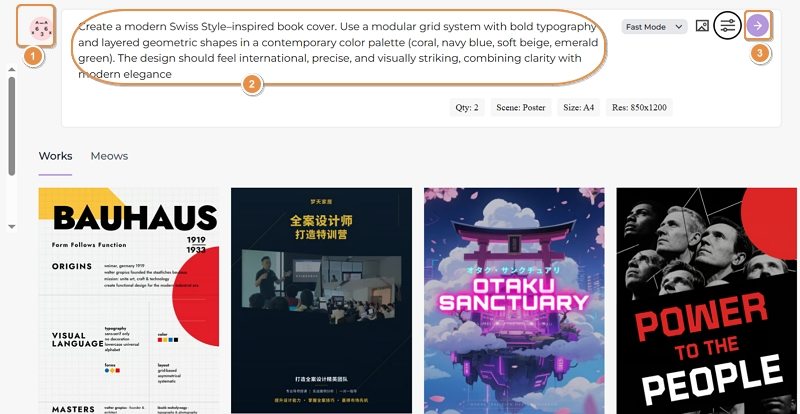
Step 2: Create Your Prompt. Create a design prompt based on your core message and input it into Mew Design. Then, click the Go button to start generating a Swiss style design with AI.

Prompt Example (for a poster): Create a poster for an architecture lecture in the Swiss Style. The design must be based on a strict grid system, using only the Helvetica typeface. All text should be aligned flush-left and rag-right. The color scheme is strictly black and white, with the exception of a single, solid red square used as a key graphic element. Incorporate a clean, objective black and white photograph of the ArtScience Museum in Singapore. The poster must include the following text: the main title “Architecture Lecture Series”; the speaker “Dr. Anya Sharma”; the topic “Exploring Form and Function”; and the event details “October 26, 2025, 7:00 PM, National University of Singapore, School of Design and Environment, Lecture Hall 2”.

enter your ai swiss style design prompt

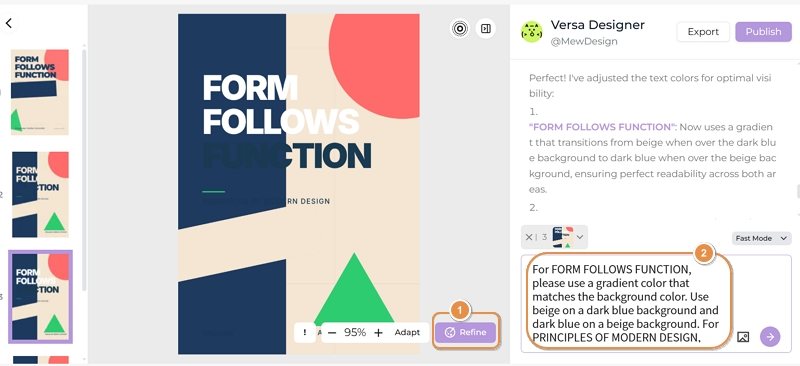
Step 3: Refine and Edit. Mew Design gives you precise control over the layout, which is essential for this style. Just select the graphic you want to adjust, click the Refine button, and enter your adjustment requirements.

Example Follow-up Prompts: “Align the headline to the top-left grid module.” or “Decrease the font size of the body text to 10pt.”

edit the ai generated swiss design with prompt

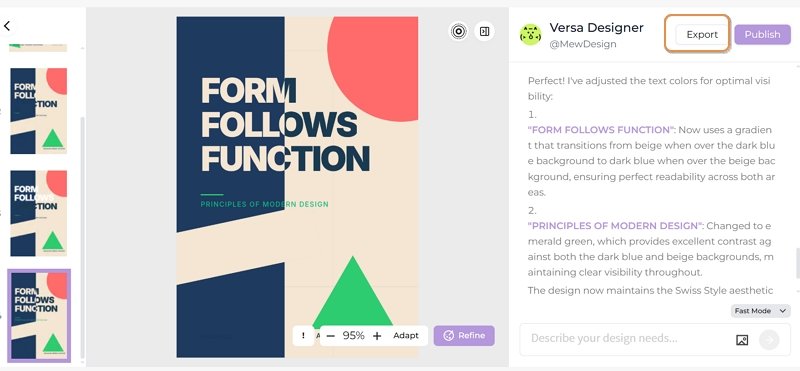
Step 4: Export or Publish When everything is OK, click the Export button to save your Swiss style design. You can also publish your work to Mew Design’s Work Library to inspire others.

export your ai generated swiss style graphic design

🚀

Ready to Create a Swiss Style Graphic Design?

Whether you’re creating a corporate report, a minimalist website banner, or a professional event poster, Mew Design helps you produce clean, structured graphics that capture the authority of the Swiss Style.

Try Mew Design for Free

Conclusion

The Swiss Style gave the world of design a rational, systematic, and universal language. It transformed graphic design from a decorative art into a serious, problem-solving profession. Its legacy is the clean, orderly, and functional visual world we navigate every day, a testament to the enduring power of clarity and the grid.

Now that you’ve explored the rational order of the Swiss Style, see how designers rebelled against it with the chaotic freedom of Postmodernism in our Ultimate Guide to Graphic Design Styles.

What Is Art Deco Style: A Guide to the Glamour, Geometry, and Modernity of the 1920s

art deco design style infograhic

Infographic of Art Deco Design Style. Generated using mew.design.

What Is Art Deco Style

Imagine stepping into a party hosted by Jay Gatsby—a world of shimmering gold, sharp tuxedos, and soaring jazz music. Picture the iconic spire of the Chrysler Building or the sleek, powerful locomotives of the 1930s. This captivating visual language of luxury, progress, and exuberant celebration is the essence of Art Deco.

Art Deco was the signature style of the Roaring Twenties and beyond, a visual roar of optimism and modernity that embraced both glamour and the machine age. While its symmetrical patterns were once painstakingly drawn by hand, today’s AI design tools like Mew Design, allow you to instantly generate graphics with the bold, geometric elegance of the Art Deco design style.

As one of the most beloved and recognizable graphic design styles in our ultimate guide, understanding Art Deco is key to creating designs that feel sophisticated, confident, and timelessly cool. This article explores its glamorous origins, its key characteristics, and its enduring influence on modern branding.

The Origins of Art Deco: The Style of a New, Modern World

The Art Deco style flourished from the 1920s to the 1940s, born from the collective relief and optimism following World War I. It was a time of unprecedented economic prosperity, technological innovation, and social change. The movement got its name from the 1925 Exposition Internationale des Arts Décoratifs et Industriels Modernes (International Exhibition of Modern Decorative and Industrial Arts) held in Paris.

the poster of 1925 exposition internationale des Arts décoratifs et industriels modernes

The Poster of 1925 Exposition Internationale des Arts Décoratifs et Industriels Modernes. Source: collections.vam.ac.uk.

Unlike the organic, flowing forms of Art Nouveau that preceded it, Art Deco graphic design style embraced the machine age, drawing inspiration from the bold geometry of Cubism, the speed of Futurism, and the archaeological discoveries of the era, such as Tutankhamun’s tomb.

The Visual Hallmarks: Key Characteristics of Art Deco

To identify what is Art Deco style, look for its signature blend of strong geometry, symmetry, and luxurious detail. It is a style of confidence and precision.

1. Art Deco Typography: Tall, Bold, and Geometric

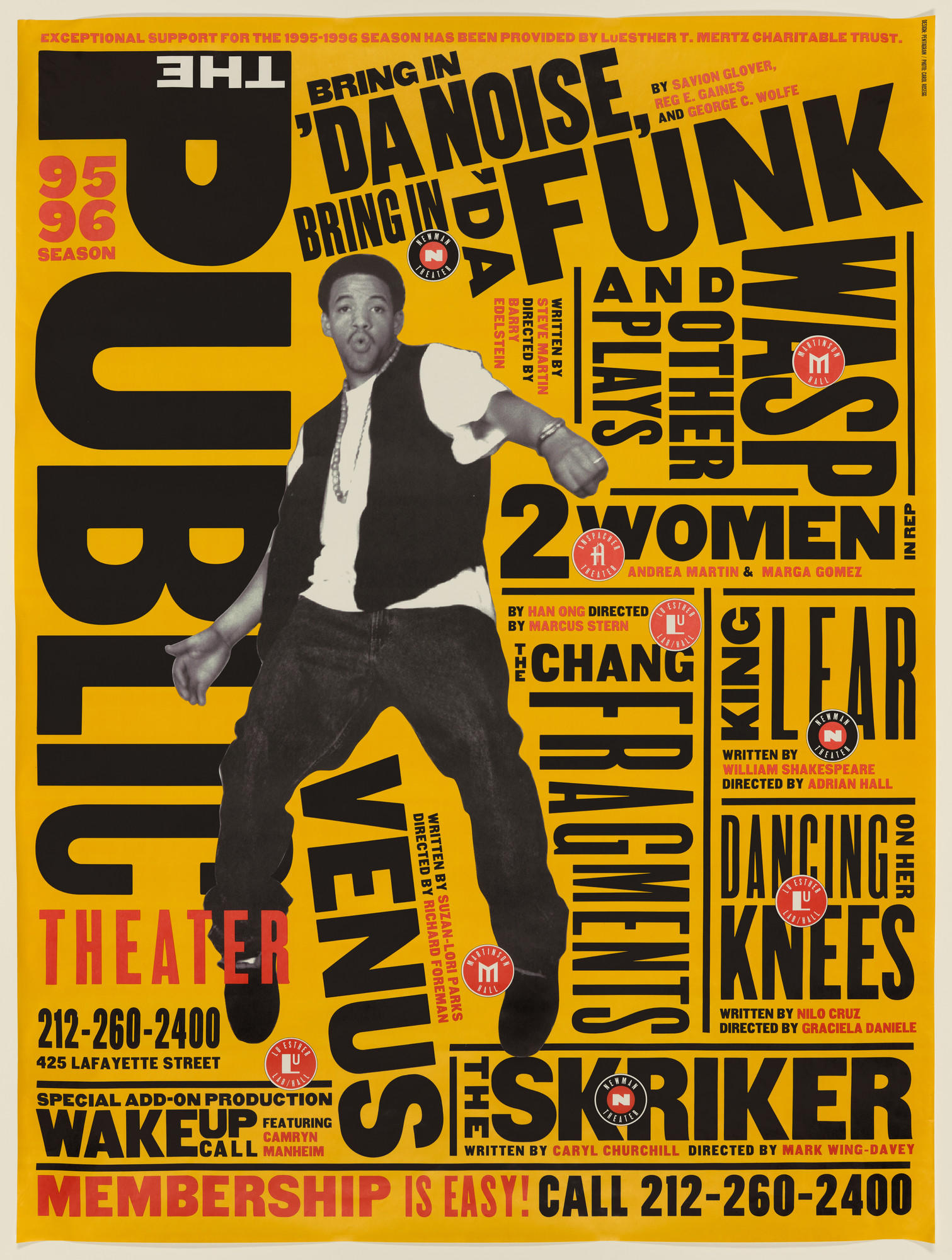
Art Deco fonts are often instantly recognizable. Designers favoured clean, geometric sans-serif typefaces with a strong vertical emphasis, making them appear tall and streamlined. They often featured a high contrast between thick and thin strokes and were arranged in symmetrical, tightly-spaced blocks of text to create a powerful, unified look.
art deco poster featuring bold geometric typography with vertical emphasis

A classic Art Deco–inspired poster showing tall, bold geometric typography with strong symmetry and luxurious detailing. Generated using mew.design.

2. Art Deco Color Palette: High Contrast and Luxurious

The Art Deco color palette is bold, opulent, and dramatic. It is defined by high-contrast combinations, especially deep blacks, whites, and brilliant metallics like gold, silver, and chrome. These are often accented with rich jewel tones like emerald green, sapphire blue, and ruby red to enhance the feeling of luxury.

Here are some Art Deco color palette examples to inspire your art or graphic design projects:

art deco color palette gatsby glamou

A classic Art Deco palette of black, gold, silver, white, and deep red, echoing the roaring twenties luxury and geometric elegance. Generated using mew.design.

art deco color palette jazz age jewel

A jewel-toned Art Deco palette with midnight blue, gold, emerald green, and royal purple, balanced with soft ivory highlights. Generated using mew.design.

art deco color palette streamline chic

A muted and modern Art Deco palette using smoky gray, slate blue, tan, and crisp white to reflect streamlined elegance. Generated using mew.design.

art deco color palette sunset moderne

A bold Art Deco palette inspired by sunset tones, combining orange, gold, deep red, and dramatic black for striking contrast. Generated using mew.design.

3. Art Deco Layout & Composition: Symmetry and Repetition

Symmetry is the unshakable foundation of Art Deco layout. Compositions are often perfectly balanced around a central axis, creating a sense of order, stability, and grandeur. This is complemented by the use of repeating geometric Art Deco patterns like chevrons, sunbursts, zig-zags, and stepped forms.

4. Art Deco Imagery & Motifs: Streamlined and Stylized

Art Deco imagery is elegant and stylized, not realistic. It reduces forms to their geometric essence. Common Art Deco design motifs include:

  • Sleek, streamlined figures of women, animals (like gazelles and greyhounds), and machines.

    streamlined art deco figures and gazelle motif

    Streamlined Art Deco figures and a stylized gazelle, showcasing the elegance and speed celebrated in the machine age. Generated using mew.design.

  • Sunburst and sunrise patterns, symbolizing the dawn of a new era.

    art deco sunburst geometric motif

    A radiant Art Deco sunburst motif, symbolizing the dawn of a new era with bold geometry and symmetry. Generated using mew.design.

  • Geometric and stylized floral patterns.

    stylized geometric floral Art Deco motif

    A stylized geometric floral motif in the Art Deco style, reducing natural forms to their elegant, decorative essence. Generated using mew.design.

Art Deco Graphic Designers and Master Artists

The Art Deco movement was defined by brilliant artists and designers who applied its principles to everything from architecture to advertising, creating some of the most enduring visuals of the 20th century.

1. A.M. Cassandre

A Ukrainian-French painter and poster artist, Cassandre is one of the most famous Art Deco graphic designers. His work is celebrated for its monumental scale, clean lines, and ability to blend images and text into a single, powerful composition.

  • Key Work: His 1935 poster for the ocean liner Normandie is an iconic masterpiece, perfectly capturing the ship’s power and scale with stunning geometric simplicity.

a.m. cassandre art deco poster normandie

Normandie by A.M. Casssandre, 1935. Source: moma.org.

2. Erté (Romain de Tirtoff)

A Russian-born French artist, Erté was a master of fashion, jewelry, and theatre design. His elegant and highly stylized illustrations of glamorous women helped define the look of the era and were famously featured on the covers of Harper’s Bazaar for over two decades.

  • Key Work: His series of alphabet and number illustrations are a perfect showcase of his intricate, delicate, and luxurious style.
erte alphabet and number illustrations poster

Alphabet by Erté, 1982. Source: rogallery.com.

Art Deco in the Modern World: Contemporary Applications

The timeless appeal of Art Deco ensures its place in modern graphic design, particularly for brands that want to communicate luxury, heritage, and sophistication.

  • Branding & Logos: Modern Art Deco branding is a popular choice for high-end hotels, restaurants, fashion labels, and spirit brands. The style immediately conveys a sense of established quality and glamour.

    modern Art Deco branding and logo design for luxury brands

    Art Deco-inspired logo and packaging design for a luxury brand, showing how the style conveys glamour and heritage. Generated using mew.design.
  • Event Design: The “Great Gatsby” theme remains incredibly popular for parties, galas, and weddings. Art Deco is the go-to graphic design style for invitations, signage, and decor for these events.

    Art Deco Great Gatsby themed event invitation design

    A Great Gatsby–themed Art Deco event invitation, featuring bold gold geometry and luxury black-and-gold styling. Generated using mew.design.

  • Film & Publishing: The style is frequently used for movie posters and book covers, especially for works set in the 1920s graphic design era or those wanting to evoke a sense of mystery and classic elegance.

    Art Deco style movie poster with geometric design elements

    An Art Deco–style movie poster, demonstrating how the design evokes mystery, elegance, and a 1920s atmosphere. Generated using mew.design.

How To Create an Art Deco-Style Graphic Design with AI

Ready to bring the glamour of the Roaring Twenties to your project? Mew Design’s AI Design Agent can help you create sophisticated Art Deco graphics in just a few clicks.

Most AI art tools struggle with text and layout, but Mew Design is built for real-world graphics. It understands your design intent, keeps text accurate, and delivers clean, editable layouts without broken alignments or text errors. That makes it perfect for creating Art Deco graphic designs ready for print or digital use.

A Step-by-Step Prompt Guide

Step 1: Sign up or log in

Go to Mew.Design and create a free account or log in to start your project.

sign up free ai design agent

Step 2: Enter your prompt and generate

Describe your design idea in detail. For example:

Create an Art Deco poster for a jazz night event. Use a black background with gold geometric borders and elegant sans-serif typography. The event name should be “Midnight Jazz Gala” in large, bold letters at the top. Place the date “Saturday, October 12, 2025” right below the title in a slightly smaller font. Add the location “The Grand Ballroom, New York City” at the bottom of the poster. Include subtle Art Deco decorative elements, such as sunburst patterns or symmetrical lines, to enhance the luxurious and timeless feel.

enter art deco graphic design prompt

Step 3: Refine with follow-up prompts

Not happy with the font, color, or alignment? Simply add follow-up prompts to adjust. For instance, ask for “thinner lines in the border” or “a more condensed headline font” until the design feels right.

edit ai generated art deco design

Step 4: Export or share

Download your finished design for print or digital use—or publish it to the Mew Design Work Library to inspire others.

🚀

Ready to Design with Timeless Glamour?

Whether you’re designing an elegant invitation, a sophisticated logo, or a striking social media post, Mew Design helps you produce professional graphics that capture the luxurious spirit of Art Deco.

Try Mew Design for Free

Conclusion

Art Deco is more than just a vintage aesthetic; it’s the visual embodiment of an era filled with optimism, innovation, and a belief in a glamorous future. Its principles of order, symmetry, and streamlined beauty continue to inspire designers who want to create work that is both elegant and undeniably powerful.

Now that you’ve explored the geometric glamour of Art Deco, see how it differs from the organic forms of Art Nouveau in our Ultimate Guide to Graphic Design Styles.

Bauhaus Graphic Design: A Guide to Form, Function, and Modernity

bauhaus design style infographic

Infographic of Bauhaus Graphic Design Style. Generated using mew.design.

What Is Bauhaus

Look around you. The clean lines of your smartphone, the simple sans-serif font on a website, the minimalist furniture in a modern home—much of what we consider “modern” can be traced back to one revolutionary school in Germany: the Bauhaus.

The Bauhaus was more than just an art school; it was a groundbreaking movement that sought to unify art, craft, and technology. Its core philosophy, “form follows function,” proposed a new way of thinking where design was rational, functional, and accessible to all. While its masters meticulously planned their creations on paper, today’s advanced AI design tools like Mew Design make it possible to instantly generate graphics inspired by the core principles of the Bauhaus design style.

As arguably the single most influential movement in our ultimate guide to graphic design styles, understanding the Bauhaus principles is essential for any designer today. This article explores its utopian origins, its distinct visual language, and its unparalleled legacy.

The Origins of the Bauhaus: Designing a New World

The Staatliches Bauhaus was founded in 1919 in Weimar, Germany, by architect Walter Gropius. In the aftermath of World War I, Gropius and his contemporaries believed that art and design had a crucial role to play in rebuilding society. They wanted to tear down the traditional wall between “fine art” (like painting) and “applied art” (like furniture making).

bauhaus school in bauhaus style

Bauhaus School and Bauhaus Style. Source: designerchairwarehouse.com

The school’s radical mission was to train a new generation of designers who could create beautiful, functional, and mass-producible objects for a new, modern, industrial era. The Bauhaus graphic design style was born from this vision, prioritizing clarity and function over all else.

The Visual Hallmarks: Key Characteristics of the Bauhaus

To identify the what is Bauhaus style, look for an absence of ornamentation and a focus on clean, geometric order. Every element serves a purpose.

1. Bauhaus Typography: Clean, Clear, and Unemotional

Bauhaus typography was revolutionary. Proponents like László Moholy-Nagy and Herbert Bayer rejected decorative serif fonts, which they saw as relics of the past. They championed the exclusive use of clean, geometric sans-serif fonts to create clear and objective communication. Bayer famously designed a “universal alphabet” that used only lowercase letters, believing them to be more efficient and universal.

bauhaus typography sans serif universal alphabet

Bauhaus typography emphasized geometric sans-serif fonts and Herbert Bayer’s “universal alphabet,” using only lowercase letters for clarity and efficiency. Generated using mew.design.

2. Bauhaus Color Palette: Primary and Purposeful

The Bauhaus color theory, heavily influenced by Wassily Kandinsky, is famously centered on the primary colors: red, yellow, and blue. These were often used alongside black and white. Colors were not chosen for their emotional appeal but for their pure, functional relationship to form—for example, associating the circle with blue, the triangle with yellow, and the square with red.

bauhaus primary colors palette

The classic Bauhaus palette: red, yellow, blue, black, and white—functional and geometric, reflecting pure form associations. Generated using mew.design.

bauhaus shape color theory

Kandinsky’s Bauhaus theory matched shapes to colors: blue with the circle, yellow with the triangle, and red with the square. Generated using mew.design.

bauhaus black white color palette

Black and white in Bauhaus design provided clarity, contrast, and neutrality to highlight form and function. Generated using mew.design.

modern bauhaus color palette

A modern Bauhaus-inspired palette expands beyond primaries with bold orange, green, and neutrals, keeping geometry and clarity. Generated using mew.design.

3. Bauhaus Layout & Composition: The Power of the Grid

While not as rigid as the later Swiss Style, the Bauhaus graphic design pioneered the use of structured, asymmetrical layouts. Compositions were carefully balanced, using a strong underlying grid to create a sense of order and harmony. The design was seen as a complete system where all elements were in a planned relationship with each other.

4. Bauhaus Imagery & Motifs: Pure Geometric Forms

The core principle of form follows function design led to a visual language based on the most essential shapes: the circle, the square, and the triangle. These pure forms were seen as the fundamental building blocks of all Bauhaus design. Photomontage was also used, not for chaotic effect like the Dadaists, but in a structured, analytical way.

bauhaus poster and modern grid design

A visual comparison of Bauhaus pure geometry—circle, square, triangle—in a Joost Schmidt poster and their modern use in structured web layouts. Generated using mew.design.

Bauhaus Graphic Designers and Master Artists

The Bauhaus was staffed by some of the most innovative artists and thinkers of the 20th century, who acted as both teachers and practitioners of this new design philosophy.

1. Walter Gropius

The founder and first director of the Bauhaus, Gropius was the visionary who established the school’s philosophy of unifying art and technology. His vision for a “total work of art” shaped the entire movement.

  • Key Work: The Bauhaus building in Dessau, Germany, designed by Gropius himself, is the ultimate physical manifestation of the school’s principles.

bauhaus dessau building designed by walter gropius

Bauhaus Dessau Building by Walter Gropius

2. László Moholy-Nagy

A highly influential master at the Bauhaus, Moholy-Nagy was a painter, photographer, and designer who pushed the boundaries of typography and photomontage. He believed these were the essential tools for modern visual communication.

  • Key Work: His experimental “Typophotos” combined text and photography in dynamic new ways, profoundly influencing future Bauhaus graphic design.

moholy nagy typophoto

Design for the title-page of the journal Broom New York, 1922. Typophoto: Moholy-Nagy​. Source: bauhaus-bookshelf.org.

3. Herbert Bayer

A student and later a master at the Bauhaus, Bayer was instrumental in defining the school’s typographic identity. He developed the famous experimental Herbert Bayer universal alphabet, a geometric sans-serif typeface composed entirely of lowercase letters.

  • Key Work: His 1926 poster for a Kandinsky exhibition is a perfect example of Bauhaus graphic design principles, using bold sans-serif type, geometric shapes, and a strong diagonal composition.

herbert bayer bauhaus graphic design collage

A collage of Herbert Mayer’s graphic designs. Source: socks-studio.com.

The Bauhaus in the Modern World: Contemporary Applications

Though the Bauhaus school itself was closed by the Nazis in 1933, its influence is arguably stronger today than ever before. Its ideas spread globally as its faculty fled Germany, and its philosophy became the bedrock of modern design.

  • Corporate Branding & UI/UX: The Bauhaus focus on grids, clean typography, and functional clarity is the foundation of almost all modern web and app design. It helps create intuitive and easy-to-navigate user experiences.
  • Furniture & Product Design: The principle of “form follows function” is central to modern product design. Think of the simple, functional elegance of IKEA furniture or the clean lines of a modern smartphone—all descendants of the Bauhaus design style.
  • Architecture & Interior Design: Bauhaus architecture and its use of simple forms, open spaces, and industrial materials continue to influence architects and interior designers creating minimalist and functional spaces.

modern bauhaus app ui logo and furniture design

A mood board showing a modern app interface, a Bauhaus style logo, and a piece of minimalist modern furniture. Generated using mew.design.

How To Create a Bauhaus-Style Design with AI

Whether you’re making a poster, flyer, or social media graphic, the Bauhaus design style is a timeless way to achieve clean and impactful visuals. Inspired by its rational, minimalist aesthetic? Mew Design can help you create designs that are structured, purposeful, and beautifully modern.

Mew Design works like your AI design partner, not just an AI image generator. It helps you create layouts that respect Bauhaus principles—precise alignment, legible text, and balanced composition. You get editable graphics that can be fine-tuned for both print and digital use.

Key strengths:

  • Accurate text rendering (no broken letters)
  • Clean layouts that stay true to Bauhaus balance
  • Editable outputs for typography and composition
  • Quick iteration with step-by-step refinements

A Step-by-Step Prompt Guide

  1. Sign up and gather your content

    Register or log in to Mew Design. Prepare your headline, supporting text, and any logos or imagery you’d like to include.

  2. Write your Bauhaus-style prompt

    Enter your prompt into Mew Design, upload any reference images as needed, and click the Go button to start generating your Bauhaus-style design with AI.

    input design prompt

    Example: Design a Bauhaus-inspired exhibition poster. Use bold geometric forms such as red, yellow, and blue rectangles and circles, arranged with clear balance and alignment. The headline “Design for Everyone” should be set in a strong sans-serif typeface, aligned left, with generous spacing for clarity. Add minimal exhibition details (date, venue, curator) in small sans-serif type at the bottom. The overall layout should feel functional, modern, and true to Bauhaus principles of clarity and universality.

  3. Generate and refine your design

    Mew Design will start to build your layout. Use follow-up prompts to adjust the geometry, text size, or placement until you get the right balance.

    edit the ai generated graphic design

    Example Follow-up Prompts: “Align all text to the left.” or “Make the red square larger and place it in the bottom right corner.”

  4. Finalize and export

    Make final adjustment to typography and spacing. Then export a clean, ready-to-use design that works across both digital and print formats. You can also publish your work in Mew Design’s Work Library to inspire others.

🚀

Ready to Create Bauhaus Designs with AI?

Whether you’re creating a professional presentation, a modern logo, or a clean web graphic, Mew Design helps you produce structured, professional designs that capture the revolutionary spirit of the Bauhaus.

Try Mew Design for Free

Conclusion

The Bauhaus was more than just a style; it was a vision for a better, more rational, and more beautiful modern world. It taught us that good design is not about decoration, but about finding the clearest and most elegant solution to a problem. Its legacy is all around us, proving that the principles of form, function, and clarity are truly timeless.