
Skip to content

Blog

What Is Surrealism: A Guide to the Art of Dreams & the Subconscious

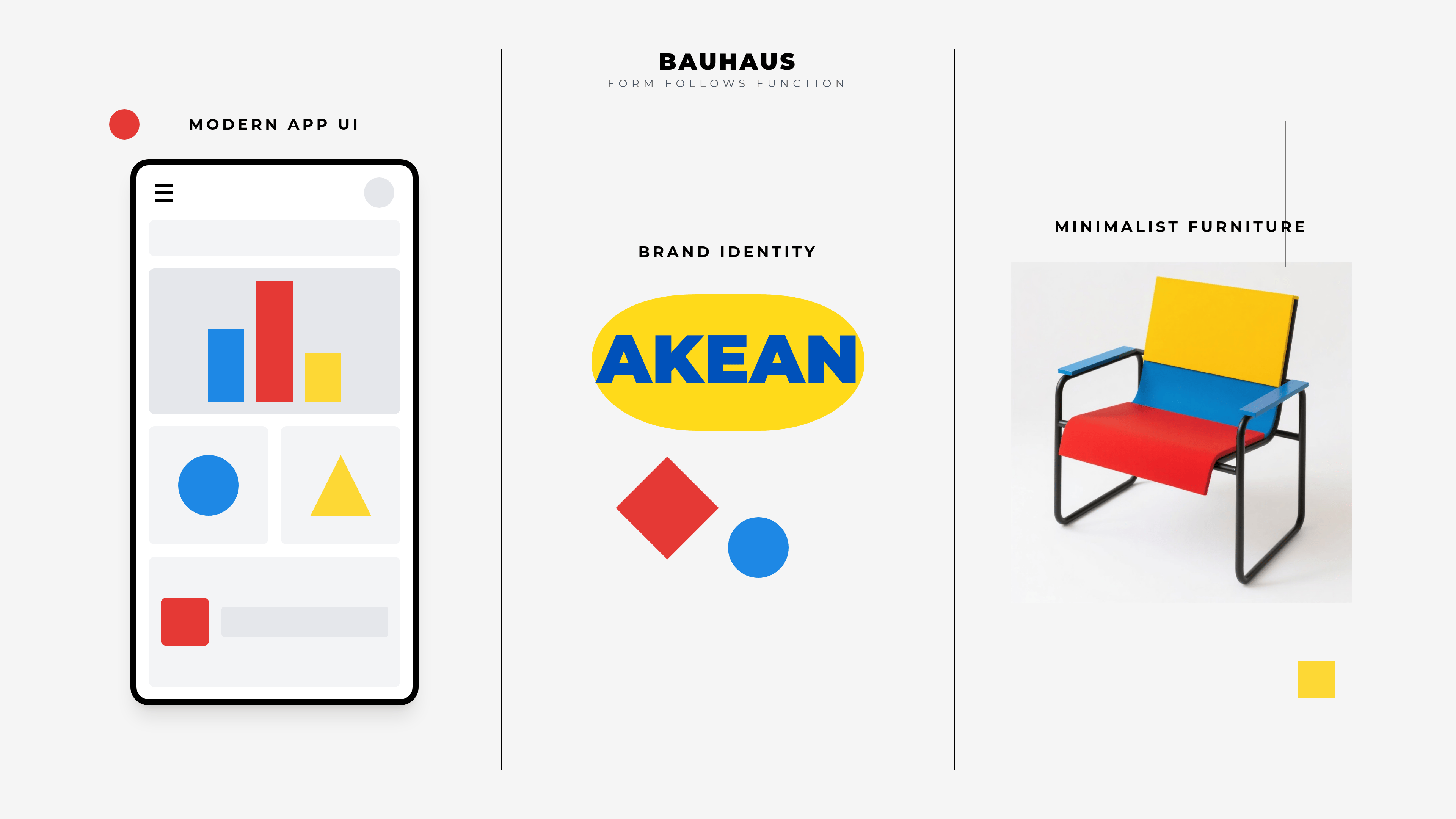
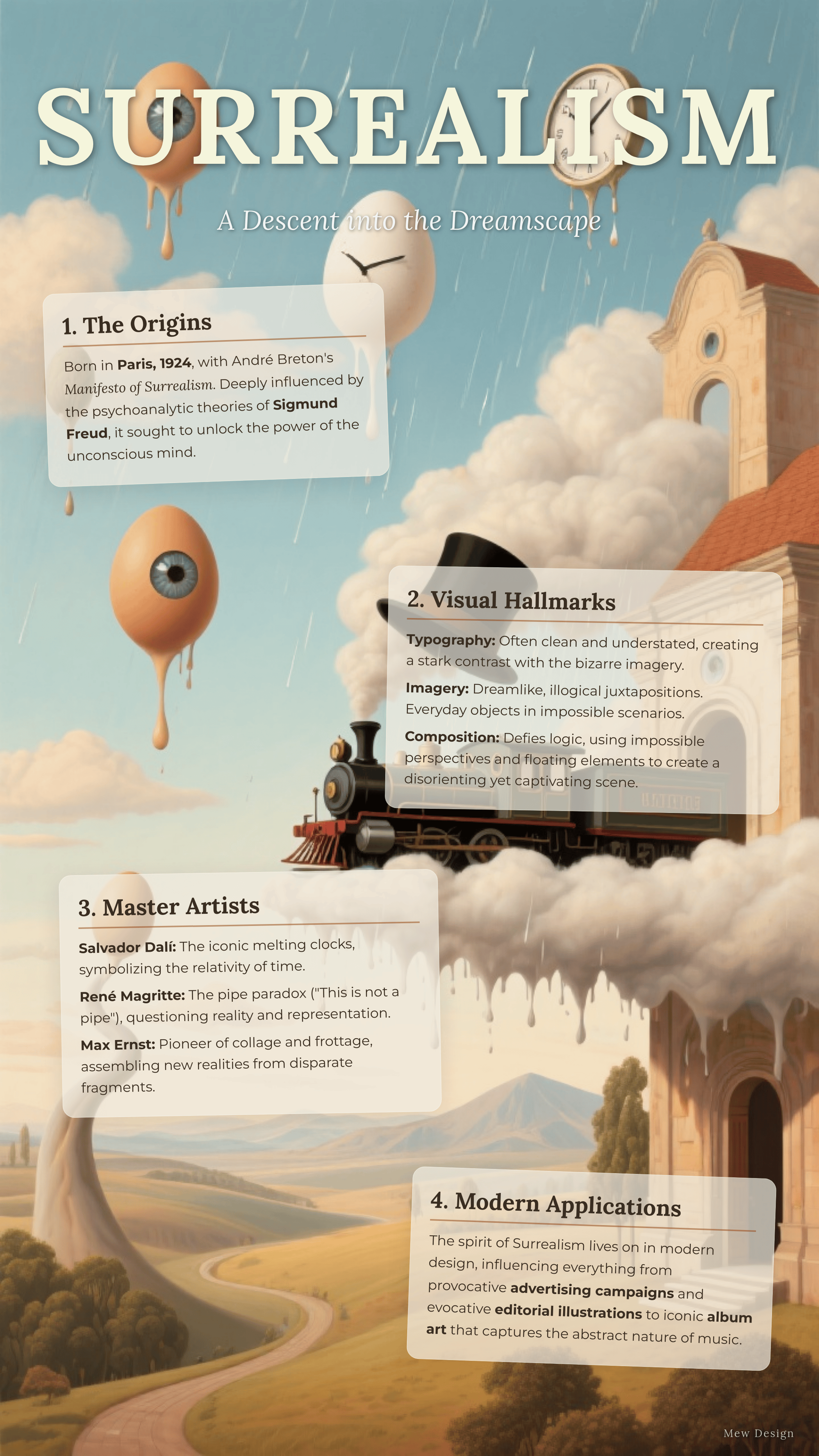
surrealism design style infograhic

Infographic of Surrealism Design Style. Generated using mew.design.

What Is Surrealism

Imagine a world where clocks melt over tree branches, where a train emerges from a fireplace, and where men in bowler hats rain from the sky. This is not a world of logic, but the bizarre, beautiful, and thought-provoking landscape of Surrealism.

Surrealism is an art movement dedicated to exploring the hidden depths of the mind—the subconscious, the world of dreams, and the irrational. It creates connections where none exist, making the impossible seem real.

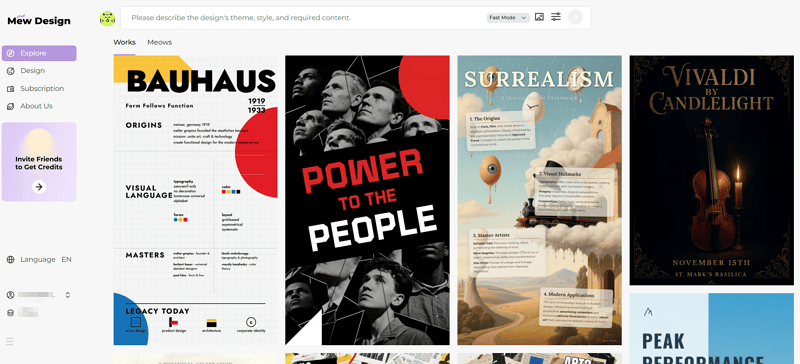
While its masters used paint and collage to unlock their minds, today’s creative tools, including AI design agents like Mew Design, allow you to instantly generate visuals that capture the strange and wonderful logic of Surrealism style.

As one of the most intellectually stimulating graphic design styles in our ultimate guide, understanding Surrealism is key for any designer looking to create work that is memorable, intriguing, and deeply symbolic. This article explores its origins in psychology, its key visual characteristics, and its powerful influence on modern advertising and art.

The Origins of Surrealism: A Journey into the Mind

The Surrealist movement officially began in Paris in 1924 with the publication of André Breton’s Surrealist Manifesto. Emerging from the ashes of the chaotic Dada movement, Surrealism was less about political protest and more about psychological exploration.

Heavily influenced by Sigmund Freud’s theories on psychoanalysis, the Surrealists sought to bypass conscious thought and tap directly into the subconscious in art. This Surrealism graphic design style was created through techniques like “automatism” (drawing or writing without conscious thought) and the detailed depiction of dreams, creating a visual world where the bizarre and the everyday collide.

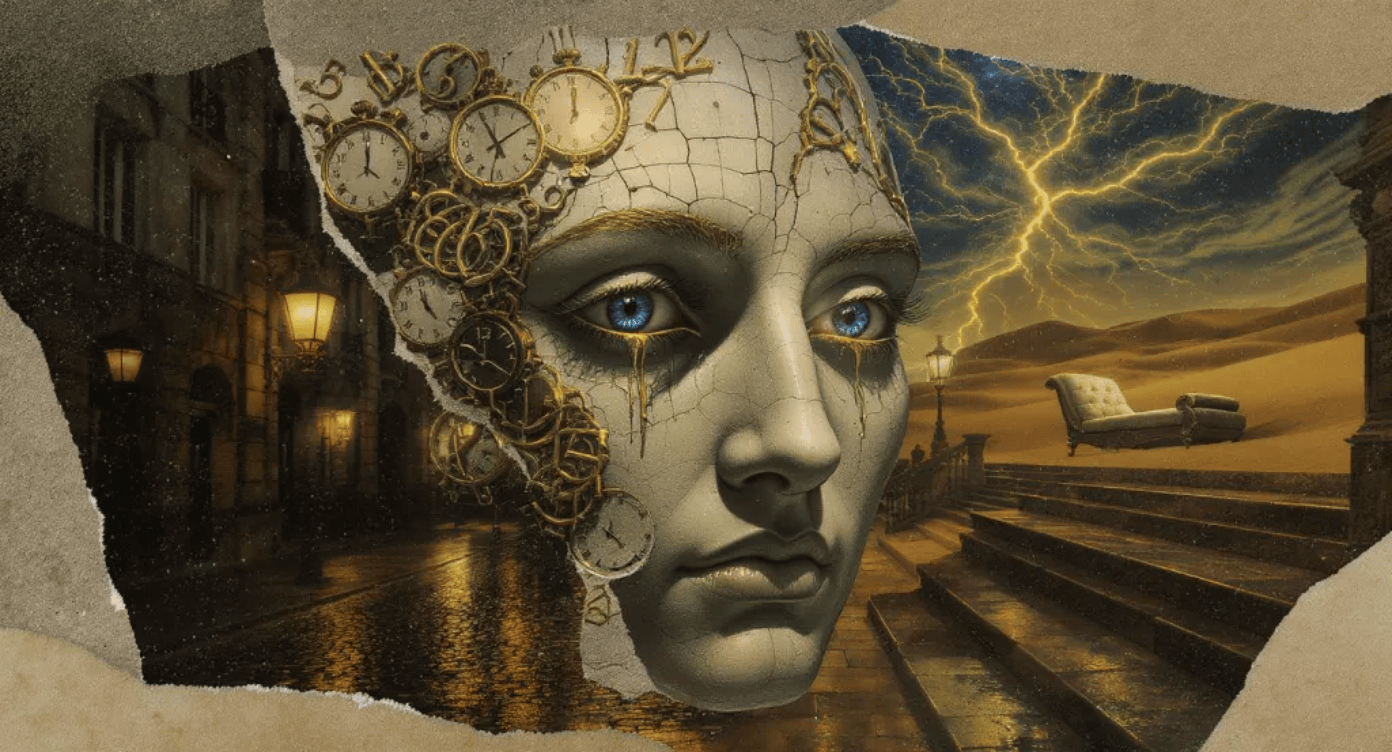
surreal dreamlike subconscious art

The origins of Surrealism: a dreamlike journey into the subconscious, shaped by Freud’s psychoanalysis and the 1920s Paris avant-garde. Generated using mew.design.

The Visual Hallmarks: Key Characteristics of Surrealism

To identify the Surrealism design style, you must be willing to abandon logic and look for the strange in the familiar. Its visuals are meant to surprise, provoke, and intrigue the viewer.

1. Surrealism Typography: Understated and Secondary

Unlike more expressive movements, typography in classic Surrealist works is often simple and understated. Artists frequently used clean, simple serifs or sans-serifs that did not distract from the power of the image. The title of a work was often presented as a simple caption, adding to the feeling of a strange but objective report from another reality.

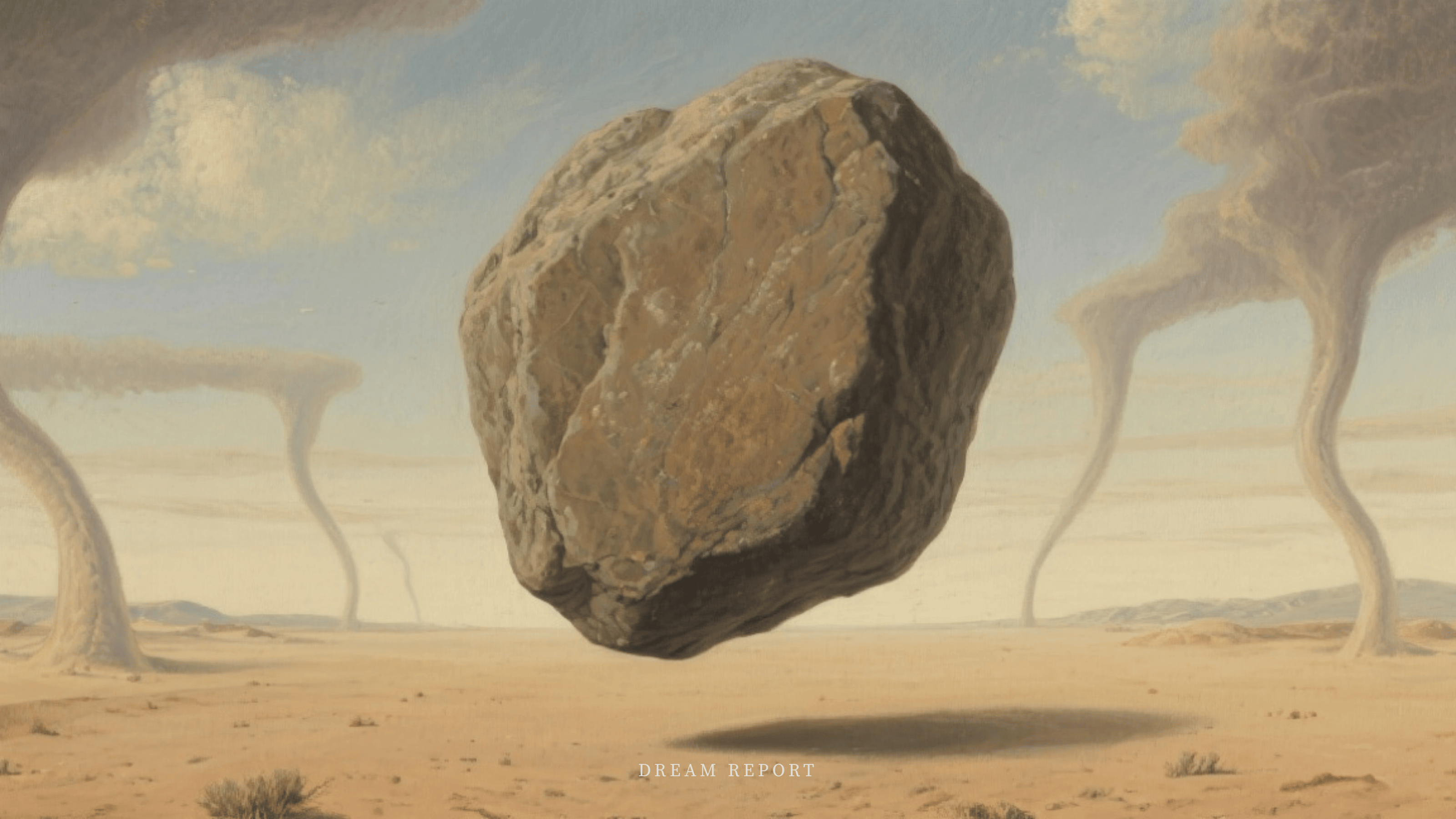
surrealism style poster with simple caption

Surrealist poster where simple typography acts as a minimal caption, reinforcing the movement’s emphasis on image over text. Generated using mew.design.

2. Surrealism Color Palette: Realistic or Symbolic

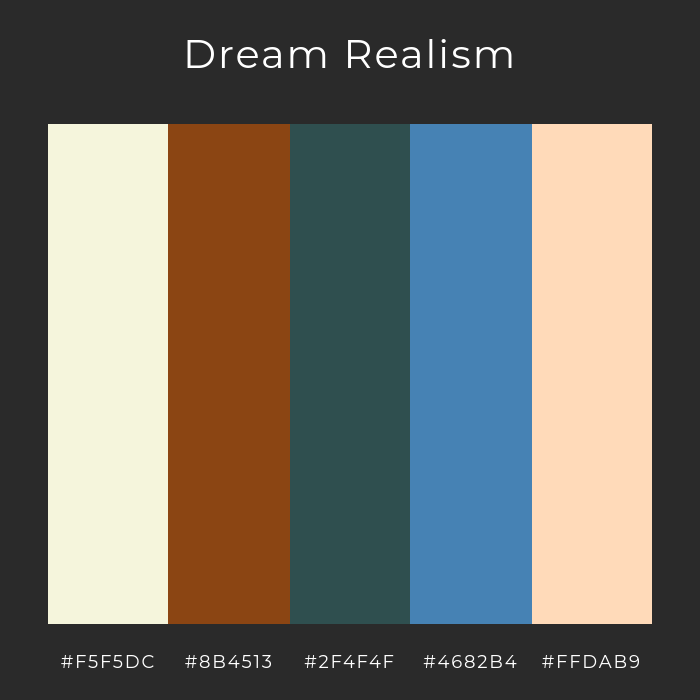
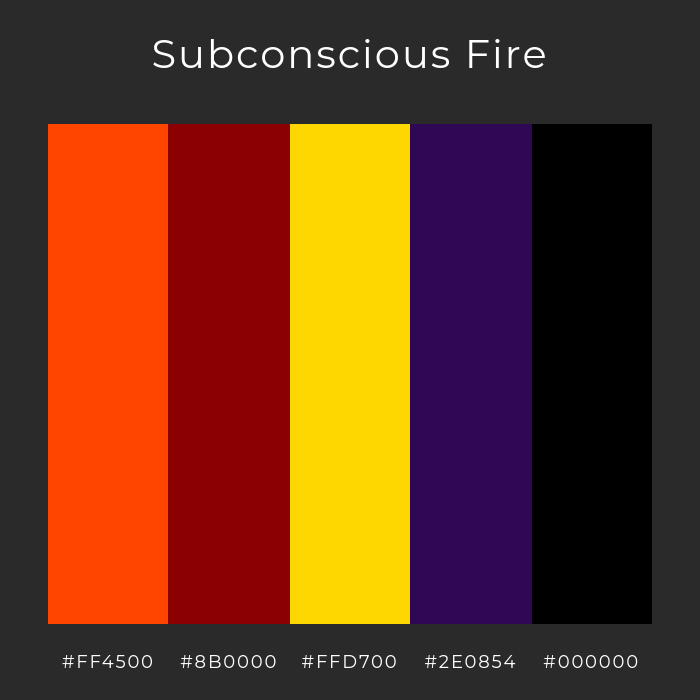
The Surrealism color palette can go in two directions. Some artists, like Dalí, used a highly realistic, almost academic color palette to make their dreamscapes feel more tangible and real. Others used color symbolically, choosing hues based on emotion or subconscious association rather than reality.

Here are some Surrealism color palettes you can use to inspire your design work.

surrealism dreamlike realistic colors

Dream Realism uses muted earth tones, soft blues, and natural textures to create dreamscapes that feel eerily real, echoing Dalí’s hyper-detailed style. Generated using mew.design.

surrealism fiery symbolic palette

Subconscious Fire combines burning reds, deep purples, and stark gold, channeling raw emotion and symbolic intensity in surrealist art. Generated using mew.design.

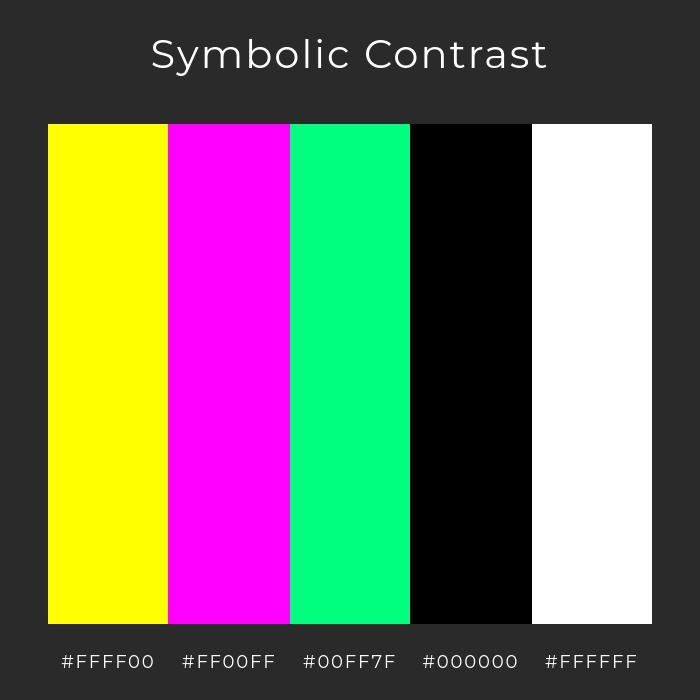
surrealism bold contrast colors

Symbolic Contrast juxtaposes neon brights with stark black and white, highlighting the surrealist tension between logic and chaos. Generated using mew.design.

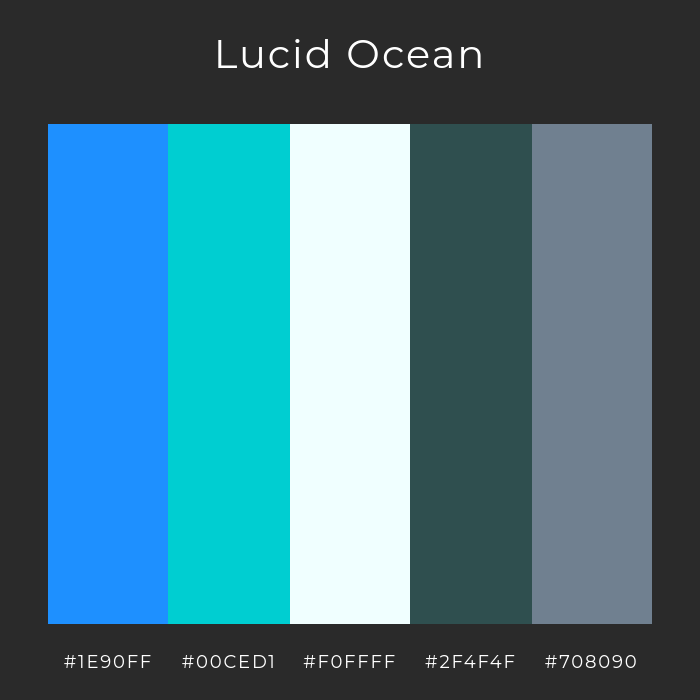
surrealism ocean dream colors

Lucid Ocean blends cool blues, turquoise, and soft greys, reflecting the subconscious flow of dreams and watery surreal landscapes. Generated using mew.design.

3. Surrealism Layout & Composition: Illogical Juxtaposition

The core of Surrealism composition is juxtaposition: placing ordinary objects in an unexpected or impossible context. The layout might follow traditional rules of perspective and balance, but the content of the layout defies all logic. This creates an immediate sense of wonder and unease.

4. Surrealism Imagery & Motifs: The Stuff of Dreams

Dreamlike imagery in design is Surrealism’s most famous trait. Common visual elements include:

  • Metamorphosis: Objects or bodies transforming into something else.
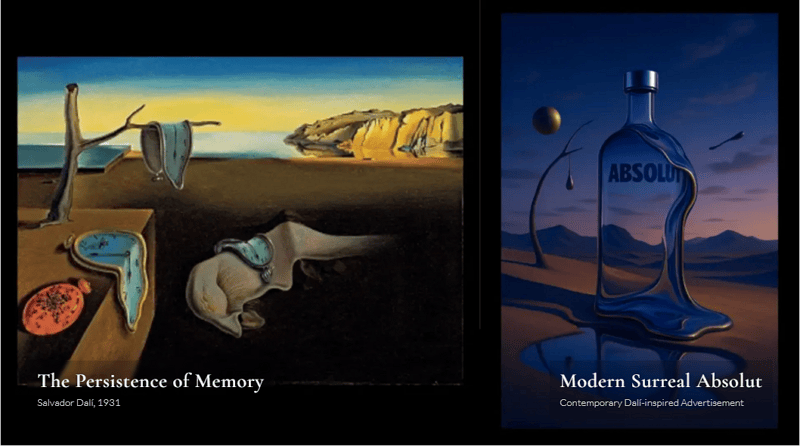
  • Dislocation: An object appearing in a place it could never be (like a train in a fireplace).
  • Symbolism: Everyday objects like eyes, clocks, and eggs are imbued with deeper, often psychological, meaning.
  • Surrealist collage art and photomontage were also used to create impossible scenes.

split-screen classic and modern surrealism

Surrealist imagery: classic Dalí on one side, modern surreal advertising on the other, showing dreamlike transformation and symbolic objects. Generated using mew.design.

Surrealism Graphic Designers and Master Artists

The Surrealist movement was home to some of the most famous and imaginative artists of the 20th century. These pioneering Surrealist graphic designers and painters created a visual dictionary for the subconscious mind.

1. Salvador Dalí

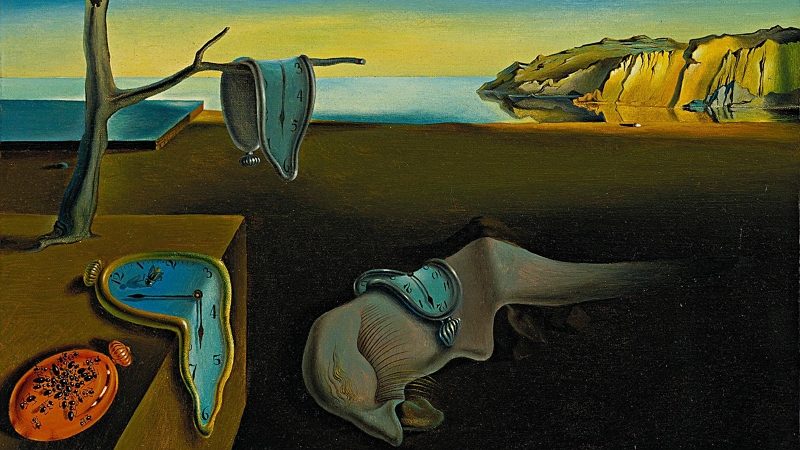
The most famous Surrealist, Dalí’s flamboyant personality was matched by his “hand-painted dream photographs.” He developed the “paranoid-critical method” to tap into his subconscious and create his bizarre, highly detailed worlds.

  • Key Work: The Persistence of Memory (1931), with its iconic melting clocks, is the quintessential image of the Salvador Dalí style and Surrealism itself.

salvador dalí - the persistence of memory

Salvador Dalí - The Persistence of Memory. Source: thefunartselection.com

2. René Magritte

A Belgian artist, Magritte’s work is known for its witty and thought-provoking visual paradoxes. He played with words and images to challenge the viewer’s perceptions of reality.

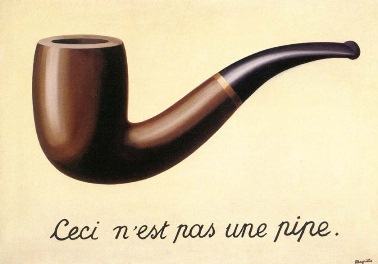
  • Key Work: The Treachery of Images (1929), which depicts a pipe with the caption “Ceci n’est pas une pipe” (“This is not a pipe”), is a famous exploration of the difference between an object and its representation.

rené magritte - the treachery of images

René Magritte - The Treachery of Images. Source: wikimedia.org

3. Max Ernst

A German artist and a pioneer of both Dada and Surrealism, Ernst was an innovator of techniques like frottage (rubbing) and collage to create fantastical, often textured and semi-abstract, imagery.

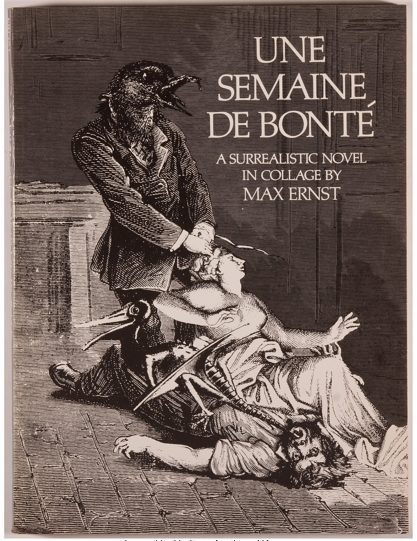
  • Key Work: His collage novel Une Semaine de Bonté (A Week of Kindness) is a masterclass in using altered Victorian illustrations to create a dark and surreal narrative.

max ernst - une semaine de bonté

Max Ernst - Une Semaine de Bonté. Source: historical.ha.co

Surrealism in the Modern World: Contemporary Applications

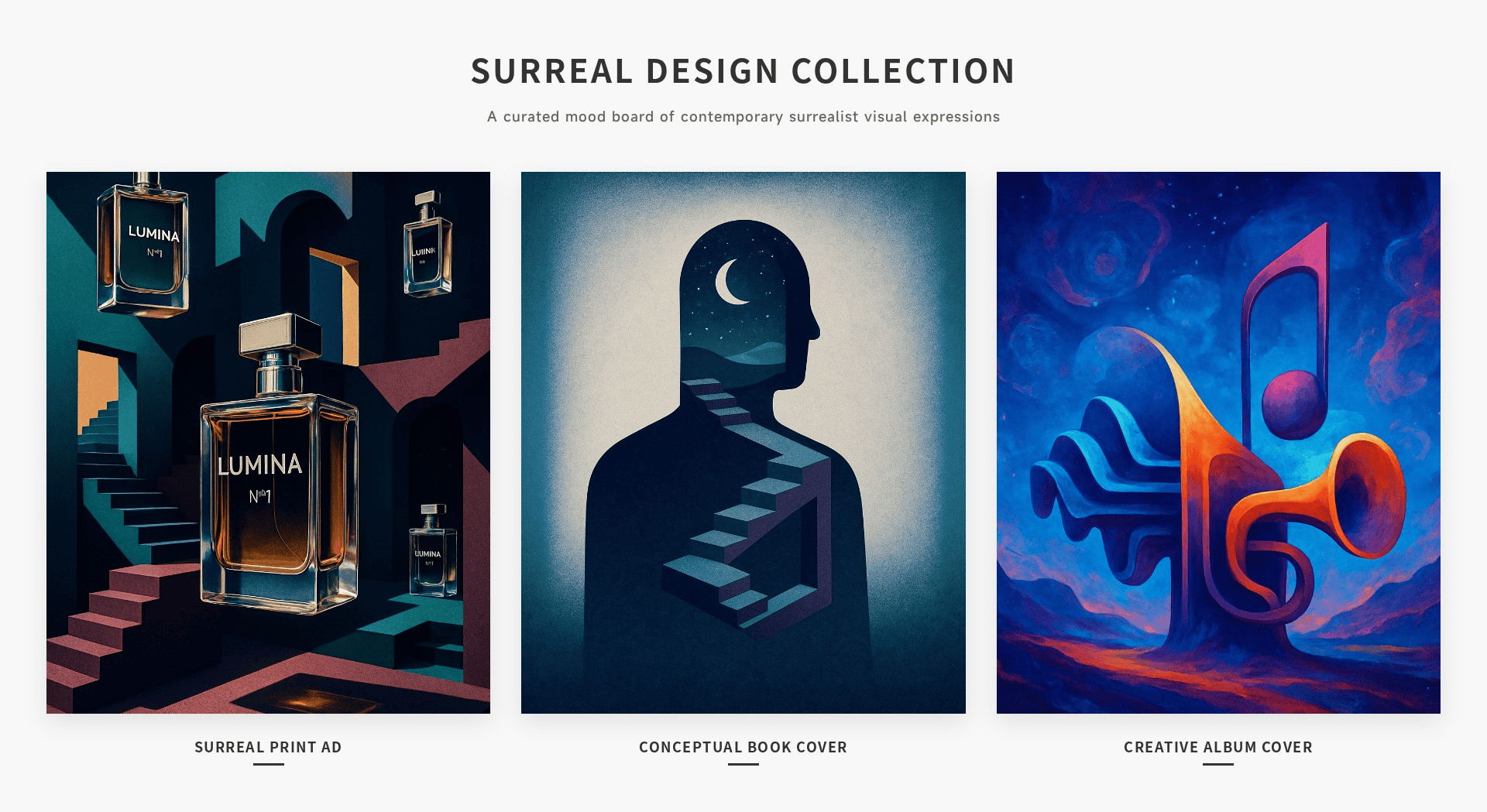
The influence of modern Surrealism is vast, particularly in fields that rely on catching the viewer’s attention with an intriguing and memorable image.

  • Advertising: Modern Surrealism advertising is a powerful tool. By creating a strange and unforgettable visual, brands can make their products stick in the viewer’s mind long after the ad is over.
  • Editorial & Book Illustration: Surrealism is perfect for illustrating complex or abstract concepts in magazines and books. It’s also a popular style for fiction book covers, especially in the fantasy and magical realism genres.
  • Album Art & Posters: Musicians and filmmakers often use surreal imagery to visually represent the themes of their work, creating art that invites interpretation.

modern surrealism design examples

Modern Surrealism in advertising, editorial illustration, and album art, showcasing strange, memorable, and imaginative visuals. Generated using mew.design.

How To Create a Surrealism-Style Design with AI

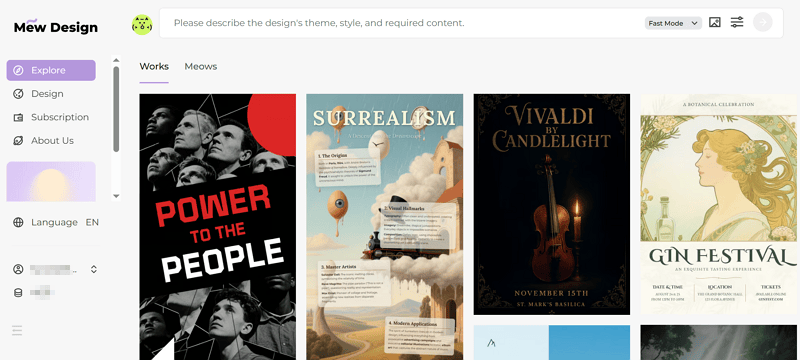
Ready to explore your own subconscious and create surreal designs that defy logic? Mew Design can help bring your bizarre and beautiful ideas to life with the help of its intelligent AI design agents.

edit the ai generated graphic design

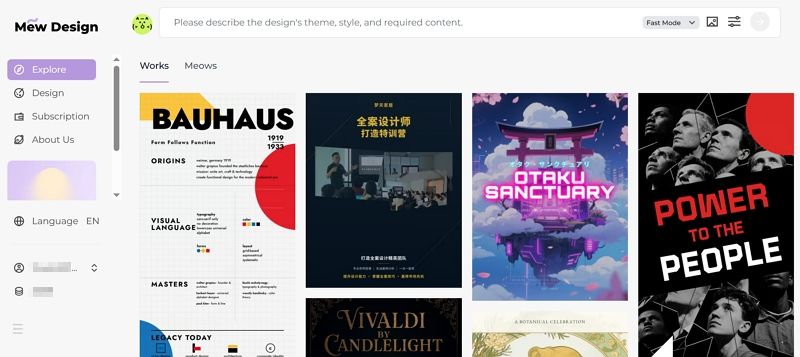
Unlike typical tools that simply generate images, Mew Design ensures your text and layout remain precise and editable. With style-specialized agents—called Meows—it interprets your prompts and creates designs that are visually striking and compositionally balanced.

Key advantages:

  • Text and layout accuracy: No garbled letters or messy alignment.
  • Editable outputs: Adjust fonts, spacing, and composition freely.
  • Style-aware agents: Each Meow knows how to capture surrealism’s dreamlike energy.
  • Interactive refinement: Fine-tune your design step by step.

A Step-by-Step Prompt Guide

Step 1 — Sign up and prepare your content

Create an account or log in to Mew Design. Gather your text, images, logos, or other assets.

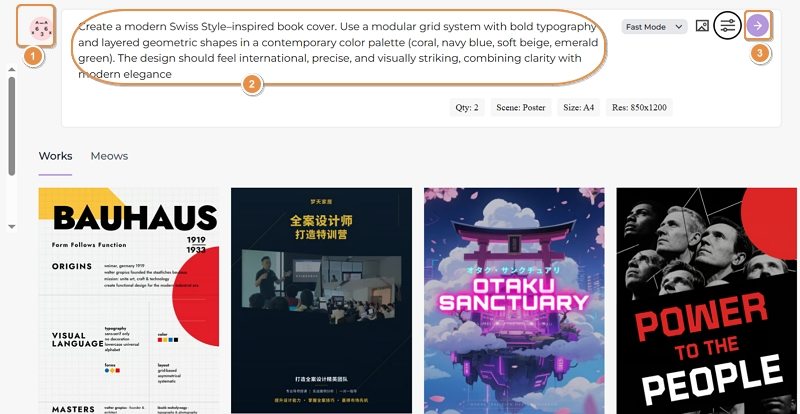
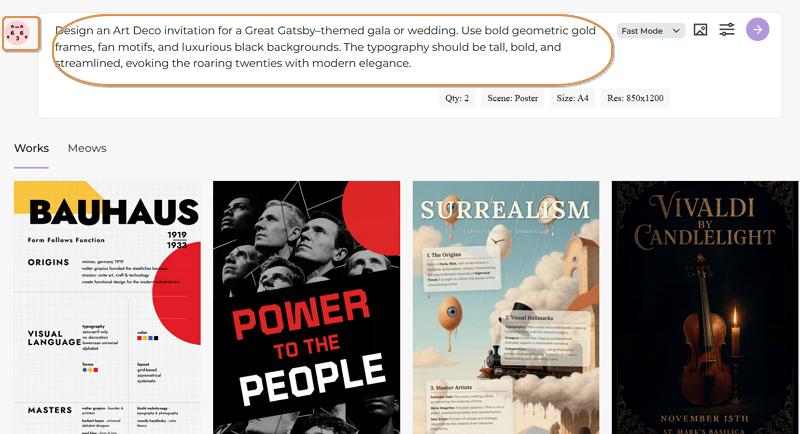
Step 2 — Write a clear prompt

Describe the surreal concept and key elements, focusing on mood and juxtaposition rather than a polished final image.

Example: Create a poster in a photorealistic Surrealist style. An antique grandfather clock is melting over the edge of a floating island in the sky. Below, a school of fish is swimming through the clouds. The lighting is like a dramatic, late afternoon sunset.

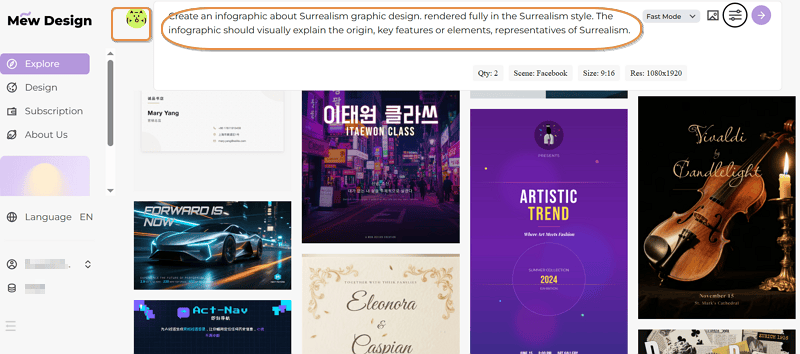
input design prompt

Step 3 — Generate and refine

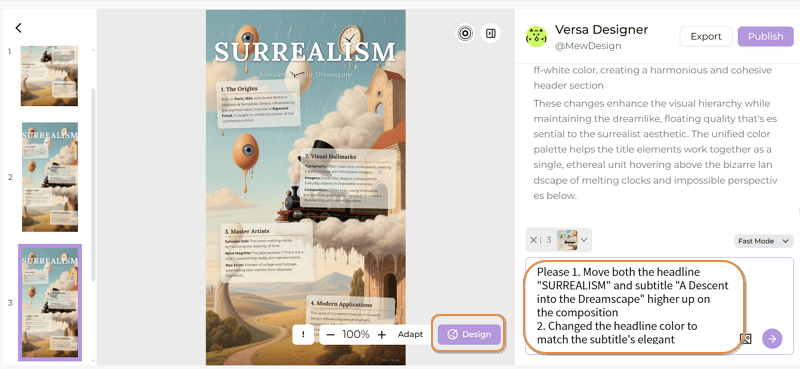
Mew Design’s AI agent selects the best Meow to produce your design. Adjust placement, scaling, colors, or text style using follow-up prompts until you achieve the desired effect.

Example Follow-up Prompts: Add a single, oversized key floating in the foreground.” or “Make the colors more saturated, like a vintage postcard.

edit the ai generated surrealism graphic design

Step 4 — Finalize and export

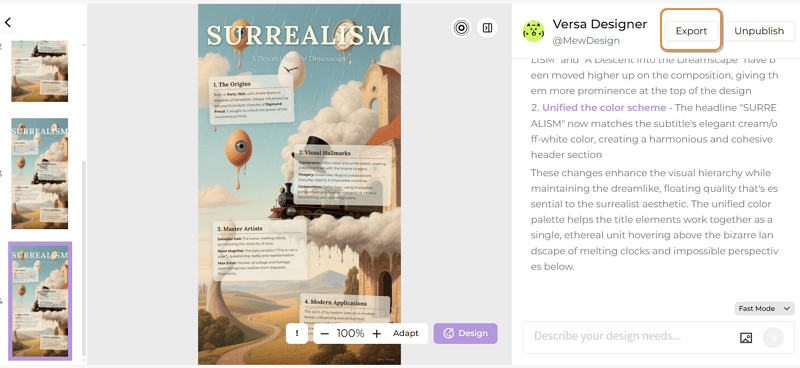
Tweak typography, spacing, and alignment as needed. Download your ready-to-use, print- or web-ready graphic. The code-based output ensures clean layouts and editable text.

export ai generated surrealism graphic design

🚀

Ready to Design Beyond Reality?

Whether you’re creating a thought-provoking ad, a unique illustration, or a piece of personal art, Mew Design helps you produce professional graphics that capture the fascinating spirit of Surrealism.

Try Mew Design for Free

Conclusion

Surrealism taught the world that the most powerful images often come from within. By exploring dreams, symbols, and the irrational, it unlocked a new frontier for visual storytelling. Its legacy reminds designers that breaking the rules of reality can often lead to creating something unforgettable and profoundly true.

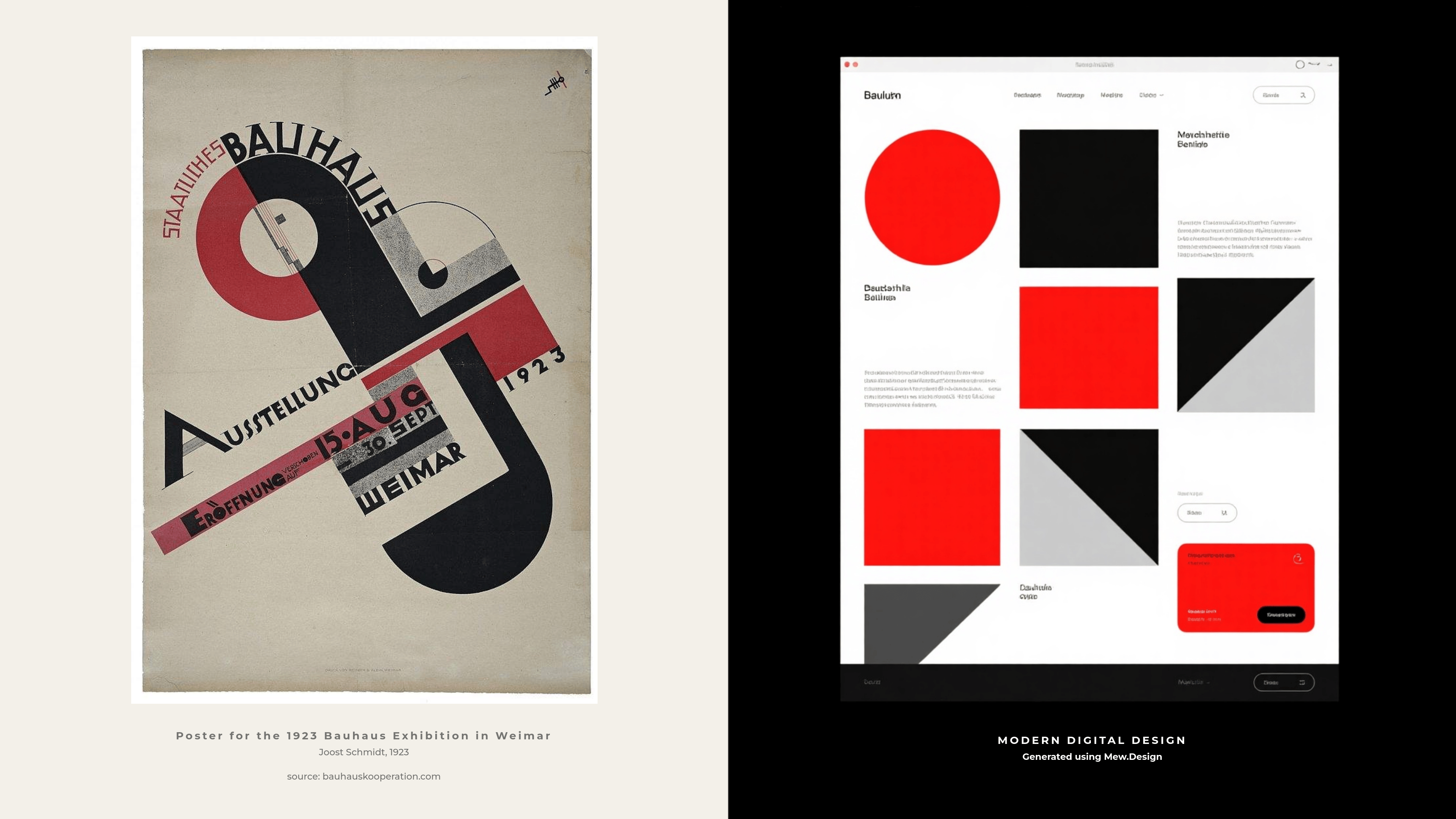
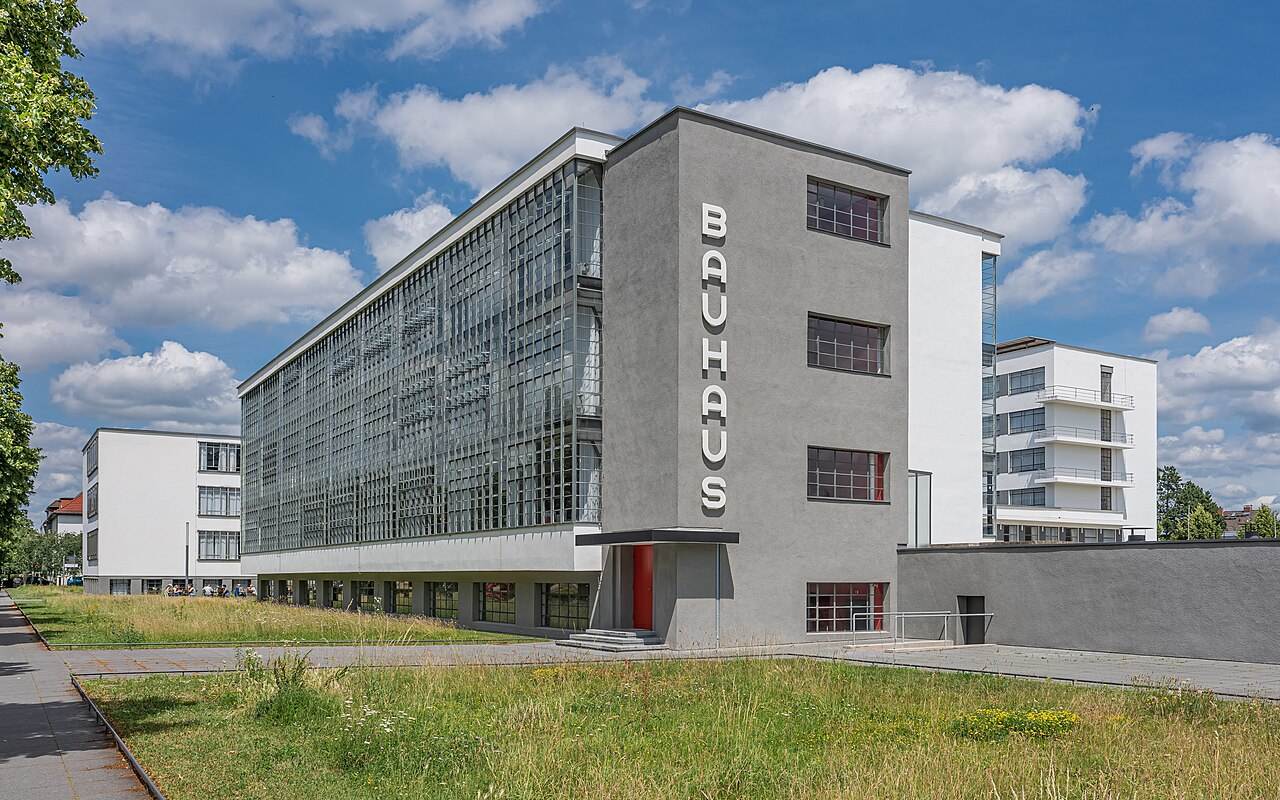
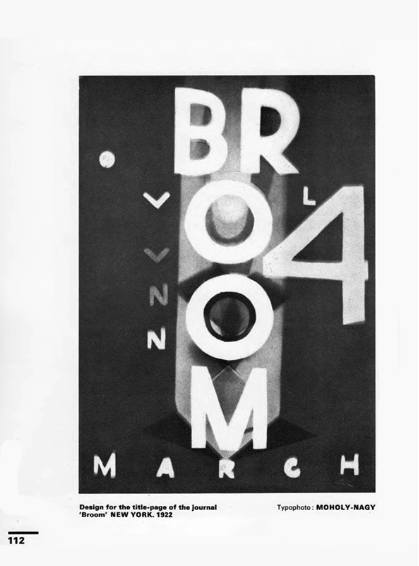
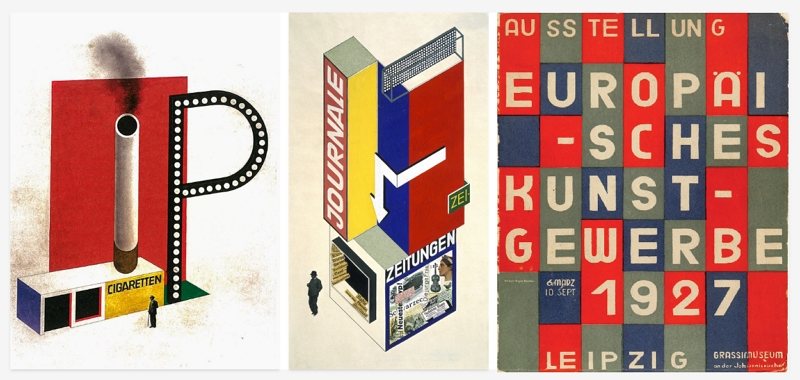
After exploring the world of dreams with Surrealism, see how its principles of abstraction were formalized into clean, functional design by the Bauhaus in our Ultimate Guide to Graphic Design Styles.
What Is Constructivism: A Guide to Constructivist Graphic Design

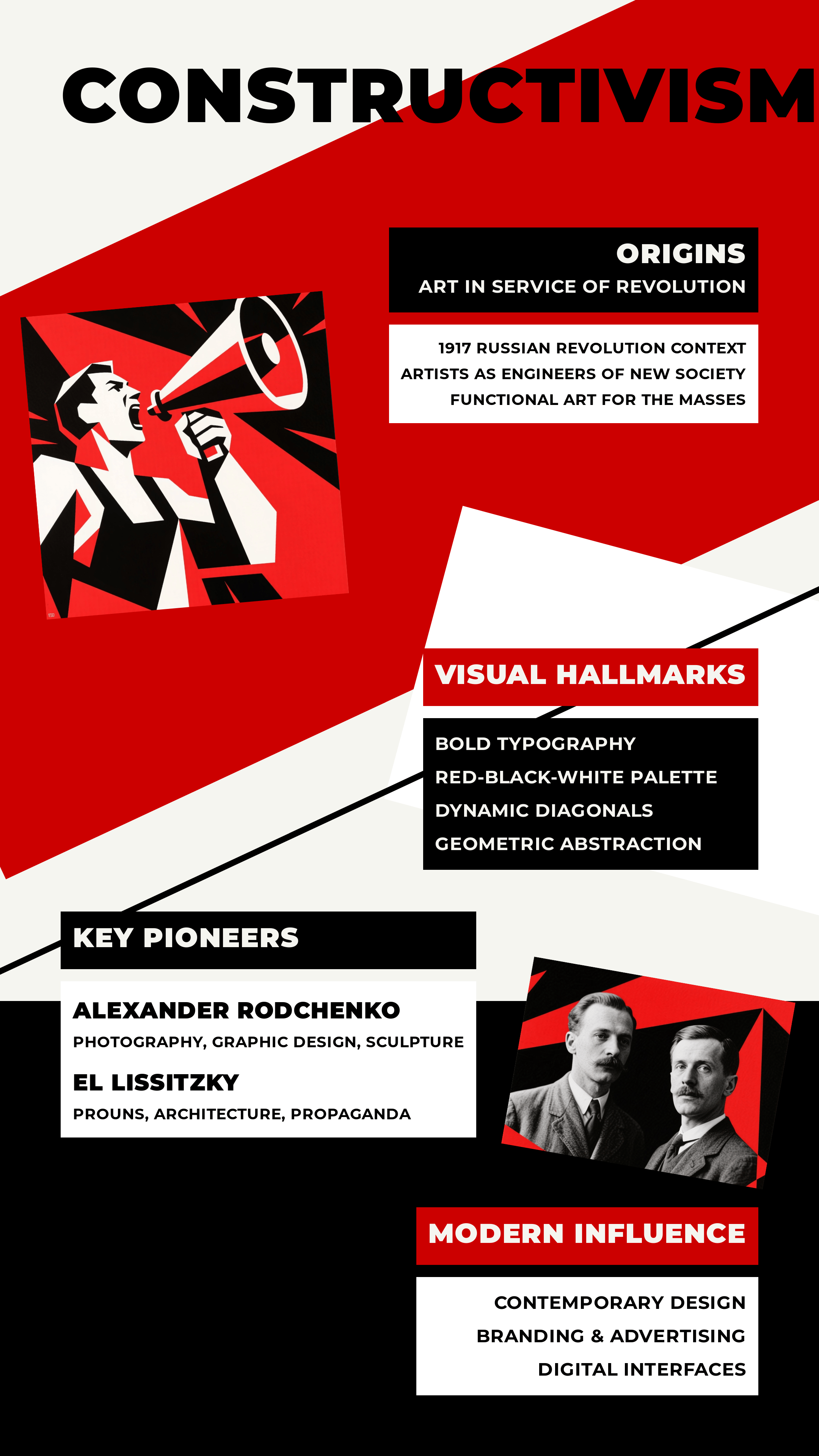
constructivism graphic design infograhic

Infographic of Constructivism Graphic Design. Generated using mew.design.

What Is Constructivism

Imagine a world where art isn’t something to be hung in a gallery, but a powerful tool used to build a new society. Picture bold, geometric posters that communicate with the force of a public announcement. This is the world of Constructivism, a revolutionary movement where design was given a clear and powerful social mission.

Constructivism declared that art should not be for personal expression (“art for art’s sake”) but should be a practical instrument for social change. It was a philosophy of action, precision, and purpose. While its pioneers crafted these works by hand, today’s AI design tools like Mew Design, allow you to create graphics in the Constructivism style in seconds—no design experience needed.

As one of the most ideologically significant graphic design styles in our ultimate guide, understanding Constructivism design style is key to appreciating how design can be used to communicate powerful messages. This article explores its revolutionary origins, its distinct visual language, and its profound influence on modern design.

The Origins of Constructivism: Art in Service of Revolution

The Russian Constructivist art movement was born in the fervent years following the 1917 Russian Revolution. In a nation undergoing radical transformation, a group of artists rejected the idea of traditional studio art, which they saw as a bourgeois luxury. They wanted to be more like engineers and scientists, using their skills to actively “construct” a new communist society.

This new graphic design style was applied to everything from architecture and theater sets to government propaganda and commercial advertising, with the unified goal of creating a new, modern, and unified visual culture for the new Soviet state.

The Visual Elements: Key Characteristics of Constructivism

Typography: Bold and Functional

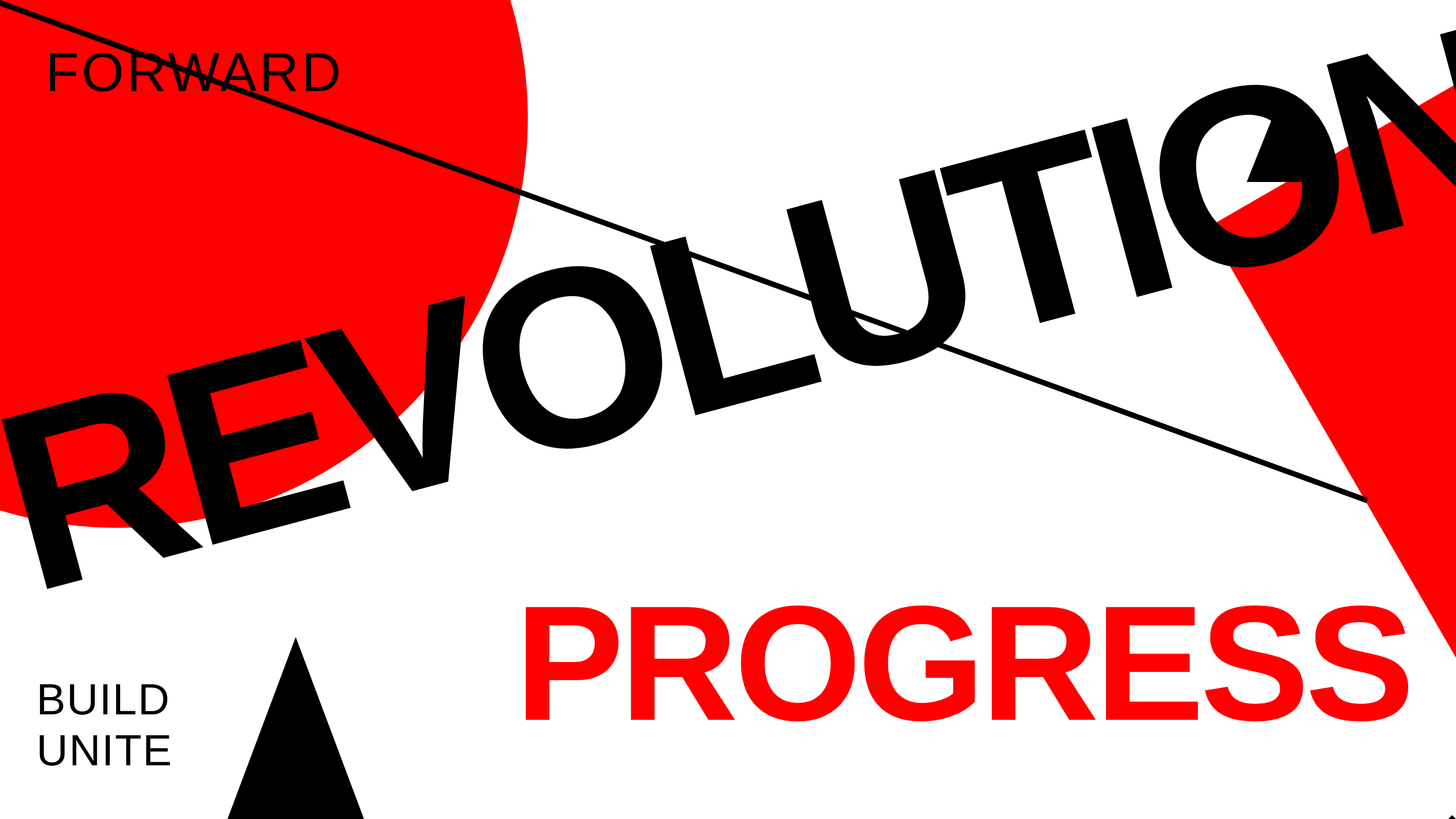
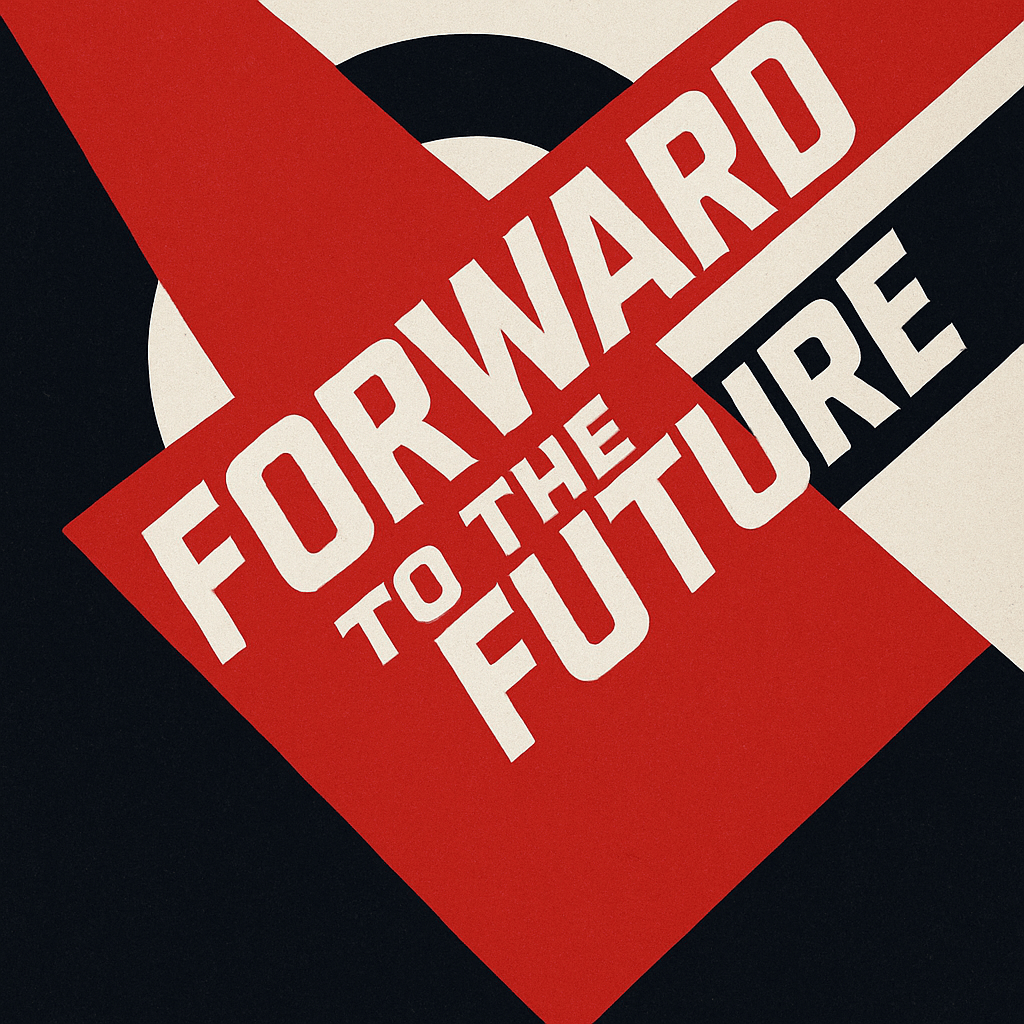
Constructivist typography is bold, direct, and often monumental. Type was treated as a concrete visual form. Designers used sans-serif fonts, often in all caps and in varying sizes and weights, to create a clear hierarchy and a dynamic visual rhythm. The text was meant to be read quickly and to command attention.

bold constructivist typography with red and black all-caps text and geometric shapes

Constructivist Typography Example. Generated using mew.design.

Color Palette: Symbolic and Minimal

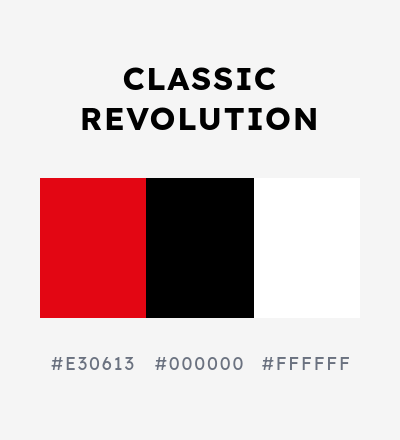
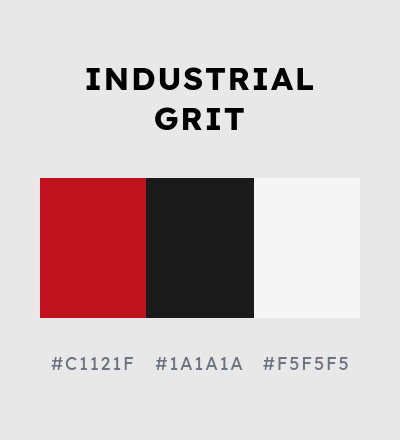
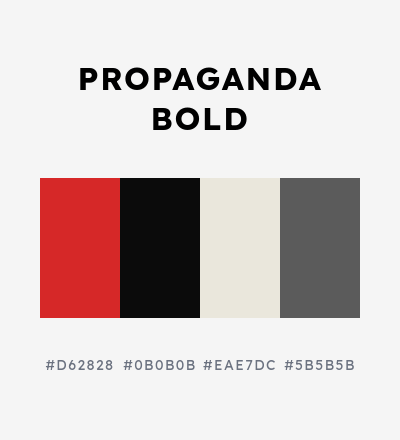
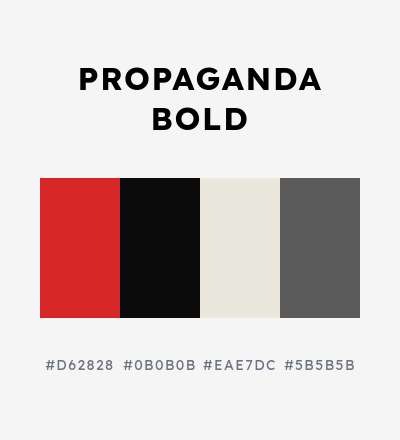
The Constructivism color palette is famously minimal and highly symbolic. It is dominated by red, black, and white (or off-white). Red symbolized the revolution and communism, while black and white provided the starkest possible contrast for maximum visual impact. Other colors were used sparingly, if at all.

Here are some Constructivism color palettes for your reference:

Classic Revolution color palette

Constructivism color palette – Classic Revolution. Generated using mew.design.

Industrial Grit color palette

Constructivism color palette – Industrial Grit. Generated using mew.design.

Propaganda Bold color palette

Constructivism color palette – Propaganda Bold. Generated using mew.design.

Modern Twist color palette

Constructivism color palette – Modern Twist. Generated using mew.design.

Layout & Composition: Dynamic Diagonals

Constructivists rejected the static, horizontal and vertical compositions of the past. Instead, they used strong diagonal lines to create a sense of dynamism, action, and progress. The layout feels energetic and often asymmetrical, guiding the viewer’s eye with force and intention.

constructivist layout with bold diagonal lines and geometric shapes in red, black, and white

Constructivism Layout. Generated using mew.design.

Imagery & Motifs: Geometric Abstraction and Photomontage

Two key elements define Constructivist imagery:

  • Geometric Abstract Art: Abstract shapes like circles, squares, and lines were used to create compositions that felt as precise and engineered as a blueprint.
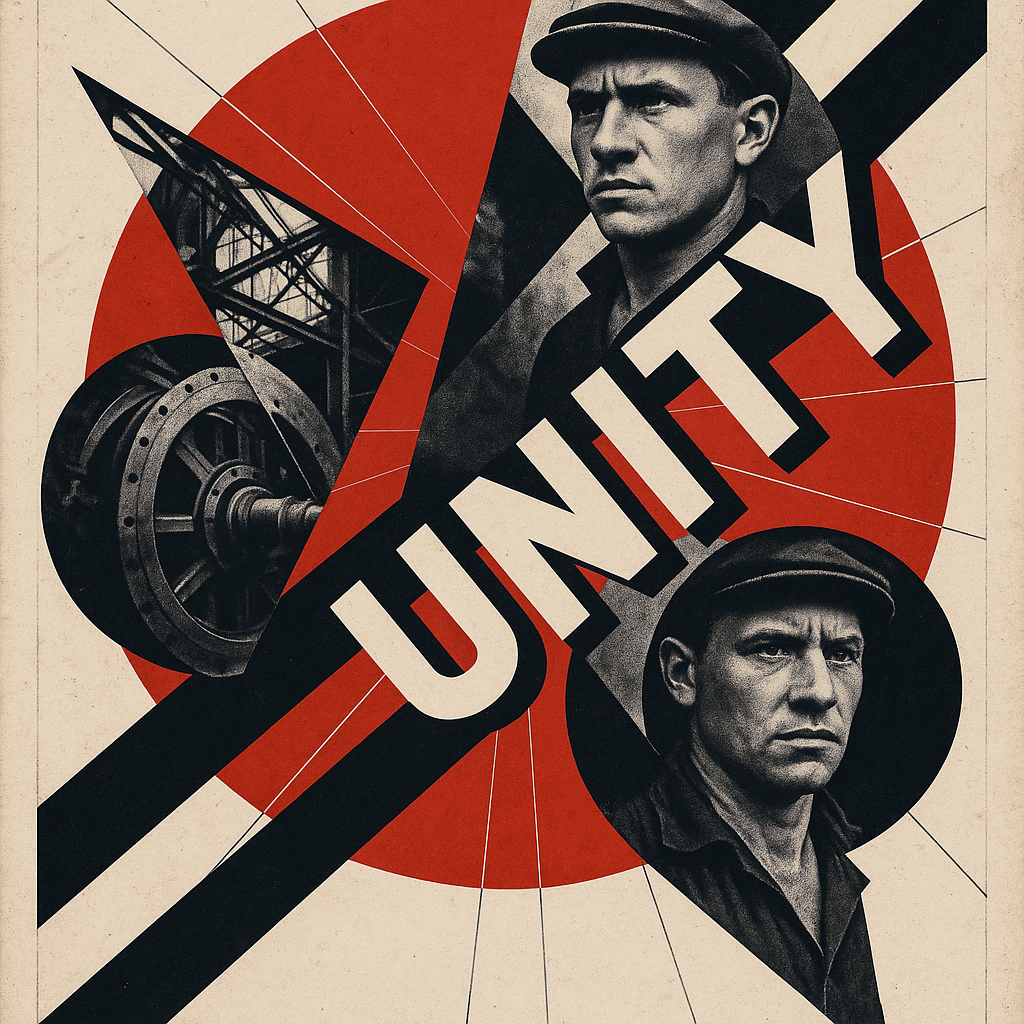
  • Photomontage: Constructivists were pioneers in using photography in design. They combined fragments of photos to create powerful, message-driven compositions that were more direct and “real” than illustration.

constructivist photomontage with industrial imagery, geometric shapes, and bold text

Constructivism Photomontage. Generated using mew.design.

Constructivist Graphic Designers and Master Artists

Alexander Rodchenko

A central figure of the Russian Constructivism movement, Rodchenko was a master of painting, sculpture, photography, and design. His work is defined by its powerful compositions, use of photomontage, and bold typography.

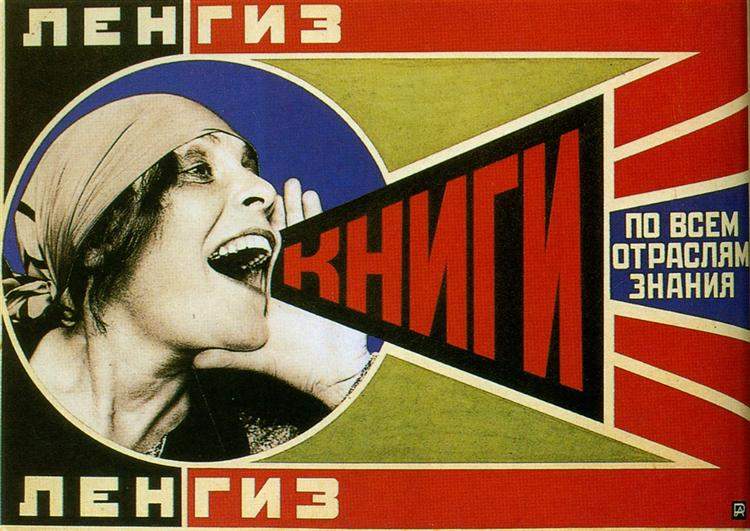
Key Work: His 1924 advertising poster for the Lengiz Publishing House, featuring a shouting Lilya Brik, is one of the most famous Alexander Rodchenko posters and a quintessential example of Constructivist design.

alexander rodchenko advertising poster for lengiz publishing house

Alexander Rodchenko’s Work - Advertising poster for Lengiz Publishing House (1924). Source: wikiart.org

El Lissitzky

Lissitzky was an artist, designer, and architect who acted as a crucial bridge between the Russian avant-garde and Western artists. He developed a style of abstract art he called “Proun” (an acronym for “project for the affirmation of the new”), which explored the relationship between art and architecture.

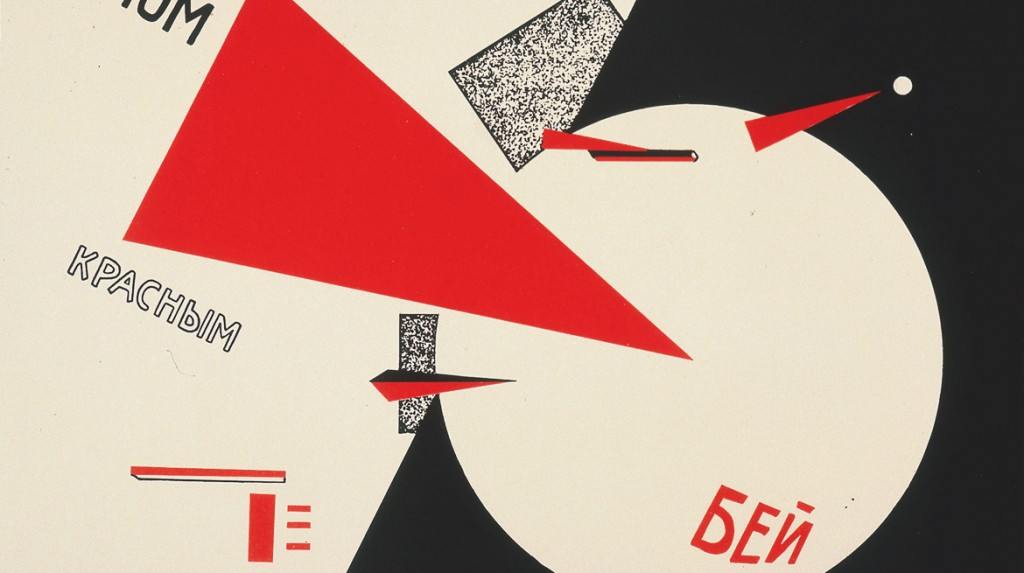
Key Work: His 1924 propaganda poster Beat the Whites with the Red Wedge is an iconic work of abstract political art, using simple geometric shapes to tell a powerful story.

lissitzky beat the whites with the red wedge

Lissitzky’s Work - Beat the Whites with the Red Wedge. Source: whitechapelgallery.org

Constructivism in the Modern World: Contemporary Applications

While tied to a specific political ideology, the visual principles of modern Constructivism have had a profound and lasting impact on graphic design. Its philosophy of message-driven, impactful design is more relevant than ever.

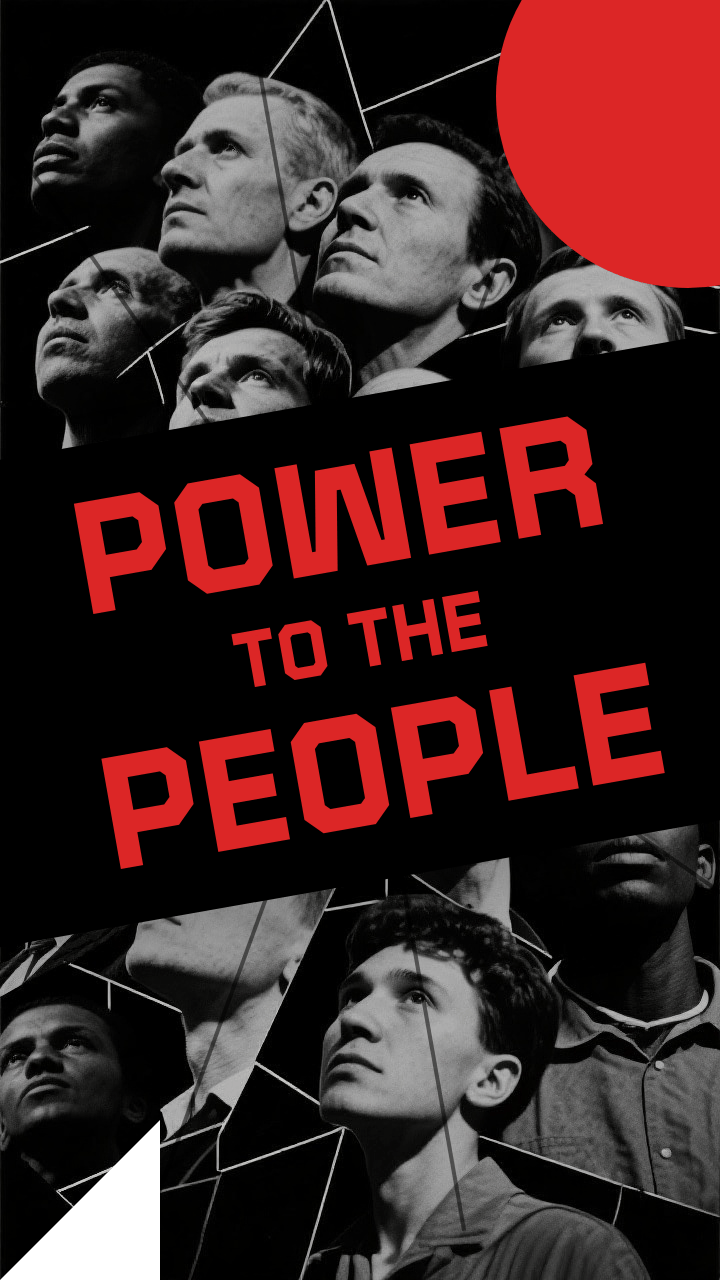
  • Poster and Activist Art: The style’s use of bold typography, strong diagonals, and high-contrast colors makes it a go-to aesthetic for modern protest posters and social cause campaigns.

modern constructivism poster example

Modern Constructivism Poster. Generated using mew.design.

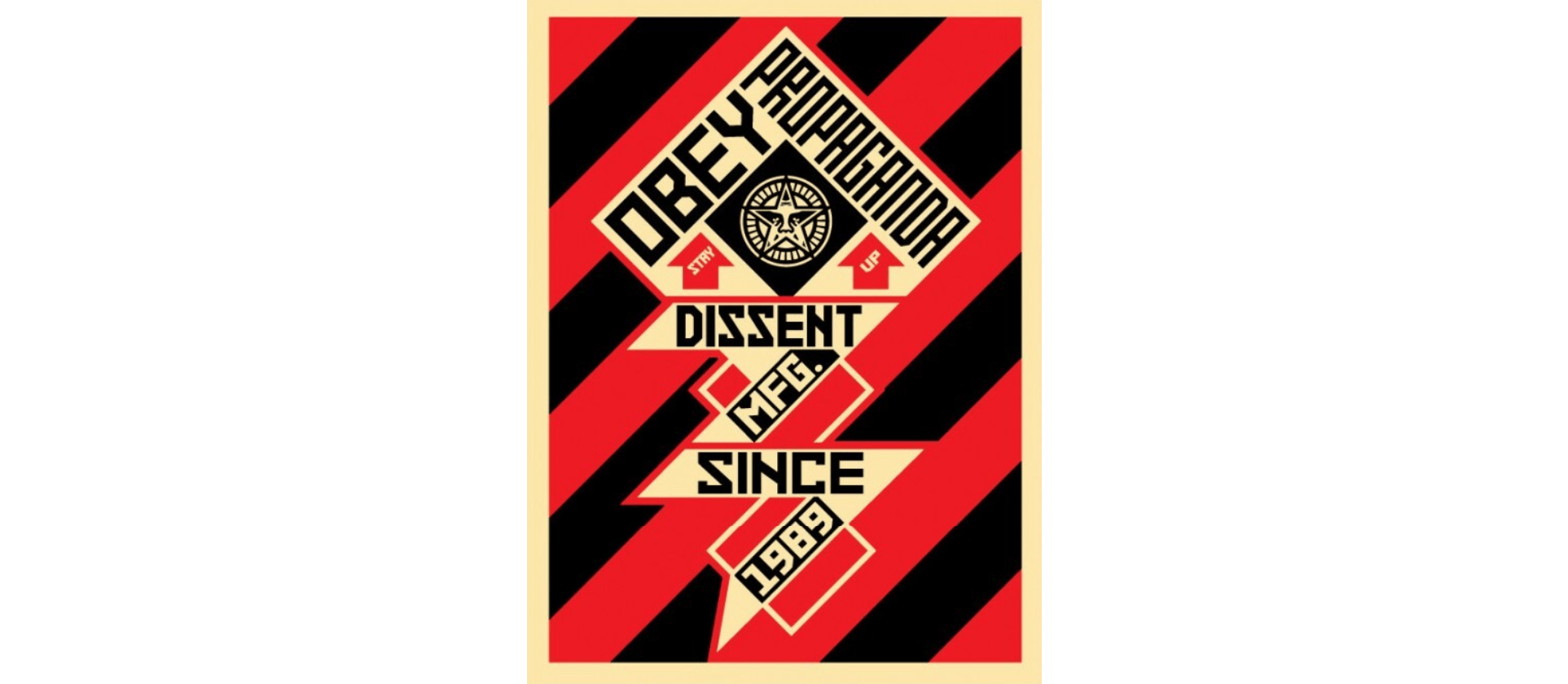
  • Corporate Branding: Designers like Shepard Fairey (OBEY) have famously adapted the Constructivist look to create iconic and powerful brand identities.

shepard fairey constructivist banner

Constructivist banner of Shepard Fairey. Source: artsy.net

  • Web and Motion Graphics: The dynamic compositions and clean geometric forms of Constructivism design style translate well to digital media, influencing layouts and animations that need to feel energetic and direct.

How To Create a Constructivist-Style Design With AI

Inspired by the power and purpose of Constructivism design? Mew Design can help you create bold, geometric graphics that communicate your message with force.

Mew Design is an AI design agent—not just a text-to-image tool. It analyzes your intent and produces fully editable layouts with:

  • Accurate text rendering (no garbled letters or “text hallucinations”).
  • Precise layout control (clean grids, consistent alignment, typographic hierarchy).
  • Style-specialized Meows (agents) that understand genres like Constructivism.
  • Interactive refinement via follow-up prompts, plus logo/QR/image uploads.

Here is a step-by-step guide for creating Constructivism graphic design with AI.

Step 1. Define Your Core Message
Constructivism is all about the message. Start with a clear, concise headline or call to action.

Step 2: Craft Your Prompt
Use keywords that describe the core visual elements of Constructivism style: geometry, color, and composition.

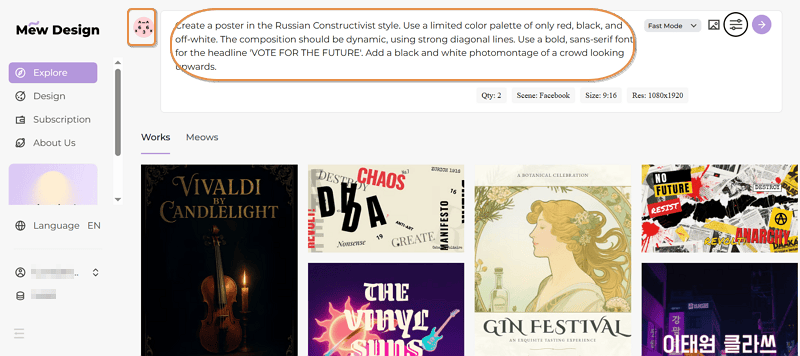
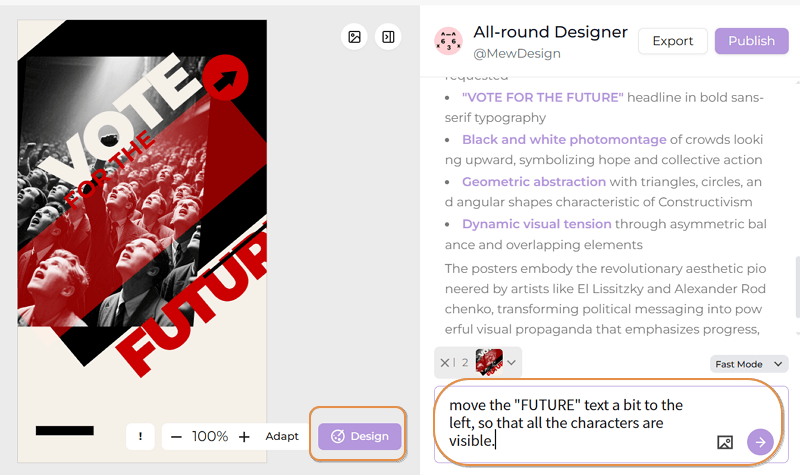
High-Quality Prompt Example (for a poster): Create a poster in the Russian Constructivist style. Use a limited color palette of only red, black, and off-white. The composition should be dynamic, using strong diagonal lines. Use a bold, sans-serif font for the headline ‘VOTE FOR THE FUTURE’. Add a black and white photomontage of a crowd looking upwards.

Step 3: Generate Your Design
Sign in to Mew Design and input your prompt. Mew Design’s AI agent interprets your intent and produces a clean, editable layout.

ai generate constructivist style poster

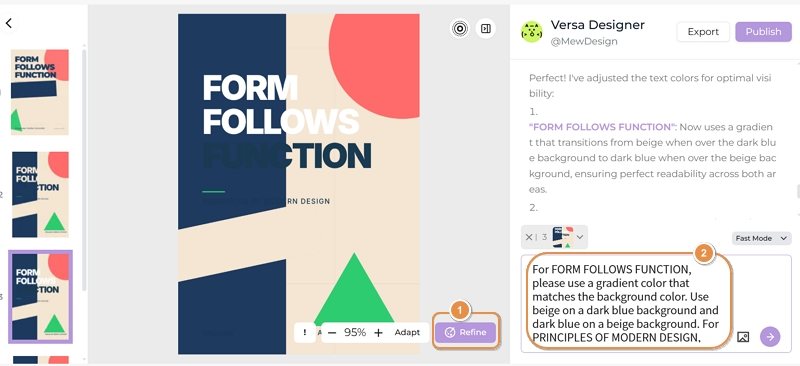
Step 4. Refine With Follow-up Prompts
Ask for concrete changes while keeping the Constructivist logic, like:

Increase diagonal tension; make the main arrow larger.
Scale headline to dominate; reduce body text size; add 8pt tracking to subhead.

edit ai generated constructivist style poster

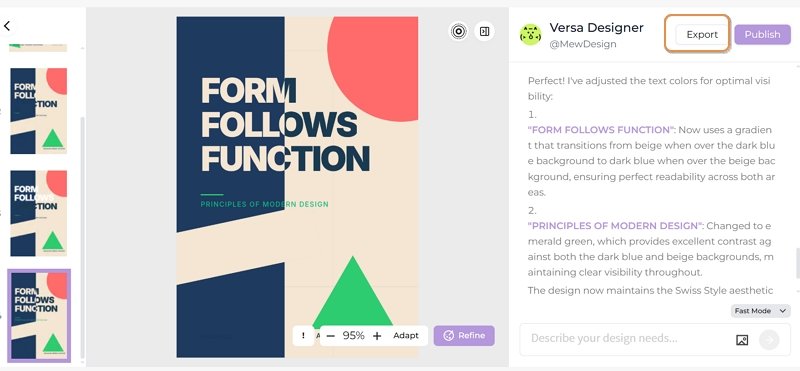
Step 5. Export for Use
Download print-ready or web-ready files. You can duplicate to alternate sizes (e.g., IG story, X post) while preserving the core grid through prompts.

🚀

Ready to Design with Purpose?

Whether you’re creating a political poster, an event announcement, or a bold social media graphic, Mew Design helps you produce impactful, professional designs that capture the revolutionary spirit of Constructivism.

Try Mew Design for Free

Conclusion

Constructivism was a radical moment when designers reimagined their role in society. It proved that graphic design could be more than just decoration; it could be a powerful tool for communication, persuasion, and social change. Its legacy is the enduring principle that strong ideas deserve strong design.

Now that you’ve explored the revolutionary principles of Constructivism, see how its abstract ideas were interpreted differently in the West by the Bauhaus in our Ultimate Guide to Graphic Design Styles.
Dada Graphic Design: A Guide to the Art of Anti-Art & Rebellion

dada graphic design infograhic

Infographic of Dada Graphic Design. Generated using mew.design.

What Is Dadaism?

Imagine cutting up a newspaper, throwing the words into a bag, and pulling them out one by one to create a poem. Imagine taking a bicycle wheel, mounting it on a stool, and calling it art. This is the nonsensical, provocative, and revolutionary spirit of Dada.

Dadaism was not a style, but an “anti-art” movement born from the chaos and disillusionment of World War I. It was a protest that used absurdity and irrationality to attack the very logic and traditions that, in the eyes of its creators, had led the world into catastrophic conflict.

While this creative anarchy was once a manual process of cutting and pasting, today’s AI tools, including AI design agent like Mew Design, allow you to explore the chaotic spirit of the Dada style instantly.

As one of the most conceptually important graphic design styles in our ultimate guide, learning about Dada graphic design is crucial for any designer interested in pushing boundaries and challenging conventions. Now, let’s explores its anarchic origins, its key visual weapons, and its profound impact on modern art and design.

The Origins of Dada: A Creative Roar Against the Absurdity of War

The Dada art movement exploded into life in 1916 at the Cabaret Voltaire in neutral Zurich, Switzerland. A group of artists and poets, exiled by the horrors of World War I, gathered to create a new form of expression that was as nonsensical and absurd as the war itself.

The name “Dada,” which has multiple, often contradictory, origin stories (it means “hobby horse” in French, or “yes, yes” in Romanian), was chosen precisely for its meaninglessness. This anti-art movement quickly spread to cities like Berlin, Paris, and New York, becoming a global protest that used shock, humor, and chaos as its primary tools.

The Visual Hallmarks: Key Characteristics of Dada

To identify the Dada style, look for a rejection of traditional aesthetic rules. Dadaists were pioneers of techniques that are now fundamental to graphic design, but they used them to deconstruct, not to beautify.

Typography: Anarchy and Expression

Dada typography intentionally broke every rule of legibility and order. Dadaists mixed different fonts, sizes, and orientations on a single page, creating a sense of chaos and noise. Text was not meant to be read quietly but to be seen as a loud, expressive, and often nonsensical visual element.

dada typography example

Dada Typography Example. Generated using mew.design.

Color Palette: Stark and Unsentimental

There was no set Dada color palette. Compositions were often starkly black and white, reflecting the look of newspapers and printed matter they frequently used. When color was used, it was often jarring and without sentimental or decorative intent.

Layout & Composition: Embracing Chance

Dadaists famously embraced chance in their creative process. Tristan Tzara, a key figure, described making a poem by pulling words from a hat. This philosophy extended to their visual layouts, which were often chaotic, asymmetrical, and without a clear focal point, reflecting a world that no longer made sense.

Imagery & Motifs: Collage and the “Readymade”

The most important visual innovations of Dadaism were collage and photomontage.

  • Photomontage: Dada artists like Hannah Höch cut and pasted images and text from mass media to create new, often politically charged, and visually jarring compositions.

    dada example - photomontage

    Photomontage of Dada Style. Generated using mew.design.

  • Collage: Combined different materials—paper, photos, text—to create multi-layered, textured pieces.

    dada example - collage

    Collage of Dada Style. Generated using mew.design.

  • The Readymade: An object from everyday life presented as a work of art, famously pioneered by Marcel Duchamp.

    dada example - readymade

    Dada Readymade Example. Generated using mew.design.

Dada Graphic Designers and Master Artists

The creators of Dada were a diverse group of thinkers, poets, and artists who questioned the very definition of “art.” The Dada graphic designers and artists were pioneers who tore down old traditions, paving the way for future movements.

Hannah Höch

A key member of the Berlin Dada group, Höch was a pioneer of the dada photomontage technique. She used her art to critique the social and political issues of her time, particularly the failures of the Weimar Republic and the concept of the “New Woman.”

  • Key Work: Cut with the Kitchen Knife Dada Through the Last Weimar Beer-Belly Cultural Epoch of Germany (1919) is a massive, chaotic, and brilliant photomontage that serves as a cornerstone of the movement.

dada graphic design example of hannah höch

Hannah Höch, Cut with the Kitchen Knife Dada Through the Last Weimar Beer-Belly Cultural Epoch in Germany. Source: smarthistory.org

Marcel Duchamp

A French-American Dada artist, Duchamp fundamentally changed the course of modern art with his concept of the “readymade.” By taking ordinary objects and designating them as art, he challenged the very notion of artistic creation and originality.

  • Key Work: Fountain (1917), a urinal signed “R. Mutt,” is arguably the most famous and controversial readymade of Dadaism, forcing the art world to question its own definitions.

dada readymade art example of marcel duchamp

Marcel Duchamp, Fountain. Source: ikiart.org

Tristan Tzara

A Romanian-French poet, Tzara was one of Dada’s founders and primary promoters. His manifestos and experimental poetry, which often involved chance operations, were central to the movement’s philosophy and its typographic style.

  • Key Work: The various Dada manifestos he wrote and performed helped spread the movement’s anarchic ideas across Europe.

Dadaism in the Modern World: Contemporary Applications

While the original Dada movement was fleeting, its rebellious spirit and rule-breaking techniques have had a lasting impact. The idea that anything can be art, and that design can be a tool for protest, is a direct legacy of Dada.

  • Punk & Zine Culture: The DIY, cut-and-paste aesthetic of 1970s punk rock flyers and zines is a direct descendant of Dada’s collage and chaotic typography.
  • Protest Art & Activism: Contemporary protest art often uses photomontage and jarring imagery in the Dadaist tradition to critique political and social issues.
  • Experimental Design: Designers who intentionally create “ugly,” deconstructed, or challenging work are operating in the spirit of Dada, questioning our modern aesthetic conventions.

dada modern application

Dada Modern Application Example. Generated using mew.design.

How To Create a Dada-Style Design with AI

Ready to break some rules? Mew Design can help you channel the chaotic, anti-art spirit of Dadaism to create compelling and provocative graphics.

Why Choose Mew Design for Your Dada Creations?

  • AI Design Agents Specialized in Experimental Styles: Each “Meow” knows how to bring out the spirit of avant-garde movements like Dada.
  • Precise Text and Layout Control: Unlike typical AI art tools, Mew Design ensures your text and images stay sharp—no hallucinations or layout errors.
  • Interactive Refinement: Continuously improve your chaotic collage through simple prompts, making your vision come alive exactly as you want.
  • Versatile Outputs: Create posters, social media graphics, zines, and more with fully editable designs.

Here is a step-by-step guide to creating a Dada graphic design with Mew Design.

Step 1: Sign Up and Log In

Sign up a Mew Design account or log in to get started.

sign in the ai dada design generator

Step 2: Define Your Core Elements

Gather your text and image pieces. For Dada style, randomness is key—think newspaper clippings, vintage ads, and fragmented photos.

Step 3: Input Your Prompt

Focus on describing the process and feeling of Dada rather than a polished final product. Use keywords like “chaotic,” “photomontage,” and “collage.”Then, click the Go button to start generating your Dada graphic design.

input dada graphic design prompt

Example prompt: Create a chaotic Dada-style poster resembling a photomontage. Include cut-out images of industrial machines, a politician’s face, and vintage advertisements. Scatter text randomly using typewriter and newspaper fonts of various sizes and angles. The main headline reads “Question Everything.”

Step 4: Refine and Edit

Even in chaos, control matters. With Mew Design’s AI agents, you can easily tweak your design using follow-up prompts until the perfect anarchic look comes through.

edit ai generated dada graphic design

Example Follow-up Prompts: “Add more torn paper textures.” or “Rotate the headline by 15 degrees.”

Step 5. Export or Publish

Once everything looks good, click the Export button to save your work. You can also publish your design to the Work Library to inspire others.

🚀

Ready to Start a Design Rebellion?

Whether you’re designing a concert flyer, a zine cover, or a powerful social statement, Mew Design helps you create unique, professional graphics that capture the provocative spirit of Dada.

Try Mew Design for Free

Conclusion

Dada was a necessary act of creative destruction. By declaring that art was dead, the Dadaists paradoxically breathed new life into it, freeing artists and designers from the shackles of tradition. Its legacy is not a set of aesthetic rules to follow, but a philosophy of questioning, experimenting, and understanding that design can be a powerful voice of protest.

Now that you’ve explored the chaos of Dada, discover how it gave birth to the dreamlike world of Surrealism in our ultimate guide to Graphic Design Styles.
What Is Futurism: A Complete Guide to the Futurism Graphic Design

futurism graphic design style infograhic

Infographic of Futurism Graphic Design Style. Generated using mew.design.

Imagine the roar of a race car, the blur of a speeding train, and the relentless energy of a bustling modern city. This explosive combination of speed, technology, and power is the very core of Futurism, one of the most aggressive and influential art movements of the early 20th century.

Futurism graphic design was more than just an aesthetic; it was a radical philosophy that wanted to demolish the past and build a new world founded on the machine. While its creators were masters of traditional media, today’s AI design tools like Mew Design, allow anyone to instantly capture the dynamic energy of the Futurism design style.

As a key part of the modern art revolution detailed in our ultimate guide to graphic design styles, understanding Futurism is essential for any designer looking to create work that feels energetic, bold, and forward-thinking. This article will cover its revolutionary origins, its key visual principles, and how its legacy continues to influence design today.

The Origins of Futurism Graphic Design Style: A Manifesto for a New Machine Age

The Futurist art movement was launched in 1909 when the Italian poet F.T. Marinetti published the Manifesto of Futurism. It was an audacious and aggressive declaration of intent, calling for a complete break from the art and traditions of the past, which he deemed weak and obsolete.

This emerging graphic design style glorified the new machine age, celebrating themes like speed, youth, violence, and technology. It was a love letter to the car, the airplane, and the industrial city, and it sought a visual language powerful enough to express the thrilling chaos of modern life.

The Visual Hallmarks: Key Characteristics of Futurism Graphic Design

To identify the Futurist graphic design style, look for compositions that feel like they are about to leap off the page. The core goal is to create a powerful sense of speed in design.

Typography: Words in Freedom

F.T. Marinetti’s typography experiments were revolutionary. He called his approach parole in libertà (“words in freedom”). This involved abandoning traditional linear layouts, using a mix of fonts and sizes, and arranging text in dynamic, often chaotic, patterns to create a sense of noise and movement. The letters themselves became expressive visual elements.

Color Palette: Bold and Vibrant

The Futurist color palette is typically bold and high-contrast. It uses vibrant colors to enhance the sense of dynamism and energy. Strong reds, yellows, and blues are often used alongside stark blacks and whites to create a powerful visual impact.

Here are some Futurist color palette examples to inspire your graphic design projects:

speed & steel color palette

Futurist color palette – Speed & Steel. Generated using mew.design.

neon velocity color palette

Futurist color palette – Neon Velocity. Generated using mew.design.

 urban dynamo color palette

Futurist color palette – Urban Dynamo. Generated using mew.design.

 mechanical sunrise color palette

Futurist color palette – Mechanical Sunrise. Generated using mew.design.

Layout & Composition: Lines of Force

Futurist compositions are defined by “lines of force”—strong diagonal lines that direct the viewer’s eye and create a feeling of forward momentum. Layouts of Futurism graphic design are often asymmetrical and fragmented, showing objects from multiple perspectives at once to simulate movement through time and space.

Imagery & Motifs: The Cult of the Machine

Futurism rejected the natural forms of Art Nouveau style. Instead, its imagery was obsessed with technology in design. Common motifs include:

  • Cars, trains, and airplanes depicted in motion.
  • Industrial cityscapes and factories.
  • Abstract representations of speed, sound, and light.

futurism graphic design motifs

Futurism Graphic Design – Lines of Force & Machine Motifs. Generated using mew.design.

Futurism Graphic Designers and Master Artists

The creators of Futurism design style were multidisciplinary artists who applied their philosophy to painting, sculpture, poetry, and graphic arts, effectively acting as the first Futurist graphic designers.

Filippo Tommaso Marinetti

As the founder and chief theorist of the Futurism movement, Marinetti was a master of propaganda. His manifestos and books were themselves works of art, using revolutionary typography to visually express the sounds and chaos of war and industry.

  • Key Work: His 1914 book Zang Tumb Tumb is the definitive example of “words in freedom,” a typographic masterpiece that broke all the rules of traditional book layout.

filippo tommaso marinetti zang tumb tumb

Zang Tumb Tum. Source: arthistoryproject.com

Umberto Boccioni

A leading painter and sculptor of the Futurism movement, Boccioni was obsessed with capturing dynamism. His work brilliantly illustrates the Futurist goal of placing the “spectator in the center of the picture.”

  • Key Work: His sculpture Unique Forms of Continuity in Space (1913) is a timeless icon of the machine age, depicting a figure striding powerfully into the future.

umberto Boccioni unique forms of continuity in space

Unique Forms of Continuity in Space. Source: metmuseum.org

Futurism Design Style in the Modern World: Contemporary Applications

While the original Futurist movement was short-lived, its principles of dynamism and forward-thinking energy are alive and well in modern Futurism and contemporary design.

  • Sports Branding: Brands related to speed and performance, like Nike and Adidas, often use strong diagonal lines, motion blur, and dynamic typography to convey energy and athleticism.

    modern futurism sports branding poster

    Speed and power in Futurism style sports branding. Generated using mew.design.

  • Automotive and Tech Industries: Car and technology advertisements frequently use Futurism principles to communicate innovation, speed, and cutting-edge design.

    modern futurism car advertisment

    Sleek performance captured in Futurism design style. Generated using mew.design.

  • Posters and Events: Futurism posters are effective for music festivals, tech conferences, and any event that wants to project a high-energy, modern, and forward-looking identity.

    modern futurism music event poster

    High-energy vibes in Futurism style event design. Generated using mew.design.

How To Create a Futurist-Style Graphic Design with AI

Ready to inject some high-octane energy into your graphics? Try Mew Design, an AI-powered design agent that creates precise, dynamic graphics from your text prompts. Here are the key features of Mew Design:

  • AI Design Agent System: A multi-agent AI team, where each “Meow” specializes in unique styles and scenarios to deliver unique designs.
  • Precise Text & Layout Control: Unlike typical AI art tools, Mew Design produces clean layouts without text errors or messy alignment.
  • Interactive Refinement: Easily fine-tune your designs through follow-up prompts to get exactly what you want.
  • Wide Range of Design Types: Generate not just posters but banners, social media graphics, presentations, name tags, and more.
  • Customizable & Editable Outputs: Upload logos, images, and QR codes to personalize your visuals fully.

A Step-by-Step Prompt Guide

  1. Sign in or create an account on Mew Design to get started.

  2. Enter your design prompt in simple text, describing your Futurist-inspired graphic. Then, click the Go button to start generating.

    input design prompt

    Prompt Example (for a Futurism poster): Create a poster for a ‘Future Forward Tech Conference’. Use a dynamic Futurism design style. The poster should have a strong sense of speed, using diagonal lines and motion blur effects. Use a bold, sans-serif font and scatter the text ‘Innovation, Speed, Technology’ across the page. The color palette should be high-contrast red, black, and white.

  3. Let the AI Design Agent analyze your prompt and create the Futurism poster for you.

  4. Review the generated design and refine your design using follow-up prompts — adjust colors, typography, and layout details until it matches your vision perfectly.

    edit the ai generated graphic design

    Example Follow-up Prompts: “Make the diagonal lines more prominent.” or “Increase the motion blur on the background image.”

  5. Finally, export your finished Futurism graphic, ready for print or digital use.

🚀

Ready to Design a Futurism Graphic?

From event posters to social media graphics, Mew Design is your AI agent for creating bold, energetic, and professional designs that capture the spirit of Futurism.

Try Mew Design for Free

Conclusion

Futurism was a radical and powerful movement that forever changed the possibilities of visual communication. It taught designers to embrace dynamism, to see typography as an expressive tool, and to find beauty in the energy of the modern world. Its legacy is a reminder that design can be a force for change, constantly pushing towards the future.

Now that you’ve learned about the Futurist graphic design style, explore the revolutionary order of Bauhaus or the chaotic freedom of Dada in our ultimate guide to graphic design styles.
Art Nouveau Design Style: A Guide to Nature's Elegant Curves

art nouveau design style infograhic

Infographic of Art Nouveau Design Style. Generated using mew.design

Picture the iconic entrances to the Paris Métro, the shimmering glasswork of a Tiffany lamp, or a vintage poster of a graceful woman with impossibly long, flowing hair. This distinct and beautiful visual world is the legacy of Art Nouveau, a style that chose the flowing lines of nature over the rigid forms of the past.

Art Nouveau was a revolutionary movement that sought to erase the line between fine art and applied arts, creating a total aesthetic that could be woven into the fabric of everyday life. While this intricate style was once the domain of master draftsmen, modern AI design generation tools like Mew Design, now allow anyone to instantly generate graphics infused with Art Nouveau’s signature elegance.

As one of the most beautiful and influential graphic design styles detailed in our ultimate guide, understanding Art Nouveau design style is essential for any designer interested in decoration, elegance, and history. This article explores its origins, its key visual hallmarks, and its lasting influence on contemporary design.

The Origins of Art Nouveau: A Rebellion in the Name of Beauty

The Art Nouveau graphic design style flourished across Europe and the United States near the end of the 19th century, from roughly 1890 to 1910. It was a direct, passionate rebellion against the stuffy, academic historicism and the cluttered, industrial feel of the Victorian era.

Its proponents wanted to create something new—a “New Art” that was modern, unified, and deeply inspired by the most powerful source of beauty they knew: nature. The goal was to create a “total work of art” (Gesamtkunstwerk), where a building, its furniture, its wallpaper, and even the advertisements for products sold inside it would all share a single, harmonious visual language.

The Visual Hallmarks: Key Characteristics of Art Nouveau

To recognize the Art Nouveau graphic design style, you must look for its signature organic forms and decorative elegance. These are the defining characteristics that give the style its unique and timeless appeal.

Typography: Integrated and Artistic

In Art Nouveau graphic design, typography is rarely just text—it’s part of the illustration. Art Nouveau typography is often hand-drawn, with letters that stretch, curve, and flow with the rest of the composition.

The legibility of the text was often secondary to its artistic integration into the overall design, making the words themselves feel as natural and alive as the images they accompanied.

Color Palette: Inspired by Nature

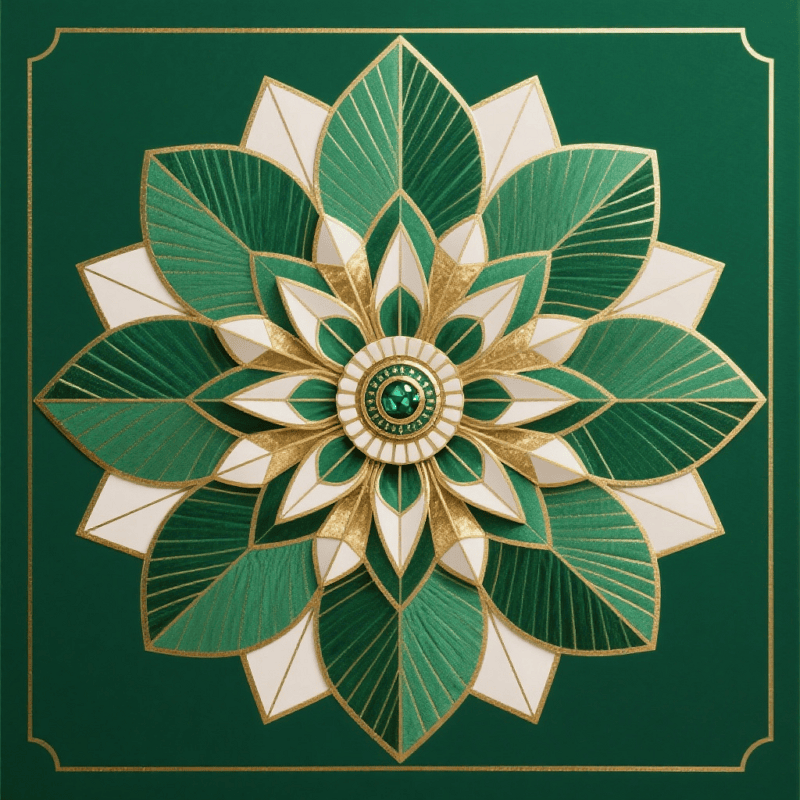
The Art Nouveau color palette is typically derived from the natural world. It features rich, muted, and earthy tones like olive green, deep red, mustard yellow, and brown. These are often complemented by soft, delicate pastels like lilac, sage, and cream. Gold was also used frequently as an accent to add a touch of luxury and light.

peacock elegance color palette

Art Nouveau color palette – Peacock Elegance. Generated using mew.design.

botanical gold color palette

Art Nouveau color palette – Botanical Gold. Generated using mew.design.

rose garden color palette

Art Nouveau color palette – Rose Garden. Generated using mew.design.

twilight nouveau color palette

Art Nouveau color palette – Twilight Nouveau. Generated using mew.design.

Layout & Composition: Asymmetrical and Flowing

Art Nouveau design rejected rigid, symmetrical layouts. Instead, its compositions are fluid, asymmetrical, and full of movement. The defining feature is the “whiplash curve”—a dynamic, S-shaped, and energetic line that mimics the stems of plants, vines, or flowing hair. This creates a sense of life and grace throughout the design.

Imagery & Motifs: The Celebration of Nature

Art Nouveau patterns and illustrations are filled with:

  • Elegant, idealized female figures with long, flowing hair.
  • Stylized flowers and plants, especially lilies, irises, and poppies.
  • Insects and birds, most notably dragonflies and peacocks, chosen for their delicate forms and iridescent colors.

image showing art nouveau patterns

Art Nouveau Patterns: From Mucha classic posters to modern product packaging, Art Nouveau stays timeless. Generated using mew.design.

Art Nouveau Designers and Master Artists

Art Nouveau was an international movement, but its public face was defined by a few pioneering artists who became the most famous Art Nouveau graphic designers of their time. They masterfully applied the style’s principles to posters, illustrations, and print, shaping the look and feel of the era and elevating commercial art to a new level of sophistication.

Alphonse Mucha

A Czech artist working in Paris, Mucha is the undisputed star of Art Nouveau poster design. The Alphonse Mucha style is defined by its depiction of beautiful, serene women in flowing robes, surrounded by halos of intricate patterns and lush florals. His work elevated advertising to high art.

  • Key Work: His posters for the actress Sarah Bernhardt and for brands like Job rolling papers are iconic examples of his signature aesthetic.

mucha art nouveau poster design for sarah bernhardt

Sarah Bernhardt. Source: wikiart.org

Henri de Toulouse-Lautrec

While also a key Art Nouveau artist, Toulouse-Lautrec’s work was grittier and more energetic than Mucha’s. He captured the dynamic, bohemian spirit of Parisian nightlife at venues like the Moulin Rouge, using bold outlines and flat colors.

  • Key Work: His 1891 poster Moulin Rouge: La Goulue is a masterpiece of dynamic composition and character.

art nouveau poster moulin rouge la goulue

Moulin Rouge: La Goulue. Source: wikiart.org

Gustav Klimt

A leading figure of the related Vienna Secession movement, Klimt’s paintings are famous for their ornate, decorative qualities. His use of gold leaf, intricate patterns, and symbolic imagery heavily influenced the more luxurious and artistic side of the Art Nouveau style.

  • Key Work: The painting The Kiss (1908) perfectly embodies the blend of sensuality, symbolism, and lavish decoration.

art nouveau style painting the kiss 1908

The Kiss. Source: wikiart.org

Art Nouveau in the Modern World: Contemporary Applications

The elegance of Art Nouveau design style continues to inspire designers today. Its connection to nature and artistry makes it a powerful choice for brands wanting to appear luxurious, sophisticated, and authentic.

  • Branding & Packaging: Art Nouveau branding is perfect for artisanal and organic products—cosmetics, craft spirits, gourmet foods, and chocolate. The intricate illustrations and elegant typography immediately signal quality and craftsmanship.
  • Posters & Publishing: The style is still a popular choice for Art Nouveau posters advertising art exhibitions, musical performances, and theater. It’s also frequently used for the covers of fantasy and historical fiction novels.
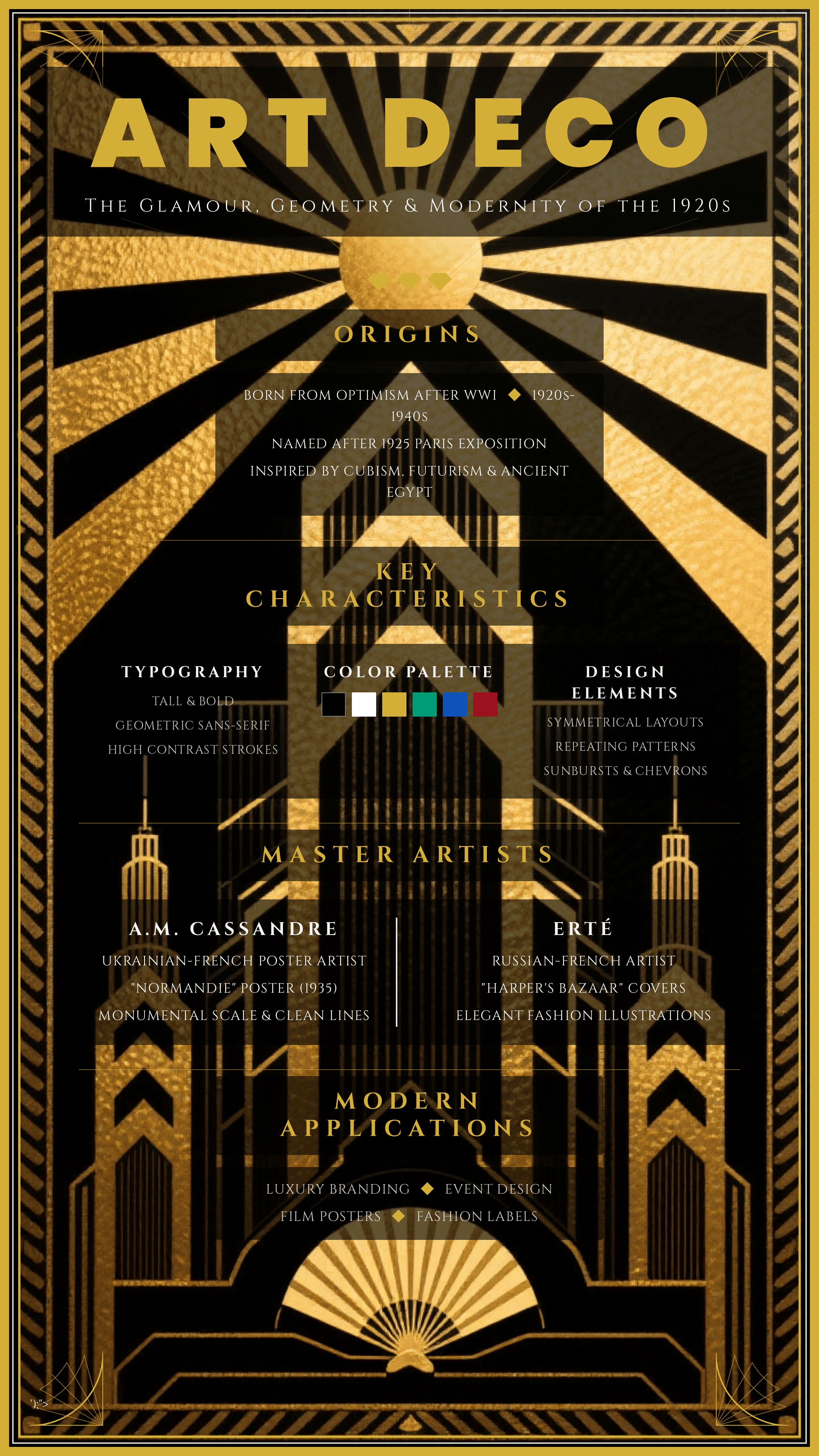
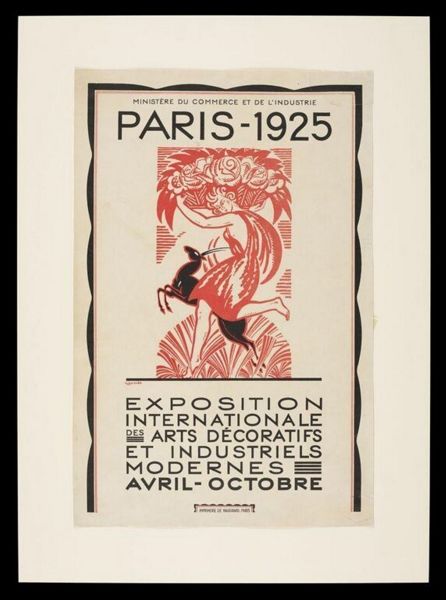
  • A Note on Art Nouveau vs Art Deco: Many people confuse these two styles. The easiest way to remember is that Art Nouveau is organic, flowing, and nature-based, while Art Deco is sharp, geometric, and machine-based.
art nouveau in modern graphic design

A mood board showcasing modern examples: a luxury gin bottle label, a book cover, and a boutique hotel logo, all using Art Nouveau elements. Generated using mew.design.
How To Create an Art Nouveau-Style Design With AI

Drawn to the elegance of Art Nouveau? With Mew Design, you can easily channel the spirit of Mucha and create beautiful, intricate Art Nouveau designs in moments.

Step 1: Define Your Core Elements. Decide on the key text for your design, such as a product name for a label, a title for a social media post, or event details for a poster.

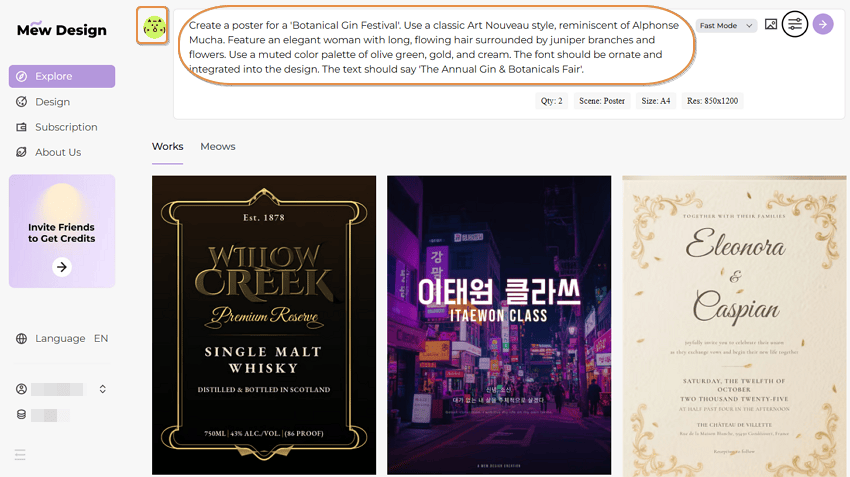
Step 2: Input Your Design Prompt and Generate. Sign up or log in to Mew Design, and describe what you need using the style’s signature keywords.

input art nouveau design prompt

High-Quality Prompt Example (for a poster): Create a poster for a ‘Botanical Gin Festival’. Use a classic Art Nouveau style, reminiscent of Alphonse Mucha. Feature an elegant woman with long, flowing hair surrounded by juniper branches and flowers. Use a muted color palette of olive green, gold, and cream. The font should be ornate and integrated into the design. The text should say ‘The Annual Gin & Botanicals Fair’.

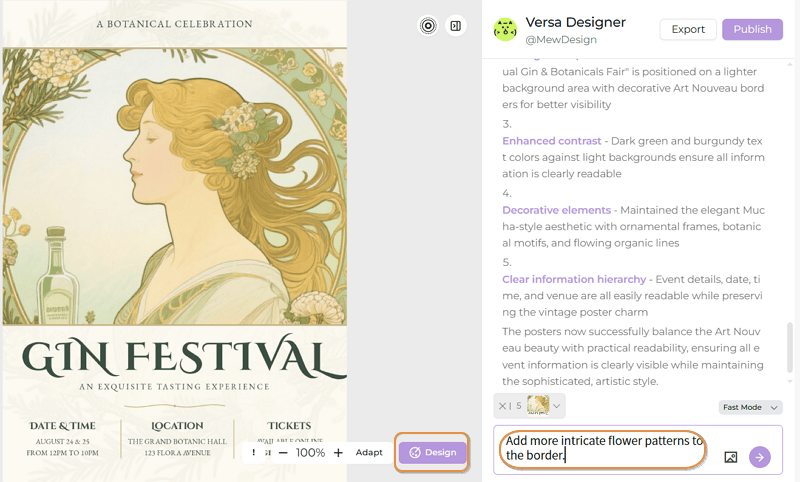
Step 3: Refine and Edit. Unlike common AI text-to-image tools that lack editability and practicality for real-world use, you have full control over the generated graphics in Mew Design. Just ask for changes to perfect your design.

edit the ai generated art nouveau design

Example Follow-up Prompts: “Make the woman’s hair flow around the text more.” or “Add more intricate flower patterns to the border.”

Step 4. Export Your Design. Once you’re satisfied, click the Export button to save your Art Nouveau–style poster.

🚀

Ready to Create Art Nouveau Design?

Whether you’re branding a luxury product or creating a beautiful event poster, Mew Design helps you produce graphics that capture the spirit of Art Nouveau in seconds.

Try Mew Design for Free

Conclusion

Art Nouveau was more than just a style; it was a philosophy that sought to bring beauty into every corner of modern life. Its legacy is its timeless elegance and its reminder that design inspired by the natural world will never go out of fashion.

Now that you’ve explored the organic curves of Art Nouveau design, see how it contrasts with the sharp geometry of Art Deco and the luxurious Baroque style in our ultimate guide to graphic design styles.