
Skip to content

Blog

DIY KPop Demon Hunters Halloween Costume 2025 [Blueprint Included]

I’ve been obsessed with the K-pop Demon Hunters movie ever since I binged it on Netflix a while back. The stunning visuals, the dark fantasy storyline, the incredible outfits—I was completely hooked.

kpop demon hunters poster

KPop Demon Hunters Poster/Netflix

While the show has been living rent-free in my head for months, I hadn’t thought about it for Halloween until last night. As I was scrolling through social media, I saw the “KPop Demon Hunters Halloween Costume” topic trending everywhere, and suddenly, inspiration struck like lightning: this is it. This has to be my costume for this year’s party.

The entire aesthetic of the movie is a perfect match for Halloween. It has that dark, gothic mystery, the thrill of the supernatural, and that powerful, dramatic flair that’s perfect for the holiday. I knew I didn’t want some generic, store-bought version; I wanted to create a unique DIY KPop Demon Hunters Halloween costume that felt authentic to the world I loved, but was still completely my own.

So, I decided to take on the project, and I’m sharing my entire creative process with you. This is my step-by-step experience of using an amazing AI tool called Mew Design to bring my movie-inspired, social-media-sparked vision to life. Let’s get started.

Deconstruct the KPop Demon Hunters Style for Your DIY Halloween Costume

My first step, even before touching any AI design tools, is to break down the aesthetic. What makes this look so iconic? From what I saw in the movie, the KPop idol demon concept costume is all about a masterful blend of textures and layers.

  • Key Clothing Items: The foundation is built on asymmetrical leather jackets, tactical vests, corsets, battle-worn capes, and functional cargo pants loaded with straps and harnesses. It’s about looking both elegant and ready for action.
  • Essential Fabrics: I saw a lot of faux leather and sleek vinyl mixed with softer, more dramatic materials like velvet and sheer, ripped fabrics for a ghostly, layered effect. This contrast is key to the dark fantasy KPop style outfit.
  • Must-Have Accessories: This is where the “hunter” identity shines. Think silver chains, gothic cross pendants, glowing rune charms, fingerless leather gloves, and intricate harnesses. These details sell the story.

The goal is to create a silhouette that feels like it belongs to a hero from a dark, mystical world.

kpop demon hunters girls clothing items

KPop Demon Hunters Girls Clothing/Netflix

kpop demon hunters boys clothing items

KPop Demon Hunters Boys Clothing/Netflix

With these key elements, you have everything you need to create the perfect ‘Demon Hunter’ look. Of course, a well-designed Halloween costume deserves an equally brilliant party to show it off. Before you start brainstorming your specific outfit, consider setting the overall tone for your event. It all starts with the perfect invitation—for instance, some vintage halloween party invitations can instantly inject a mysterious and classic atmosphere that perfectly complements your demon hunter theme.

Endless Inspiration: 2025’s Hottest KPop Demon Hunters Halloween Costume Ideas

Now for the fun part. Instead of just trying to copy an outfit from the movie, I wanted to create my own original character within that universe. This is where I turned to Mew Design. By giving it specific, detailed prompts, I could explore countless KPop Demon Hunters Halloween costume ideas in minutes.

mew design ai design generator

For Women: Elegant Gothic & Warrior Chic of HUNTR/X Demon Hunter

Inspired by the fierce and fashionable members of the K-pop girl group HUNTR/X in the KPop Demon Hunters movie, I wanted a look that was both fierce and beautiful.

My Prompt for Mew Design: Generate a photorealistic, full-body image of a young woman wearing a K-pop Demon Hunters Halloween costume. The costume consists of a black crop top, a pair of black high-waisted pants with mysterious dark patterns, a leather moto jacket, Gothic Cross Accessories, and combat boots. She is also wearing a holographic belt and a stylish harness, and holding a prop demon-hunting sword with glowing accents. She is striking a ready-for-action pose, with bold K-pop idol-style makeup and her hair in a high ponytail with colorful streaks. The figure should be set against a clean, plain background to clearly display the full costume effect.

ai kpop demon hunters Halloween custome design for women

KPop Demon Hunters inspired Halloween Costume for Women. Generated using mew.design.

For Men: Saja Boys Demon Idol

The male characters in the KPop Demon Hunters film had the amazing mix of ancient magic and futuristic tech. The following Halloween costume is based on the charismatic and secretly demonic rival boy band, the Saja Boys. The style is sleek and modern with subtle demonic details.

My Prompt for Mew Design: Generate a photorealistic, full-body image of a young man in a ‘demon idol’ Halloween costume inspired by the Saja Boys. He is dressed in a long, dark, traditional-inspired robe with subtle red trim or embroidery, similar to a Korean Hanbok. He is wearing a wide-brimmed, black traditional hat, like a ‘gat’. His look has subtle demonic details, such as glowing eyes and faint, ethereal patterns on his hands or neck. He has a charismatic and mysterious expression. His hair is styled like a modern K-pop idol’s, peeking out from under the hat. The figure should be set against a clean, plain background to clearly display the full costume effect.

ai kpop demon hunters halloween custome design for young men

KPop Demon Hunters inspired Halloween Costume for Men. Generated using mew.design.

For Kids: Cute & Spooky Little Monster Hunter

This theme can even be adapted for kids! If you are preparing a KPop Demon Hunters Halloween costume for your kids, I reimagined this cute and comfortable version of the HUNTR/X outfits, perfect for a child.

My Prompt for Mew Design: K-pop style female demon hunter Halloween costume for a young girl, cute yet fierce design, dark fantasy mixed with K-pop stage outfit, black and purple color scheme, short dress with layered skirt, silver chains and small gothic charms, glowing red rune patterns, stylish high boots with safe rounded heels, playful but heroic look, fantasy-inspired accessories like small spiked headband, magical staff or toy sword, cinematic concept art, ultra-detailed, 8k illustration.

ai kpop demon hunters Halloween custome design for kids

KPop Demon Hunters inspired Halloween Costume for Kids. Generated using mew.design.

Fine-Tune Your DIY KPop Demon Hunters Halloween Costume Design

From the initial batch of ideas Mew Design gave me, I picked my favorite “Elegant Gothic” concept. But if you’re not satisfied with the first design and want to make a few tweaks to perfect it, the platform’s continuous modification feature is a lifesaver.

Simply keep the conversation going with the AI.

Example follow-up prompt 1: Change the pants to a high-waisted pleated skirt.

refine kpop demon hunters halloween custome design

Example follow-up prompt 2: Add intricate silver embroidery in the shape of a spider web onto the corset.

Example follow-up prompt 3: Change the material of the straps to a dark red leather to add a pop of color.

Watching the design evolve in real-time based on your instructions was an empowering experience, turning a great concept into your dream costume.

ai refined kpop demon hunters halloween custome

KPop Demon Hunters inspired Halloween Costume refined with AI.

Virtual Try-On: Preview Your KPop Demon Hunters Halloween Costume Instantly

Here’s the moment of truth for any DIY project. Will it actually look good on me? To avoid any doubt, I used the virtual try-on KPop Demon Hunters Halloween costume feature. I uploaded a recent photo, selected my final design, and let the AI work its magic. Seeing the costume seamlessly integrated onto my own photo was incredible. It provided the ultimate confirmation that this was the right look for me before I bought a single piece of fabric.

Virtual Try-on Prompt: The character in the image I uploaded is wearing the clothing and accessories from generated design.

kpop demon hunters halloween custome virtual try on

The Final Blueprint: Your DIY KPop Demon Hunters Halloween Costume Guide

Now for the final, and most practical, piece of the puzzle. How do you actually make it? Mew Design generated a professional-grade technical blueprint, which is essentially the ultimate DIY KPop Demon Hunters Halloween costume guide. This document is the key to bringing your design to life.

My personal blueprint included (Prompt):

Ultra-realistic technical fashion sheet of the K-pop female demon hunters Halloween costume for a young woman, featuring front and back views with professional annotations. The style should be a photorealistic blueprint.

Material Breakdown:

  • Jacket: Lightweight faux leather for the moto jacket.
  • Top: Stretch cotton jersey for the black crop top.
  • Pants: Durable twill for the black high-waisted pants, with subtle, dark sublimated patterns.
  • Accessories: Holographic PVC for the belt; faux leather straps with metal hardware for the stylish harness.
  • Prop: EVA foam and embedded LEDs for the glowing demon-hunting sword.
  • Footwear: Faux leather for the combat boots.

Details: All stitching, seams, and tailoring details should be clearly visible. Annotations should include key measurements for standard women’s sizing (e.g., S/M/L). The design must be presented as a DIY-friendly and cosplay-ready blueprint. Render with realistic texture photography at a high resolution.

kpop demon hunters halloween custome technical blueprint

Blueprint of the selected KPop Demon Hunters Halloween Costume Design. Generated using mew.design.

Just select your refined design and enter the blueprint prompt to get its technical blueprint. This isn’t just a picture; it’s a set of instructions. It’s everything you need to know if you want to understand how to make a Kpop Demon Hunters Halloween outfit yourself, or to give to a tailor so they can execute your vision perfectly.

Your Halloween Legend Starts Now

Thanks to that amazing movie and the power of Mew Design, I’m not just going to be wearing a KPop Demon Hunters style costume this Halloween. I’m stepping into a character I co-created. I went from a spark of inspiration to a ready-to-make blueprint without any prior design skills.

You can do it too. Stop endlessly scrolling for an uninspired, affordable KPop Demon Hunters costume online and start creating something that is truly yours.

🚀

Your epic Halloween story is waiting to be told.

Click here to sign up for Mew Design for free and start designing your legendary KPop Demon Hunters Halloween outfit today!

Try Mew Design for Free

Grunge Graphic Design: A Guide to the Raw, Distressed Art of the 90s

grunge graphic design style infograhic

Infographic of Grunge Graphic Design Style. Generated using mew.design.

What Is Grunge Style?

Imagine the raw energy of a 90s rock show, the worn-out texture of a vintage band t-shirt, and the chaotic, cut-and-paste look of an underground zine. This unfiltered, anti-establishment, and deeply authentic aesthetic is the heart of Grunge design.

Born from the flannel-clad alternative music scene of the early 1990s, Grunge was a gritty rebellion against the slick, polished, and corporate-driven design trends of the 1980s. It embraced imperfection, chaos, and a raw, human touch.

While Grunge’s pioneers used physical methods like photocopying and tearing paper, today’s AI technology like the AI design agent – Mew Design, allows you to generate graphics that capture the textured, deconstructed spirit of the Grunge style in minutes.

As one of the most attitude-filled graphic design styles in our ultimate guide, understanding the Grunge graphic design style is essential for any designer looking to create work that feels edgy, authentic, and unapologetically real. This article explores its musical origins, its key visual characteristics, and its lasting impact on design.

The Origins of Grunge Graphic Design: The Sound of Rebellion Becomes a Look

The Grunge graphic design style exploded into popular culture in the early 1990s, directly mirroring the rise of grunge music from Seattle. Bands like Nirvana, Pearl Jam, and Soundgarden rejected the polished glamour of 80s rock, and the design world followed suit.

The most influential force was designer David Carson through his work as the art director for Ray Gun magazine. He took the DIY ethos of punk rock and zine culture and brought it to a mainstream audience, creating a deconstructed layout style that was messy, emotional, and completely broke from the rigid grids of modernism. It was a visual representation of the angst and authenticity of Generation X.

grunge graphic design origins 1990s rebellion style

The origins of grunge design in the 1990s, inspired by music, zines, and rebellion. Generated using mew.design.

The Visual Hallmarks: Key Characteristics of Grunge Graphic Design

To identify the Grunge style, look for visuals that feel tangible, worn-out, and intentionally imperfect. It is a style that values texture and emotion over clean perfection.

1. Grunge Typography: Messy and Illegible

Grunge typography is famous for being hard to read. Designers treated text as a visual texture rather than just a carrier of information. They used overlapping letters, mixed different fonts, and often distorted or “dirtied” the type to make it feel less perfect. The infamous use of the Zapf Dingbats font for an entire article in Ray Gun is a prime example of this rule-breaking approach.

grunge typography messy fonts

Grunge typography using overlapping, distorted, and chaotic fonts inspired by Ray Gun magazine. Generated using mew.design.

2. Grunge Color Palette: Muted, Gritty, and Moody

The Grunge color palette is typically dark, muted, and moody. It avoids bright, cheerful colors in favor of sludgy, earthy tones, washed-out colors, and a lot of black and white. The high-contrast, black-and-white look of a photocopier was a major influence.

urban decay grunge color palette

An urban decay grunge color palette with dark greys, black, and muted red, reflecting the gritty mood of 1990s grunge design. Generated using mew.design.

rusted grunge color palette

A rusted memories palette blending brown, sepia, silver, and off-white, echoing distressed textures and worn-out grunge aesthetics. Generated using mew.design.

monochrome grunge palette

A smudged monochrome grunge palette inspired by photocopier contrasts, with layered greys, black, and white for raw graphic energy. Generated using mew.design.

faded underground grunge color palette

A faded underground palette featuring dark brown, ash grey, and muted neutrals, capturing the distressed and authentic spirit of grunge. Generated using mew.design.

3. Grunge Layout & Composition: Deconstructed and Chaotic

Grunge graphic design completely rejects the grid. Layouts are layered, chaotic, and often feel unbalanced. Elements overlap, images are cropped in unusual ways, and the entire composition can feel like a messy collage. This intentional chaos was a way to create visual energy and reject corporate slickness.

grunge chaotic collage layout

A deconstructed grunge layout with overlapping layers, cropped images, and chaotic composition. Generated using mew.design.

4. Grunge Imagery & Motifs: Distressed and Authentic

Distressed textures in design are the core of the Grunge aesthetic. Designers went out of their way to make their work look worn, old, and handmade. Common elements include:

  • Torn paper edges, tape, and staples.
  • Gritty, grainy, and out-of-focus photography.
  • Stains, dirt, and smudges.
  • Handwritten or typewriter-style text.

grunge elements and imagery

Distressed grunge imagery with torn edges, tape, stains, and grainy textures. Generated using mew.design.

Grunge Graphic Designers and Master Artists

The Grunge style was largely defined by a few key designers who dared to break every rule they had been taught, creating a new and influential visual language.

1. David Carson

Often called the “father of grunge,” David Carson’s work as the art director of Ray Gun magazine in the 90s is the definitive example of the style. He is famous for his experimental, intuitive approach to design and his belief that legibility should not always be the primary goal.

  • Key Work: Any issue of Ray Gun magazine from 1992-1995 serves as a masterclass in the David Carson style of deconstructed, expressive graphic design.

a collage of ray gun magazine covers

A collage of Ray Gun magazine covers.

2. Neville Brody

An influential British designer, Brody’s work in the 1980s for magazines like The Face and his experimental typography were major precursors to the Grunge movement. He pushed the boundaries of typography and layout, paving the way for the rule-breaking ethos of the 90s.

  • Key Work: His album cover for Cabaret Voltaire’s Micro-Phonies and his work on The Face magazine showcased a new, edgy approach to design.

album cover for cabaret voltaire micro-phonies by neville brody

Album cover for Cabaret Voltaire’s Micro-Phonies, designed by Neville Brody, 1984.

Grunge in the Modern Design: Contemporary Applications

The modern grunge aesthetic continues to be a powerful choice for brands and artists who want to convey an authentic, edgy, and non-conformist identity.

  • Music and Entertainment: The modern Grunge design style is still deeply connected to its roots and is widely used for album art, concert flyers, and branding for rock, punk, and alternative artists.

    modern grunge album cover design

    A modern grunge album cover styled as a distressed Polaroid, featuring a rock band in 1990s-inspired fashion. Generated using mew.design.

    modern grunge music flyer design

    Modern grunge music poster and flyer with distressed textures and chaotic typography. Generated using mew.design.

  • Fashion: Streetwear and alternative fashion brands often use grunge graphics on clothing and in their marketing to project a rebellious, DIY attitude.

    modern grunge streetwear fashion design

    Streetwear graphics in modern grunge style with DIY textures. Generated using mew.design.

  • Branding: While not common for large corporations, smaller brands, especially those targeting a youth audience (like skate companies or coffee shops), use grunge elements to appear more authentic and anti-corporate.

    modern grunge skate branding logo design

    Modern grunge branding for a skate brand. Generated using mew.design.

How to Create a Grunge-Style Graphic Design with AI

Ready to get your hands dirty and create something with a raw, authentic feel? Mew Design helps bring the grunge aesthetic to life while maintaining control over layout and text. Its features ensure that even chaotic designs remain structured and editable.

mew design ai design agent

Key Features for Grunge Design:

  • AI text to design tool—generate graphics in seconds, no design experience required.
  • Crisp text handling—no warped letters, even over textured backgrounds.
  • Editable layouts through follow-up prompts to adjust layers, text, and images with precision.
  • Style-aware rendering to achieve authentic distressed textures, overlays, and patterns.
  • Upload reference images, product photos, or logos for seamless integration.

Steps to Create a Grunge-Style Design in Mew Design

Step 1 – Sign Up or Log In

Create a free account or log in to Mew Design to start building your Grunge graphic design.

Step 2 – Enter Your Prompt and Generate

Describe your desired visual style and click the Generate button.

Example Prompt: A gritty, DIY-style grunge music poster. The poster announces the band “Faded Static” for their concert tour named “Sounds from the Underground”. The event is held at “The Grime Pit, Seattle” on “Saturday, Nov 9th, Doors at 9 PM”. The design should feature a heavily distressed, photocopied texture with ripped paper edges. The main image is a grainy, high-contrast, black and white photo of the band looking nonchalant. Typography is a mix of chaotic, smudged, typewriter-style and handwritten fonts. The overall color palette is muted with dirty yellows and blacks.

enter your ai grunge style graphic design prompt

Step 3 – Refine Using Follow-Up Prompts

Tweak texture intensity, rearrange graphic elements, or adjust typography placement to achieve the perfect gritty look while keeping it readable and balanced.

Example Follow-up Prompts: Add some pieces of transparent tape holding the photo. Or, make the font look even more smudged and blurry.

edit the ai generated grunge graphic design with prompt

Step 4 – Export or Share

Download your high-resolution design for print or web, or share it directly to Mew Design’s creative community. export ai generated grunge style music poster

🚀

Ready to Create a Grunge Graphic Design?

Whether you’re designing a band poster, a zine cover, or edgy social media content, Mew Design helps you produce professional graphics that capture the raw, authentic spirit of Grunge.

Try Mew Design for Free

Conclusion

Grunge was a powerful and necessary reaction that brought a much-needed dose of human imperfection back into the increasingly digital design world. It proved that design doesn’t have to be clean to be effective and that emotion can be just as important as legibility. Its legacy is the freedom for designers to be messy, to be authentic, and to create work with a raw, beating heart.

Now that you’ve explored the raw energy of Grunge, see how designers are breaking rules in a different way with the digital chaos of Glitch Art in our Ultimate Guide to Graphic Design Styles.

Seedream 4.0 Is Here! Check Out the Results of 20+ Prompt Tests

The AI world is just too wild right now! I feel like the buzz around the Google’s Nano Banana model just started, and now Seedream 4.0 by Bytedance is already here. From what I’ve seen in the official documents, the results are even better! I had to share my first impressions of what this new model can do.

It’s not just a small update. This is a complete overhaul that merges text-to-image, powerful editing, and multi-image generation into one model.

So, What’s the Big Deal? Core Upgrades in Seedream 4.0

Compared to version 3.0, Seedream 4.0 is a huge leap forward. Here’s the breakdown:

  • Text-to-Image is way better now. It actually listens to your prompts more accurately, supports higher resolutions, and is ridiculously fast—we’re talking a 2K image in less than 1.8 seconds!
  • Image Editing is a huge leap. You can throw one or more pictures at it, give it a command in plain English, and it’ll make any change you want.
  • It can now generate whole sets of related images at once. This is a lifesaver for brainstorming or storyboarding.

The 5 Features of Seedream 4.0 That Blew My Mind

After digging through the examples, five features really stand out and show the true power of Seedream 4.0:

  1. Editing with Natural Language: You don’t need complex prompts. You can just tell it what to do in normal language, like “add a helmet,” “remove the people in the background,” or “replace this with that,” and it just works.
  2. It Actually Remembers a Character’s Face: This is huge. You can create a character and then generate them in completely different styles—like an illustration, a 3D model, or a photo—and it will still look like the same person, keeping their features consistent. It also preserves the original photo’s details, so you don’t get that weird, glossy “AI look” after an edit.
  3. It Genuinely Understands Your Ideas: The model has a deep knowledge base, which means it can take your vaguest, most “out-there” ideas and turn them into something real and concrete. It can even handle logical reasoning to predict or simulate things.
  4. Mixing and Matching Multiple Images: This is where the fun begins. You can feed it multiple images at once to combine them, transfer styles, or create complex compositions that were incredibly difficult before. It also outputs related image groups, which is amazing for creative brainstorming.
  5. It’s Super Fast and Super High-Res: The speed is incredible, with images appearing in seconds. Plus, with support for up to 4K resolution, the quality is top-notch, giving you plenty of room for professional editing later.

Okay, Talk is Cheap. Let’s See the Results of Seedream 4.0!

This is the part that really matters. The test examples are just stunning.

Case Study 1: Character Consistency

The Task: Take a single character and recreate them across different art styles.

Prompt 1: Change the camera angle from a head-on shot to a top-down shot, adjust the framing from a close-up to a medium shot, and change the aspect ratio to 16:9.

seedream 4.0 character consistency example

Just look at the results! The image on the right, generated from the left, totally nails the new top-down perspective and 16:9 ratio. Best of all, it keeps the original style and all the objects in the scene perfectly consistent.

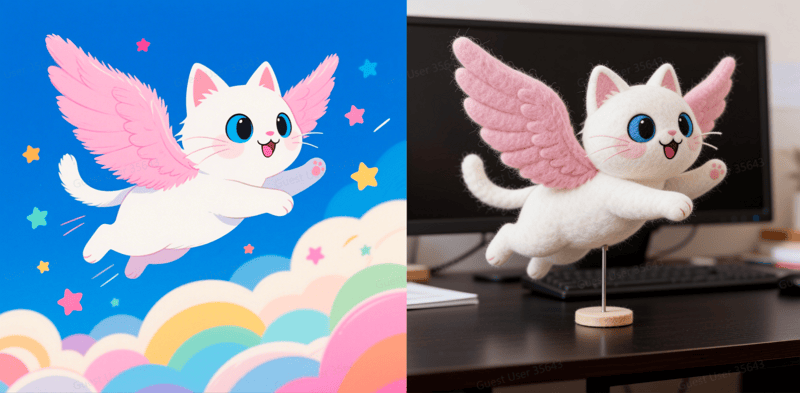
Prompt 2: Make the figure a wool felt art piece, supported by a small stand to keep its posture, set on a dark desk.

seedream 4.0 figure style transformation

While Nano Banana is the expert in generating model images, the output from Seedream 4.0 is also outstanding.

Case Study 2: Image Refinement & Consistency

The task: Take a single image and refine specific elements while maintaining overall scene consistency.

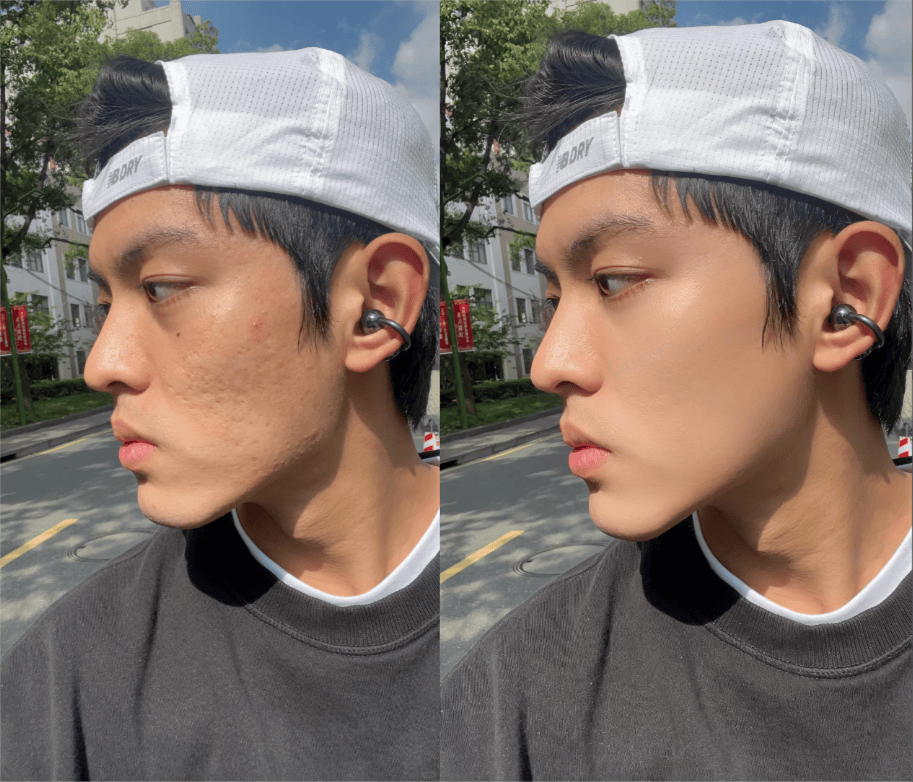
Prompt 1: Optimize the man’s facial skin texture, making it smoother and more natural while retaining pore and texture details

seedream 4.0 image refinement example 1

What’s amazing is how Seedream 4.0 keeps all the original detail. It avoids that artificial, “greasy” look you often get with AI, making the result look completely natural.

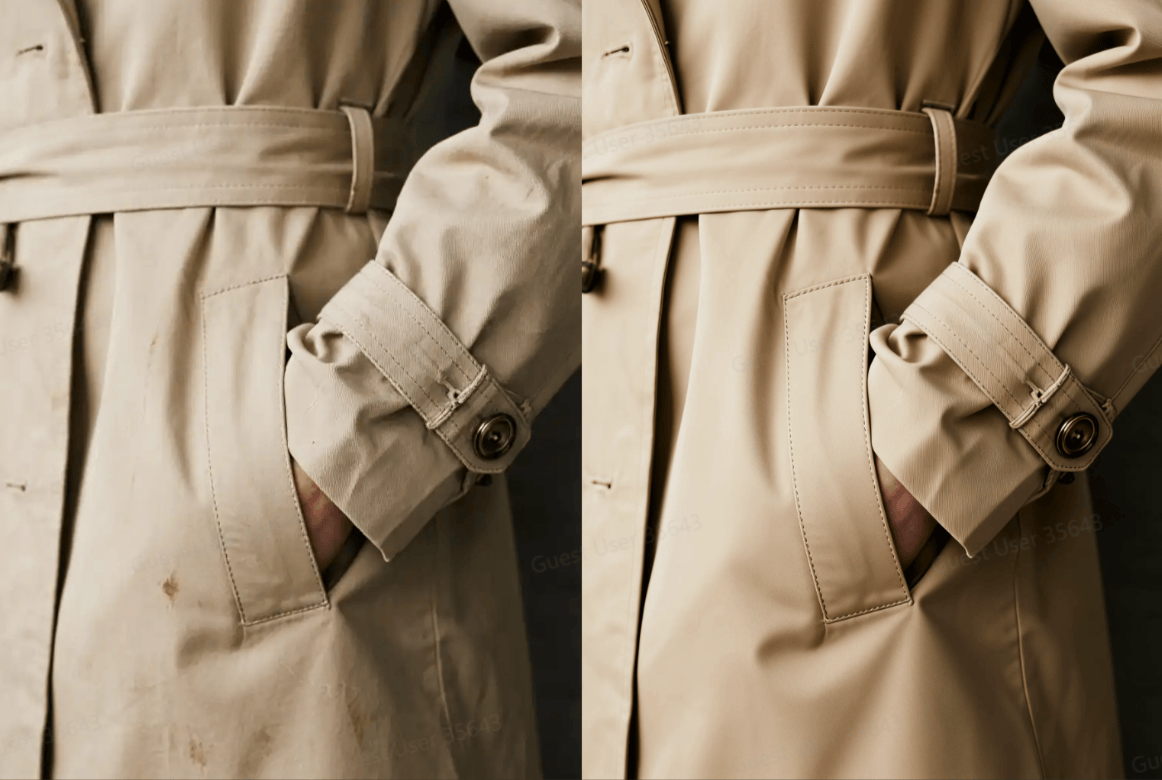
Prompt 2: Retouch, fix wrinkles, adjust lighting and shadows for high-definition commercial product photography.

seedream 4.0 image refinement example 2

Seriously, this is a game-changer for anyone trying to tell a story or build a brand. Keeping a character and image consistent used to be a nightmare, but this feature seems to solve it brilliantly.

Case Study 3: Image Editing Through Prompt

Task: Add, delete, modify, replace, and reference elements in an image.

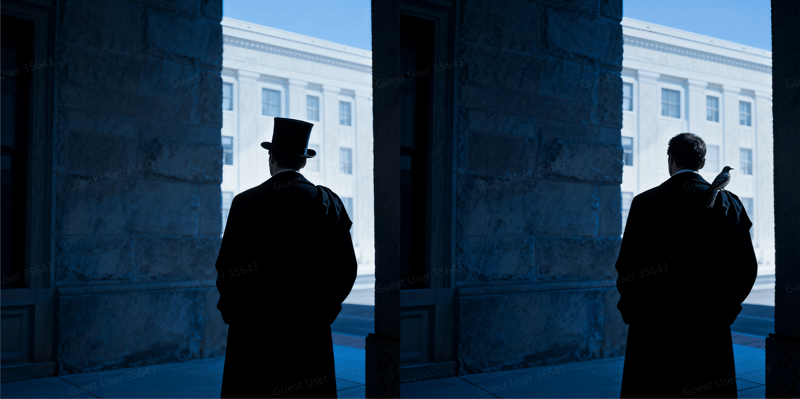
Prompt 1: The man is no longer wearing a top hat; instead, a small bird is perched on his right shoulder.

seedream 4.0 add and delete element to an image

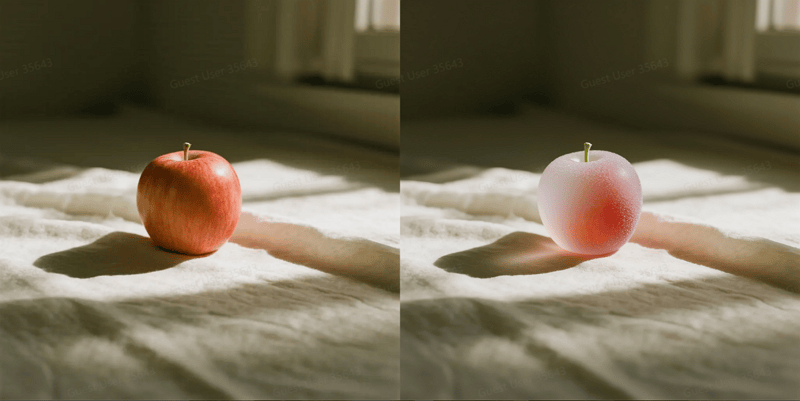
Prompt 2: Apply a frosted, icy texture to the apple while maintaining its original shape and color gradient.

seedream 4.0 modify image

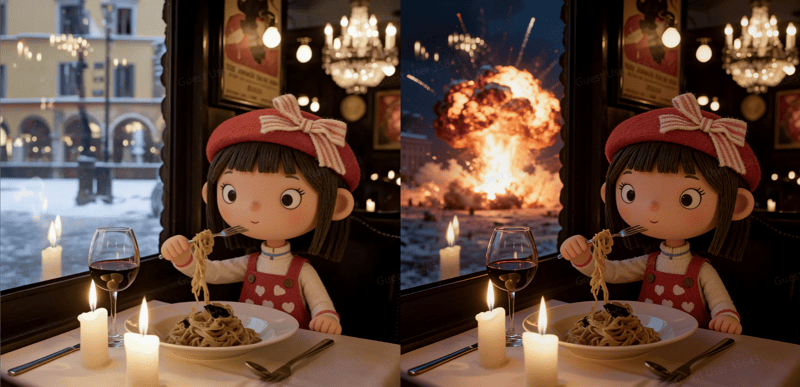
Prompt 3: Change the background outside the window from a snowy street to a large, fiery explosion in the night sky.

seedream 4.0 replace element in an image

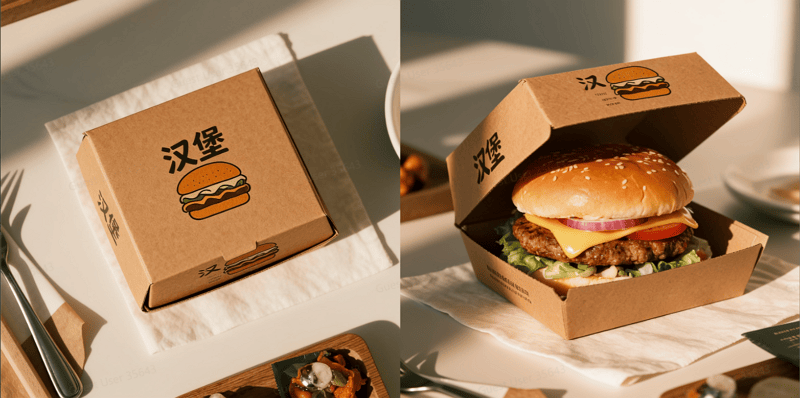
Prompt 4: Show the burger box partially opened, with a well-composed hamburger visible inside, ready to be eaten.

seedream 4.0 generate image from a reference

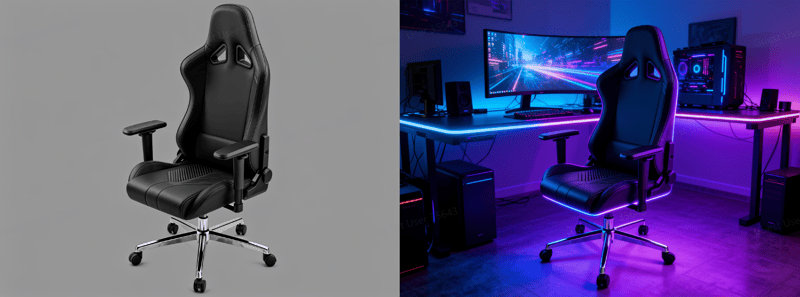
Prompt 5: Integrate the gaming chair into a futuristic gaming setup with a large screen and powerful PC. Add purple and blue LED lighting to the chair’s edges to match the room’s aesthetic.

seedream 4.0 ecommerce product demostration

My takeaway is that the editing experience with Seedream 4.0 was fantastic. Whether I was trying to add something new, remove an object, or reference another style, the results were consistently precise. This isn’t just a cool feature; it’s a powerful tool that genuinely unlocks new creative avenues for commercial work, personal art projects, and even simple, fun experiments. It really delivers on its promise.

Case Study 4: Multi-Image Input & Output

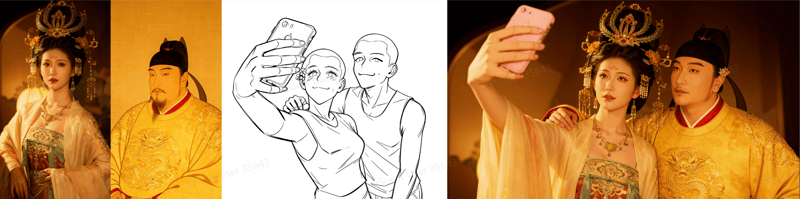
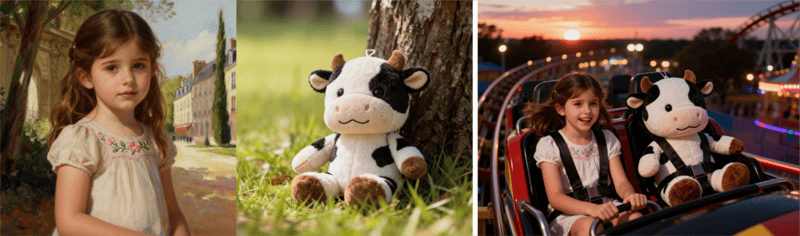
Task 1: Input multiple images simultaneously to perform complex edits such as combining, style transferring, replacing, and deriving new content.

Prompt 1: Combine the woman from Image 1 and the man from Image 2 into a single frame, referencing the pose from Image 3.

seedream 4.0 multiple images combination example 1

Prompt 2: Generate an image of a joyful girl and her stuffed cow toy on a roller coaster ride in an amusement park, 4:3 aspect ratio.

seedream 4.0 multiple images combination example 2

After trying out the multi-image input of Seedream 4.0, I have to say it’s a seriously powerful feature. It feels less like a simple editing tool and more like you’re a director orchestrating a complex scene. This is a massive advantage for anyone looking to create very specific compositions that are difficult to describe with words alone. It offers a level of creative control that really stands out.

Task 2: Generate multiple, content-related images in a single output.

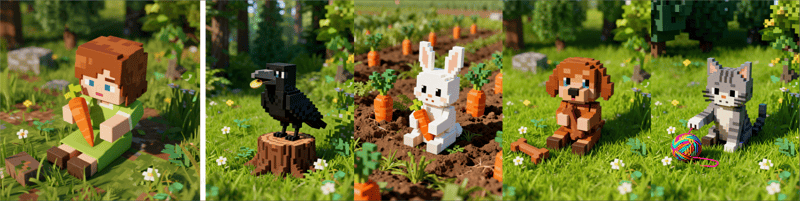
Prompt 1: In the style of the reference image, generate a group of 4 pictures, each for a blind box toy of a crow, a rabbit, a puppy, and a kitten.

seedream 4.0 multiple images output example 1

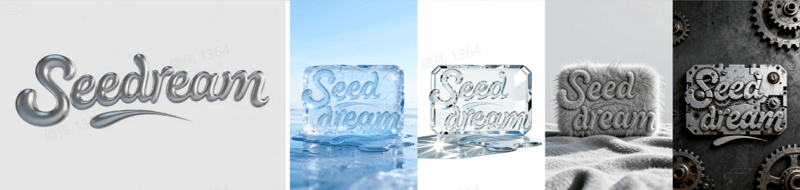
Prompt 2: Generate 4 images based on this reference, changing the title’s material to ice, glass, plush, and mechanical for each

seedream 4.0 multiple images output example 2

Prompt 3: Storyboard a fight scene with these two characters as reference.

seedream 4.0 multiple images output example 3

The multi-image output feature is an absolute game-changer for workflow and brainstorming. This is fantastic for exploring design options or quickly storyboarding a narrative sequence. It streamlines the creative process, making it much faster to visualize and develop an idea from a single concept into a full series.

Case Study 5: Deep Intent Understanding

Task 1: Upgraded knowledge base to understand complex or detailed prompts.

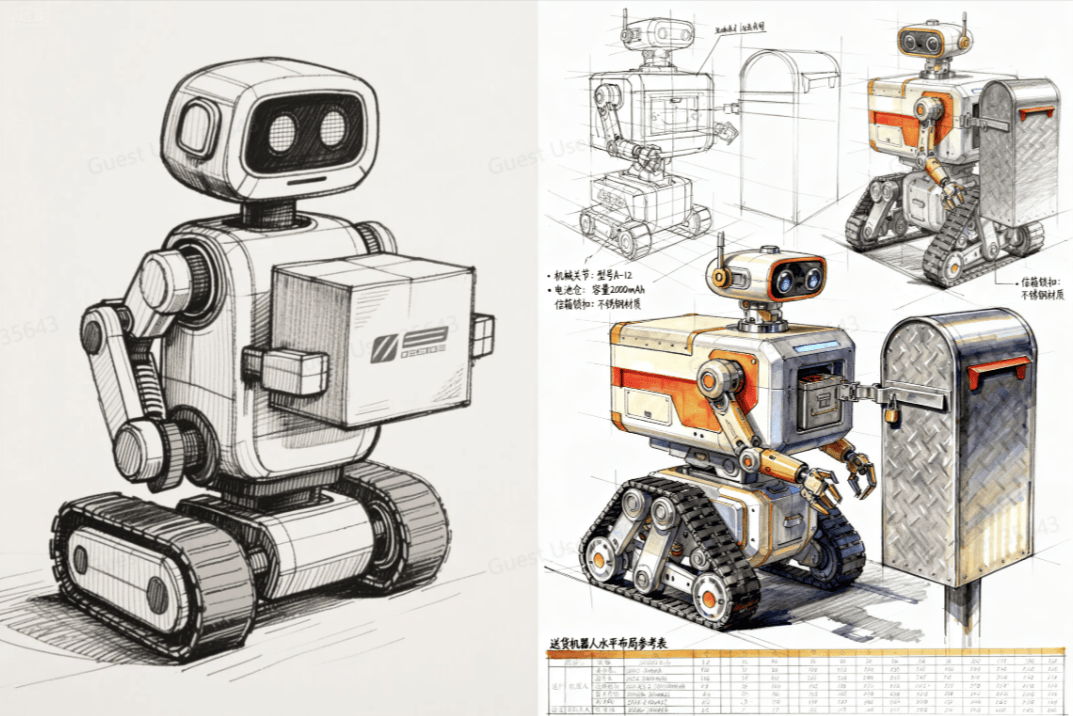
Prompt 1: Generate a sketch of a delivery robot.

seedream 3.0 vs seedream 4.0 knowledge base example 1

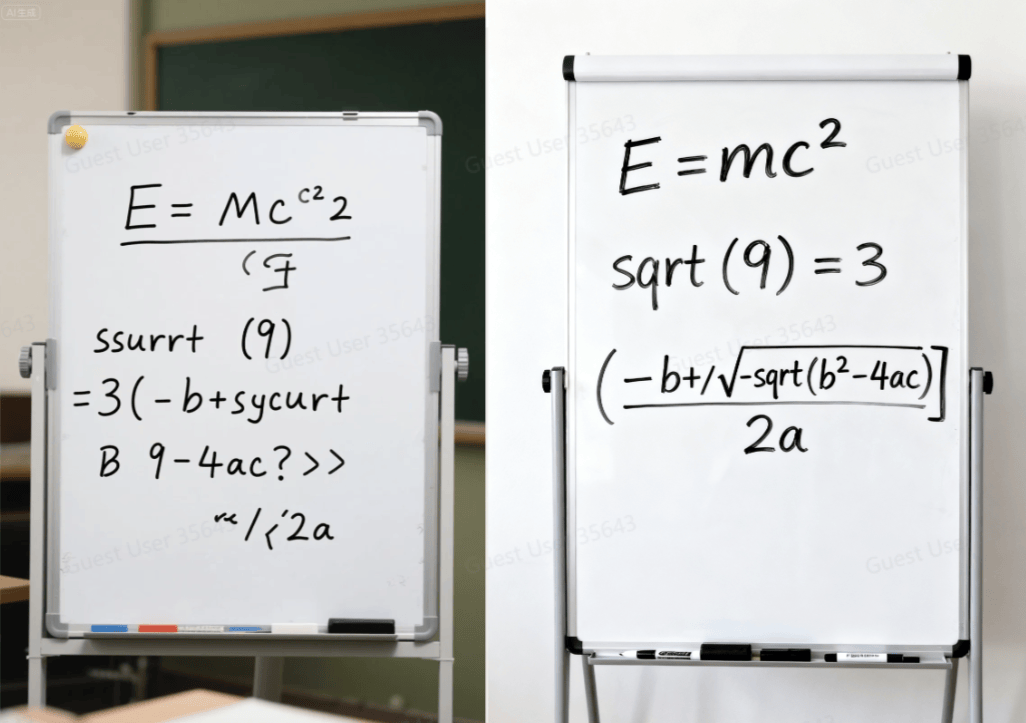
Prompt 2: A whiteboard with the following equations written on it: E=mc^2, sqrt(9)=3, (-b+/-sqrt(b^2-4ac))/2a.

seedream 3.0 vs seedream 4.0 knowledge base example 1

You can immediately see the jump in quality. Seedream 4.0’s understanding is a massive improvement over version 3.0.

Task 2: Transform abstract or imaginative concepts from vague ideas into concrete, detailed visuals.

Prompt 1: Generate a sketch of a delivery robot.

seedream 4.0 abstract concept example

Prompt 2: A whiteboard with the following equations written on it: E=mc^2, sqrt(9)=3, (-b+/-sqrt(b^2-4ac))/2a.

seedream 4.0 transform vague idea to image

What really blew me away was how Seedream 4.0 can take a completely abstract, almost poetic idea and turn it into a stunning visual. I started with just a vague feeling, and it produced a concrete, detailed image that perfectly captured the mood. For anyone who struggles with a creative block or wants to bring a “wildly imaginative” idea to life, this feature is an absolute dream.

Task 3: Use advanced reasoning to predict and simulate scenarios, making the unseen visible.

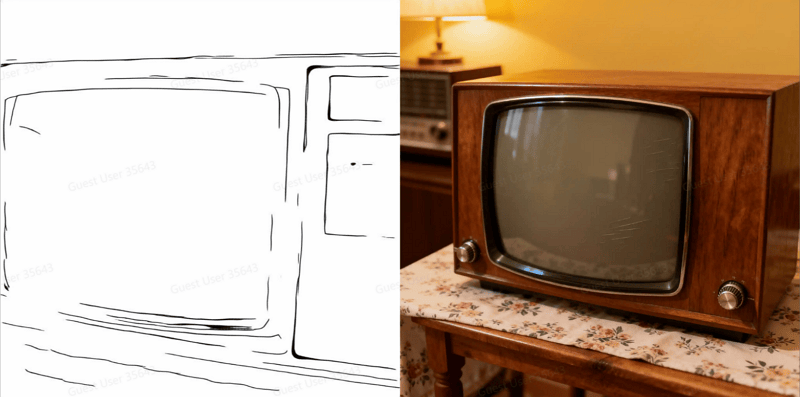
Prompt 1: Create an old-fashioned television based on the provided line drawing.

seedream 4.0 abstract concept example

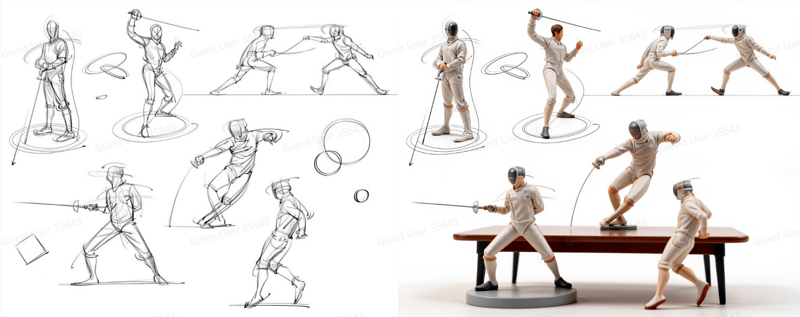
Prompt 2: Create an action figure that matches the poses of the character in the sketch.

seedream 4.0 transform vague idea to image

The reasoning and prediction capability is where Seedream 4.0 feels like it’s from the future. It doesn’t just create a picture; it logically simulates a scenario. This is an incredibly powerful tool for conceptual design, world-building, and visualizing “what if” scenarios.

Task 4: Automatically select the optimal aspect ratio to best compose the generated image.

seedream 4.0 adaptive aspect ratio example 1

seedream 4.0 adaptive aspect ratio example 2

seedream 4.0 adaptive aspect ratio example 3

The Adaptive Aspect Ratio is a brilliant quality-of-life feature. The model is smart enough to analyze your subject and automatically pick the best composition—wide for a landscape, tall for a portrait. It’s a small detail that makes a huge difference, consistently delivering more dynamic and well-composed images with zero extra effort from me.

So, How Can You Actually Use Seedream 4.0?

The Seedream 4.0’s possibilities seem endless, but here are a few ideas based on my testing:

  • For Designers: You can instantly create poster layouts, branding kits, e-commerce shots, and even interior design concepts.
  • For Artists: This could be your new best friend for storyboarding comics and films, illustrating children’s books, creating merchandise, or just coloring your line art.
  • For Fun: The creative and fun uses are limitless. You can make stylized portraits, custom emojis, cool toy designs, or turn your doodles into amazing 3D art.

The Best Part? Seedream 4.0 Is Live Now

Seedream 4.0 isn’t just an upgrade—it’s a breakthrough that’s already available to the public on September 08, 2025. You can start exploring its full power today.
If you want a smooth way to test it, Mew Design has already integrated Seedream 4.0 together with Nano Banana. That means you can generate artistic images, refine details with natural editing, and build full sets of brand assets—all in one place.

Seedream 4.0 has officially arrived, and it’s setting a new standard for AI-generated creativity. The future of design just got a whole lot closer.

Maximalist Graphic Design: A Guide to the 'More is More' Philosophy

maximalism graphic design infograhic

Infographic of Maximalism Design Style. Generated using mew.design.

What Is Maximalism

In a design world long dominated by white space and clean lines, a vibrant rebellion has taken root. It’s a style that fills every corner with color, pattern, and personality. It rejects restraint in favor of glorious, unapologetic excess. This is Maximalism, and its motto is simple: “more is more.”

Maximalism design is a celebration of creative freedom, a style that draws from a rich history of ornamentation and combines it with modern, eclectic flair. It’s about layering, mixing, and creating an immersive visual experience. While orchestrating this controlled chaos might seem daunting, today’s AI design tools like Mew Design make it possible to instantly generate rich, layered graphics that capture the expressive spirit of Maximalism style.

As a bold and exciting counterpoint to minimalism in our ultimate guide to graphic design styles, understanding Maximalism is key for any designer looking to create work that is energetic, eye-catching, and full of life. This article explores its diverse origins, its key characteristics, and its growing influence in contemporary design.

The Origins of Maximalism: A Joyful Rebellion Against Simplicity

The answer to what is maximalism lies in its role as a direct response to the long reign of minimalism. While it feels like a very contemporary trend, its philosophical roots are ancient. It echoes the decorative richness of historical styles like the Baroque and Rococo, the playful geometry of the Memphis Group from the 1980s, and the immersive sensory overload of Psychedelia.

maximalism design historical roots

The four artistic roots of Maximalism—Baroque, Rococo, Memphis Group, and Psychedelia. Generated using mew.design.

The modern Maximalist graphic design style is a digital-age collage, a joyful rejection of corporate sterility that pulls from art history, diverse cultures, and individual expression to create something new, exciting, and deeply personal.

The Visual Hallmarks: Key Characteristics of Maximalism Graphic Design

To identify maximalist design, look for an abundance of visual information. It’s a style defined by its complexity, richness, and fearless combination of elements.

1. Maximalist Typography: Eclectic and Expressive

Maximalist typography is a playground of fonts. The style freely mixes bold serifs, elegant scripts, and chunky sans-serifs all within a single design. Type is often treated as a textural or illustrative element, overlapping with images, filling shapes, and demanding attention through its expressive and unconventional arrangement.

maximalist typography mixing serif script sans-serif

Eclectic typography mixing bold serifs, scripts, and sans-serifs. Generated using mew.design.

2. Maximalist Color Palette: Vibrant, Clashing, and Fearless

Maximalist color palettes are all about bold and unexpected combinations. Forget muted tones; think vibrant, highly saturated hues, neon accents, and clashing colors used with confidence. The goal is to create energy and visual excitement through color.

Here are some Maximalist color palette examples to inspire your creative projects:

neon carnival maximalist color palette

A neon maximalist color palette for vibrant designs. Generated using mew.design.

electric pop maximalist color palette

A pop-inspired maximalist color palette with bold energy. Generated using mew.design.

jungle fever maximalist color palette

A jungle-themed maximalist color palette with tropical vibes. Generated using mew.design.

retro disco maximalist color palette

A retro disco maximalist color palette full of flashy contrasts. Generated using mew.design.

psychedelic dream maximalist color palette

A psychedelic maximalist color palette for surreal, eye-catching style. Generated using mew.design.

cosmic pop maximalist color palette

A cosmic maximalist color palette with futuristic energy. Generated using mew.design.

3. Maximalist Layout & Composition: Layered and Complex

Maximalism rejects negative space in favor of filling the canvas. Layered graphic design is a key technique, with patterns, images, text, and shapes overlapping to create a sense of depth and complexity. Compositions are often dense and intricate, inviting the viewer’s eye to wander and discover hidden details.

layered maximalist layout with overlapping elements

Layered maximalist composition filled with patterns, text, and images. Generated using mew.design.

4. Maximalist Imagery & Motifs: A Mix of Everything

This eclectic design style has no rules when it to comes to imagery. It fearlessly mixes:

  • Multiple, often competing, patterns.
  • A combination of photography, illustration, and abstract shapes.
  • Repetitive elements that create a hypnotic, wallpaper-like effect.
  • A rich variety of textures, from organic to digital.

maximalist imagery with patterns illustration photography

Eclectic mix of patterns, textures, and visual motifs. Generated using mew.design.

Maximalist Graphic Designers and Master Artists

Maximalism is not a formal historical movement with established founders, but a contemporary and fluid trend led by a diverse group of modern creatives.

1. Paula Scher

A true heavyweight in the design world, Paula Scher fundamentally changed brand identity with her revolutionary use of typography. As a partner at Pentagram, she injected the “more is more” philosophy into the mainstream, proving that a complex, expressive style could have immense commercial power and artistic impact.

  • Key Work: The identity and posters for New York’s The Public Theater. Here, bold, sans-serif typography is layered in energetic compositions that fill the entire space, becoming a landmark of maximalist branding.

the public theather 95-96 season by paula scher

The Public Theather, 95-96 Season, Paula Scher. Source: moma.org

2. Kehinde Wiley

No one merges classical portraiture with contemporary urban culture quite like Kehinde Wiley. His work subverts traditional art history by elevating Black subjects to a new status, placing them against intensely ornate and complex backgrounds in a perfect embodiment of maximalism in art.

  • Key Work: The official presidential portrait of Barack Obama. It depicts the former president against a lush, dense backdrop of symbolic flowers and leaves, making it a globally recognized icon of his signature maximalist portraiture style.

the official portrait of president barack obama by Kehinde wiley

The Official Portrait of President Barack Obama, Kehinde Wiley. Source: kehindewiley.com

3. Camille Walala

A French designer based in London, Walala is famous for her large-scale, vibrant, and geometrically patterned installations and interior designs. While not exclusively a graphic designer, her bold use of color and pattern in the Camille Walala style has had a massive influence on the maximalist aesthetic in branding and design.

  • Key Work: Her colorful takeovers of building facades and public spaces, like her “Walala Lounge” installation, are perfect examples of joyful, immersive maximalism.

a camille walala style lounge

A Lounge in the London Street, Camille Walala. Source: dezeen.com

4. Hassan Hajjaj

A Moroccan artist, Hajjaj’s work is a vibrant fusion of pop art, high fashion, and his North African heritage. His portraits are rich with color, pattern, and texture, often framed with commercial products like soda cans.

  • Key Work: His “Kesh Angels” series of photographs perfectly embodies the maximalist spirit of mixing cultures, patterns, and bold colors to create a unique and powerful statement.

kesh angels series by hassan hajjaj

An Example of the Kesh Angels series, Hassan Hajjaj. Source: dezeen.com

5. Leta Sobierajski & Wade Jeffree

This New York-based design duo defines maximalism in the digital age with their surreal, colorful, and humorous work. Spanning art direction, photography, and installation, their creations build a world that rejects mediocrity by embracing bizarre juxtapositions and saturated visual elements.

  • Key Work: The “Complements” project. This series of self-portraits, featuring them in strange and colorful interactions with various objects, is a prime example of their unique, high-saturation, and compositionally dense approach to maximalist art direction.

the complements project by leta sobierajski and wade jeffree

An Example of the Complements Project, Leta Sobierajski & Wade Jeffree. Source: nytimes.com

6. Gustav Klimt

As a standard-bearer of the Vienna Secession movement, Gustav Klimt is an undisputed master of historical maximalism. During his “Golden Phase,” he filled every corner of the canvas with gold leaf, ornate motifs, and decorative patterns, merging figures and ground into a dazzling and sensual tapestry.

  • Key Work: “The Kiss” (1907-1908). In this masterpiece, two figures are enveloped in richly patterned robes against a flat, golden background, making it an immortal icon of maximalist aesthetics through its stunning abundance of detail and texture.

the kiss by gustav klimt

The Kiss, Gustav Klimt. Source: gustav-klimt.com

Maximalism in the Modern World: Contemporary Applications

The bold and expressive nature of maximalism makes it a powerful choice for modern brands that want to stand out from the minimalist crowd and project an energetic, confident personality.

  • Branding & Packaging: Bold branding using maximalist principles is perfect for consumer goods, especially in the food and beverage industry, where it can grab attention on a crowded shelf. It’s also popular with creative and lifestyle brands.

    modern maximalism branding packaging design for consumer goods

    Modern maximalist branding and packaging design that grabs attention on crowded shelves. Generated using mew.design.

  • Hospitality & Interior Design: Hotels, restaurants, and bars use maximalism to create immersive, memorable, and highly “Instagrammable” experiences for their guests.

    modern maximalism interior design for hotels, restaurants, and bars

    A maximalist interior design concept for hospitality spaces that feels immersive and Instagrammable. Generated using mew.design.

  • Fashion & Events: The fashion industry and music event promoters often use maximalist graphics in their advertising and branding to convey energy, creativity, and excitement.

    modern maximalism fashion and event poster for high-energy campaigns

    Modern maximalist fashion and event branding showcasing vibrant energy and creativity. Generated using mew.design.

How To Create a Maximalist-Style Graphic Design with AI

Ready to embrace the “more is more” philosophy? Mew Design can help you orchestrate a beautiful chaos of colors, patterns, and layers.

mew design ai design agent

Mew Design is an AI design agent that makes it simple to explore the rich and layered nature of Maximalism graphic design without losing control of your layout. It helps you build complex designs with precision and ensures that even the busiest compositions feel intentional and visually balanced.

Key Features for Maximalist Projects

  • Crisp text rendering—no warping or distortion, even in busy layouts.
  • Editable layers for fine-tuning colors, textures, and placements.
  • Style-aware rendering to handle ornate details and vivid contrasts.
  • Option to upload product images, logos, and reference art for integration.
  • Export-ready files for high-resolution print or web use.

Steps to Create a Maximalist-Style Graphic Design in Mew Design

Step 1 – Sign Up or Log In

Create a free account or log in to Mew Design to start your Maximalist design journey.

Step 2 – Enter Your Prompt and Generate

Write a prompt describing vibrant color palettes, bold typography, layered visuals, and decorative patterns—hallmarks of Maximalism.

Prompt Example (for a poster): Create a poster for a “Summer Solstice” music festival. Use a bold, maximalist graphic design style. The background should be a vibrant pink and orange gradient. Layer a black-and-white photo of a crowd on top of a geometric pattern. Add large, playful, bubble-style typography for the headline. Scatter small, hand-drawn flower illustrations throughout the design.

enter your ai maximalism graphic design prompt

Step 3 – Refine Using Follow-Up Prompts

Move text, adjust color saturation, or add more graphic details while preserving the bold, high-energy aesthetic.

Example Follow-up Prompts: “Add another layer with a leopard print pattern at 50% opacity.” or “Make the headline font a different, clashing color.”

edit the ai generated maximalism graphic design with prompt

Step 4 – Export or Share

Download your design in high resolution for print or digital use, or share it directly with Mew Design’s creative community.

🚀

Ready to Create a Maximalism Design with AI?

Whether you’re designing an eye-catching event poster, dynamic social media content, or unforgettable branding, Mew Design helps you produce professional graphics that capture the joyful energy of Maximalism.

Try Mew Design for Free

Conclusion

Maximalism is a joyful and confident rebellion against the idea that design must be quiet to be effective. It proves that complexity, expression, and even a little bit of chaos can be incredibly beautiful and compelling. Its legacy is a celebration of creative freedom, reminding designers that sometimes, the boldest statement is to use all the colors in the box.

Now that you’ve explored the vibrant world of Maximalism, see how its opposite—Minimalism—finds power in simplicity in our Ultimate Guide to Graphic Design Styles.

Minimalist Graphic Design: A Guide to the 'Less is More' Philosophy

minimalism graphic design infographic

Infographic of Minimalism Graphic Design Style. Generated using mew.design.

What Is Minimalism

In a world filled with constant noise and visual clutter, what is the most powerful way to get a message across? Sometimes, it’s by saying almost nothing at all. This is the core belief behind Minimalism, a design philosophy that finds power in simplicity, clarity, and purpose.

Minimalism isn’t about emptiness; it’s about removing every non-essential element to make what remains more impactful. It’s a declaration of confidence and a focus on pure function. While achieving this level of refined simplicity can be challenging, modern creative tools, including AI design agents like Mew Design, make it easy to generate clean, purposeful graphics that embody the minimalist spirit.

As one of the most influential and enduring graphic design styles in our ultimate guide, mastering minimalist design principles is essential for any modern designer. This article explores its philosophical origins, its key visual characteristics, and its dominance in today’s design landscape.

The Origins of Minimalism Graphic Design: The Pursuit of Essentialism

The answer to what is minimalism can be found in the famous phrase “less is more.” While it crystallized as a major art movement in the 1960s as a reaction against the emotional chaos of Abstract Expressionism, its roots in design run deeper. The functionalism of the Bauhaus, the geometric purity of De Stijl, and the orderly grids of the Swiss Style all paved the way.
Furthermore, traditional Japanese Zen philosophy, with its focus on simplicity and tranquility, was a major influence. In the world of product design, figures like Dieter Rams and his “less but better” approach for Braun solidified minimalism as a powerful philosophy for creating objects and interfaces that were not only beautiful but also intuitive and timeless.

minimalism design historical roots

Origins of Minimalism Graphic Design: blending Bauhaus, De Stijl, Swiss Style, and Japanese Zen aesthetics into a clean, functional design philosophy. Generated using mew.design.

The Visual Hallmarks: Key Characteristics of Minimalism Graphic Design

To identify minimalist design, look for what isn’t there. The style is defined by its restraint, precision, and a deep respect for space.

1. Minimalism Typography: Clean and Purposeful

Minimalist typography is clean, legible, and highly functional. The style almost exclusively uses simple, high-quality sans-serif fonts like Helvetica, Futura, or Akzidenz-Grotesk. Typography is not used as decoration; it is a primary carrier of information, with careful attention paid to hierarchy, alignment, and spacing to ensure maximum clarity.
minimalist style clean sans-serif typography

Minimalist typography uses simple, functional sans-serif fonts with precise spacing and hierarchy. Generated using mew.design.
2. Minimalism Color Palette: Limited and Intentional

A minimalist color palette is extremely restrained. It is often monochromatic (using only shades of black, white, and grey) or uses a maximum of one or two carefully chosen accent colors. The color is not used for emotional flair but for a specific, functional purpose—to draw attention to a key element, like a button or a headline.

minimalism soft nordic color palette

Nordic Calm palette reflects cool, neutral tones perfect for minimalist design. Generated using mew.design.

minimalism neutral zen color palette

Zen Neutral palette uses warm neutrals for serene minimalist aesthetics. Generated using mew.design.

minimalism clean urban monochrome palette

Urban Monochrome palette features shades of gray for sleek minimalist layouts. Generated using mew.design.

warm desert tone palette for minimalist graphic design

Desert Accent palette pairs soft earth tones with a bold minimalist accent. Generated using mew.design.

cool forest tone palette for nature minimalist design

Misty Forest palette combines greens and grays for nature-inspired minimalism. Generated using mew.design.

soft blush minimal color palette

Soft Blush palette adds a gentle warmth with pale pinks and muted rose tones. Generated using mew.design.

3. Minimalism Layout & Composition: The Power of Negative Space

The most important element in minimalist composition is negative space (or white space). Minimalist designers understand that empty space is not empty; it’s an active element that gives breathing room to other elements, creates focus, and guides the viewer’s eye. Layouts are built on a clean, underlying grid, resulting in a feeling of order, balance, and tranquility.

minimalist layout with negative space

A minimalist website layout design with negative space. Generated using mew.design.

4. Minimalism Imagery & Motifs: Stripped to the Essence

Minimalism avoids all unnecessary decoration. There are no flourishes, complex patterns, or heavy textures. If an image is used, it is typically a single, powerful photograph or a simple geometric shape. The goal is to strip every element down to its essential form and function, creating a clean design aesthetic.

Minimalist Graphic Designers and Master Artists

Minimalism was shaped by architects, artists, and industrial designers whose philosophies were adopted by graphic designers to create a new standard for visual communication.

Pioneers of Minimalism Graphic Design

1. Massimo Vignelli (1931-2014)

As an Italian minimalist design giant, Vignelli lived by the motto, “If you can design one thing, you can design everything.” His work spanned multiple disciplines, defined by its intellectual elegance and systematic approach. He championed the use of a limited number of typefaces (especially Helvetica) and a strict grid system to create clear, timeless designs.

  • Key Work: The 1972 New York City Subway Map. This piece is a landmark in the history of information design. Vignelli boldly sacrificed geographical accuracy for diagrammatic clarity, using clean lines and 45-degree angles to represent the complex system, proving that minimalism could bring order and understanding to chaos.

massimo vignelli the 1972 new york city subway map

The 1972 New York City Subway Map, Massimo Vignelli. Source: id.iit.edu.

2. Dieter Rams (b. 1932)

While an industrial designer, Rams’ philosophy of “Less, but better” profoundly influenced minimalist graphic and interface design. His “Ten Principles for Good Design,” developed for the company Braun, emphasize that design should be useful, honest, and unobtrusive, striving for ultimate functionality and aesthetic quietness.

  • Key Work: Braun’s Product Design Language. From calculators to radios, the products and manuals Rams designed for Braun exemplified impeccable clarity. This function-driven minimalism not only defined the brand’s identity but also became a source of inspiration for later interface design, most notably for Apple Inc.

dieter rams then principles for good design

Ten Principles for Good Design, Dieter Rams. Photo: Abisag Tüllmann, Source: Vitsœ.

3. Saul Bass (1920-1996)

Saul Bass was an American minimalist graphic designer and filmmaker who excelled at distilling the complex concept of a film or brand into a single, powerful visual symbol. His style is full of motion and emotional tension, often using raw, paper-cut-style shapes and asymmetrical compositions to capture the audience’s attention and convey a core mood.

  • Key Work: Movie Posters and Title Sequences. His posters for films like Vertigo and Anatomy of a Murder are iconic. Using highly abstract and symbolic graphics, he precisely captured the film’s suspenseful atmosphere and central themes, pioneering modern visual design for cinema.

saul bass film poster for anatomy of a murder

Film poster for Anatomy of a Murder by Saul Bass. Source: walterfilm.com.

4. Paul Rand (1914-1996)

A pioneer of corporate identity design in America, Paul Rand combined modernist simplicity with playful wit. He argued that the primary goal of a logo was to “identify,” not “describe,” and his designs are full of charm and symbolism, condensing complex corporate ideas into memorable visual marks.

  • Key Work: Corporate Logos for IBM, UPS, and ABC. These enduring logos are paragons of minimalism in commercial application. The IBM logo, with its horizontal stripes, is not only simple and powerful but also conveys a sense of technology and stability, proving that simple forms can carry rich meaning.

some of the logos designed by paul rand

Some of the logos designed by Paul Rand.

5. Ikko Tanaka (1930-2002)

As one of postwar Japan’s most influential minimalist graphic designers, Ikko Tanaka skillfully blended traditional Japanese aesthetics (like Rinpa and ukiyo-e) with the geometric forms of Western modernism. His work contains rich cultural heritage and visual harmony within its simple compositions, showcasing a unique Eastern minimalist style.

  • Key Work: The 1981 “Nihon Buyo” Poster. This poster uses only basic circles, squares, and lines to outline an abstract yet elegant face of a geisha. It perfectly simplifies a complex cultural symbol into pure geometric forms, embodying the fusion of Eastern and Western aesthetics and the essence of design.

ikko tanaka the 1981 nihon buyo poster

The 1981 “Nihon Buyo” Poster, Ikko Tanaka. Source: moma.org.

Contemporary Minimalists

1. Michael Bierut (b. 1957)

A partner at the international design firm Pentagram, Bierut is known for his clear, intelligent, and accessible graphic design systems. He excels at transforming complex brand problems into simple, direct, and engaging visual solutions, demonstrating the power of minimalism in contemporary brand communication.

  • Key Work: Hillary Clinton’s 2016 Campaign Logo. The logo, consisting of a capital “H” with a forward-pointing arrow, sparked widespread discussion. Its extreme simplicity, boldness, and ease of application in digital media made it a prime example of how modern minimalism can create a clear visual focus in complex political messaging.

michael bierut hillary clinton 2016 camplaign logo

Hillary Clinton’s 2016 Campaign Logo, Michael Bierut.

2. Noma Bar (b. 1973)

Noma Bar is an Israeli minimalist graphic designer celebrated for his masterful use of negative space. His illustrations contain dual or even multiple layers of meaning beneath a minimalist surface, guiding viewers to discover deep narratives and clever visual puns within the simple imagery.

  • Key Work: Editorial Illustrations. His work is frequently featured in major publications, where he might use the shape of a gun to form a crying face or a politician’s silhouette to reveal another side of their policy. These works prove that minimalism is not just a style but an intelligent communication tool.

noma bar editorial illustrations

Some Illustration Designs of Noma Bar. Source: newyorker.com.

3. Kenya Hara (b. 1958)

As the art director for the Japanese brand Muji, Kenya Hara is a leading advocate for the contemporary aesthetic of “emptiness.” His design philosophy transcends mere visual simplification, aiming for a sense of sensory comfort and tranquility. Through a “no-brand” strategy, he communicates the essence and utility of products.

  • Key Work: The Brand Identity and Product Design for Muji. From packaging to store displays, everything about Muji reflects Hara’s philosophy. Humble materials, neutral colors, and minimal information create a feeling of “this is enough,” elevating minimalism to the level of a life philosophy.

muji product designs in minimalism style

Some product designs of MUJI.

4. Apple’s Design Ethos

Under the leadership of Steve Jobs and Jony Ive, Apple took functional minimalism to its zenith. Deeply influenced by Dieter Rams, its design ethos aims to make technology “disappear” through simplification, allowing users to interact more intuitively with content and focus on the experience itself.

  • Key Work: The iOS User Interface Starting with iOS 7, Apple completely abandoned skeuomorphism in favor of a flat, clean interface style. Generous white space, simple icons, and clear typography not only improved readability but also created a light, modern digital experience that has become the benchmark for contemporary interface design.

Modern Minimalist Graphic Design: Contemporary Applications

Today, minimalism is more than just a style; it’s the default language for sophistication, technology, and luxury. Its principles are everywhere in our daily lives.

  • UI/UX & Web Design: Minimalist website design is the industry standard. A clean interface with lots of negative space reduces cognitive load, making websites and apps more intuitive and user-friendly.

    modern minimalism web design ui example

    Clean UI design with negative space for intuitive navigation. Generated using Mew.Design.

  • Branding & Logos: Minimalist branding is used by countless global brands to appear modern, confident, and premium. A simple, clean logo is often more memorable and versatile than a complex one.

    modern minimalist logo branding design example

    Modern minimalist logo design for a premium brand identity. Generated using Mew.Design.

  • Luxury Goods: High-end fashion, cosmetics, and technology brands use minimalism in their packaging and advertising to convey a sense of elegance, quality, and exclusivity.

    modern minimalist luxury packaging design example

    Elegant product packaging with minimalist luxury design. Generated using Mew.Design.

How to Create a Minimalist-Style Graphic Design with AI

Ready to create designs with elegance and clarity? Mew Design can help you harness the power of “less is more” to create clean, impactful graphics.

mew design ai design agent

Mew Design is an AI design agent that makes it easy to achieve professional-grade minimalist graphics by combining smart layout tools with precise text handling. The platform offers:

  • Clean, grid-based layouts to maintain balance and proportion.
  • Crisp text rendering—no distortions or uneven spacing.
  • Customizable palettes for creating designs with a refined, modern feel.
  • Upload options for logos, reference images, and product visuals to keep brand identity consistent.
  • Export-ready files for web, print, and social media.

Steps to Create a Minimalist Design

Step 1. Register or Log In to Mew Design

Start by creating an account or logging in to unlock full access to its design features.

Step 2. Enter Your Prompt & Generate the Base Design

Use keywords that emphasize space, simplicity, and a limited palette. Be as specific about what to exclude as what to include.

Prompt Example (for a poster): Create a minimalist poster for a luxury perfume launch. Use a soft gradient background blending ivory and pearl gray with a subtle diffused glow. Headline: ‘Elysian Essence’ in sleek black serif font, aligned left. Subtext: ‘The New Fragrance – March 2025’ in muted gray beneath. Maintain a spacious, balanced layout with a calm, refined atmosphere.

enter your ai minimalism style graphic design prompt

Step 3. Refine with Follow-Up Prompts

Adjust spacing, colors, and typography until the design reflects the right level of simplicity and balance.

Example Follow-up Prompts: “Make the font size smaller.” or “Remove the accent color, make it all black and white.”

edit the ai generated minimalism graphic design with prompt

Step 4. Export or Publish

Save the design in high resolution for print or web, or share it directly to Mew Design’s community.

🚀

Ready to Create a Minimalism Design with AI?

Whether you’re creating a sophisticated brand logo, a clean website banner, or an elegant event invitation, Mew Design helps you produce professional graphics that capture the power of minimalist design.

Try Mew Design for Free

Conclusion

Minimalism is a powerful reminder that good design is not about adding more, but about taking away until only the essential remains. It proves that simplicity can be more impactful, more elegant, and more communicative than complexity. Its legacy is the clean, calm, and functional visual world we value today, a testament to the idea that “less is more” is a truly timeless principle.

Now that you’ve explored the quiet confidence of Minimalism, see how its opposite—Maximalism—embraces a world of vibrant complexity in our Ultimate Guide to Graphic Design Styles.